Monday, October 18, 2021

My sense of empathy is being tested


We print fiction writers have a longstanding love/hate relationship with Hollywood. We love the insane amounts of money we can make from having our works adapted to become a successful film or television series. We hate the horrible things Hollywood screenwriters and industry executives do to our brainchildren in the process of turning them into visual media products. 

Over the course of my career I have known at least several dozen writers who have had their books or short stories adapted to become films, and of them all, the only one who was completely happy with the way the film turned out was the one who told me, “They gave me a check for a hundred thousand dollars and took my name off the credits. Their check cleared the bank, so I’m happy.”

Recently though comes this news from Hollywood. The WGA apparently is in crisis, as despite Federal law and lawsuit settlements to the contrary, there is still shameless age discrimination going on in Hollywood! It’s an outrage!

WGA West Career Longevity Committee Demands “Inclusion And Equity” For Older Writers

(“Yeah, tell me about it,” mutters the 40-year-old actress.)

Now, normally I wouldn’t pay any attention at all to what’s going on with the WGA—they are strange and alien people over there—but then this article showed up in my feed this morning:

How to Make Money and Thrive as an Older Screenwriter

It’s an article by a screenwriter, writing for screenwriters, discussing strategies for making money in the face of the systemic age discrimination in the film industry. Some of his suggestions made me laugh—e.g., “Take that original script you can’t sell and turn it into a novel”—yeah, right, you think there’s more money to be made in writing novels

But then this one caught my attention. Paraphrasing now:

Find an older piece of IP that you can option for little or no cost up front, and then get yourself attached to the project as a writer-producer or executive producer. Even if the film never gets made, you (meaning the screenwriter) by WGA rules must be paid a significant amount of cash plus the requisite WGA Health and Pension benefits [emphasis added] for writing the unproduced script.

Oh, boy. That one got my hackles up. I have been on the “original author” side of that transaction before, and what a low- or no-cost screenplay rights option or “shopping agreement” means is that the original author of the intellectual property in question makes nothing until the screenplay actually gets greenlighted and goes into production, or sometimes not even until after the film is finished and released. (And yes, films do get finished and then go into the can, to be released years later, or perhaps never. It happens more often than you think.)

Meanwhile, thanks to the WGA, the screenwriter who adapted the original writer’s IP to become a script most definitely does get paid for the work, at Guild rates, and with health and pension benefits as well.

Hmm. No wonder I’ve been seeing so much interest in my back catalog lately from people claiming to be in the film industry: interest that invariably evaporates as soon as I give them my agent’s name and contact info and tell them that I have absolutely no interest in signing a no-cost rights option or “shopping agreement.”  I will gladly pay you Thursday for a hamburger today. Yeah. Right. Sure.

I’m trying to be empathetic to their plight—after all, even Hollywood screenwriters were humans, once—but I can’t help but find the comments on the linked articles amusing. They break right along the age line. The older readers form a Greek chorus, singing, Yes, absolutely, this is exactly what we need! while the younger readers deliver the antiphon, Ah, shuddup, die, and get out of the way already, Boomer!   

Makes me want to get a big bucket of popcorn, sit back, and watch how this plays out.

—Bruce Bethke

___________________________________

SHAMELESS ADVERT:  If you’re an out-of-work Hollywood screenwriter looking for a book that would make a brilliant film, check out THE MIDNIGHT GROUND! READ IT NOW!


Talking Shop: And Then…After the First Draft • By Eric Dontigney

Photo by Suzy Hazelwood from Pexels

As most of you know, I spent the last few months writing a space opera novel by the name of Rinn’s Run. I chronicled that adventure with my almost weekly Writing Challenge updates. As novels go, that book was written pretty fast. I wrote the bulk of it in about 90-100 days. When you’re writing that fast, a first draft can become somewhat all-consuming. You think about it all the time, even when you’re doing other things. I’d plot out scenes while I was making dinner, or vacuuming, or giving my cat her mandatory 20 minutes of daily affection. I’d toy with phrasing in the back of my head while I was doing my day job writing. I’d think about symbolism while…nah, just kidding. I never think about symbolism. The point is that the book bleeds into every part of your life, if only by simmering in the background.

Then, one fine day, you type “The End” and it’s over. At least, that all-consuming creative push that drove you to write the book in the first place is over. Now, for some writers, there’s a kind of mental staggering that happens after you finish a draft. There is this big gaping hole in your brain where that book used to live. You’re not really done with the book, yet, because editorial notes, revisions, and new drafts are in your future. The key phrase there is “in your future.” Between turning in that draft and getting back the first round of notes, there’s a good chance that you’re treading water and feeling at wit’s end. You feel like you ought to be doing something, but there’s nothing to do.

In that respect, I’m lucky. I had tentative plans for what I’d do next when I first started writing Rinn’s Run. I know there will be a follow-up (or several) to Rinn’s Run. I’ve got a pretty good idea about what happens in the next book. I have 50,000+ words already written on an urban fantasy novel that I need to finish. I have partially completed short stories for my next Contingency Jones book. I have a novella started that I really want to finish before Christmas. I’ve got plenty to do to keep me occupied. The question I’m up against is this: Which project do I focus on next? There is a big part of me that wants to jump straight into writing the next Kalan Rinn book. In fact, I may write the first chapter or two just so I have somewhere to start when I do sit down to write it. It won’t, however, be my next big project. You may be asking yourself a very reasonable, “Why?”

It’s because I know that I have editorial notes and revisions coming my way in the near future. I sincerely doubt that I could knock out a complete draft of the next book before I get those notes. I asked myself if I wanted to be writing the second book while I was trying to polish the first book. The answer is no. They’re too closely entwined. I’d inevitably wind up dragging my editor brain for book one into my writing sessions for book two. You need perspective to do good revisions. You need creative fire to power through a first draft. The two do not mix well. Once I settled on that, the question became what writing would I work on over the next few months. I settled on the mostly completed urban fantasy novel. Again, you could quite reasonably ask, “Why?” Won’t I have the same problem with dragging my editor brain into my writing process?

I don’t think I will. The space opera and the urban fantasy have a couple of fundamental differences that will help me maintain the necessary disconnect. The space opera is told primarily from a third-person perspective. The urban fantasy is told as a straight-up first-person narrative. That alone will do a lot to keep the two processes fundamentally separated in my brain. Second, aside from a couple of tropes common to space operas (FTL, blaster guns, sentient AI), Rinn’s Run doesn’t knowingly break with the laws of nature. Mind you, my knowledge of those laws might have failed me in some way in writing the book, but I did my best to keep it grounded. The urban fantasy, by nature, deals with violations of the laws of nature all the time. I reasoned that, given those differences, the urban fantasy was the safest choice for the next project. Even if finishing it does overlap with the rewrites on the space opera, switching between them should prove a workable situation. 

_______________________________________________

Eric Dontigney is the author of the highly regarded novel, THE MIDNIGHT GROUND, as well as the Samuel Branch urban fantasy series and the short story collection, Contingency Jones: The Complete Season One. Raised in Western New York, he currently resides near Dayton, OH. You can find him haunting obscure sections of libraries, in Chinese restaurants or occasionally online at ericdontigney.com.


SHAMELESS ADVERT: If you like Harry Dresden or John Constantine, you’ll love THE MIDNIGHT GROUND. READ IT NOW!

Sunday, October 17, 2021

About that book cover...


I’ve come to realize that I respond to a fascinating new idea the way a dog responds when someone says, “SQUIRREL!” In the case of this faux book cover, I was crawling through a stock art collection, looking for an illustration to go with a story, when I ran across this piece of art and was overcome by “Aww, that’s adorable!” I immediately stopped what I was doing and began to think of ways I could make an excuse to use this art. Perhaps I could write a novella to go with it? Or perhaps I could use it as a prompt in a contest? Or maybe, how about if I combine the two ideas and put together a theme anthology chapbook of contest-winning stories inspired by this illo? Or...

Or wait one damn minute. I don’t really have the time to do any of these things. And making the time to do it would mean taking time away from another project that is more central to the Rampant Loon mission. I already have three novels on my desk in various stages of completion, and Eric Dontigney has just turned in the first draft of Rinn’s Run, so I need to get started on reading that.

So, no. Cute idea, but get thee behind me, adorable li’l robot and boy.

But then I took one more look at it, and a more subtle meaning became clear to me. This art appeals to me because it reminds me of my Dad. 

My Dad ended up being a teacher, but deep down, he was a Wisconsin farm boy who came of age during the Great Depression. As such he embodied the DIY ethic to the point of excess, and it stayed with him all his life. Even in his later years, when cash money was no longer hard to come by, he still lived that way. If you needed something, you either made it yourself, figured out how to make do with what you already had, bought something that was almost good enough but a lot cheaper, or did without. And you never threw out anything that might conceivably be useful again some day, even if it was broken.

When I look at this picture, then, I realize that if I had asked my Dad for, say, a robot when I was a kid, that’s what I would have ended up with. He would have taken me down to the basement, handed me an old coffee can, pointed to a bushel basket filled with rusty plumbing fixtures, pinball machine parts, and random bicycle sprockets, and said, “You’re supposed to be so smart. Build it yourself.”

In some strange Lamarckian way he passed that character flaw trait on to me, and it’s profoundly affected the development of Stupefying Stories and Rampant Loon Press. For the past ten years I have been deeply into learning how to do everything here myself, which effectively means that I deliberately, if unintentionally, made myself the bottleneck on the critical path.

No more. This week’s watchword is “delegate.”

Now who here would like to do a development read on Rinn’s Run?

—Bruce Bethke

Econ 101: Opportunity Cost


There are plenty of people who are eager to tell you how to write. (Or more accurately, eager to sell you their book/program/webinar/master class/whatever that purports to teach you how to write an award-winning bestselling novel at home in your spare time, without all that messy trial-and-error and practice and learning by doing stuff.) There are almost as many people who are eager to tell you exactly what to write, or when to write, or why to write—

[Actually, that last one doesn’t seem to be a problem. Most successful writers I’ve known only started to wonder about why they wrote what they wrote after they were successful. When they were first starting out, for most of them writing was more of an obsessive-compulsive disorder. As one particularly well-known and award-winning author I knew put it, “Why do I write? Because I can’t not write.”]

Hmm. If the how, what, when, and why are already covered (and then some!), what else could I possibly teach you? How about… 

What not to write! There is an open niche! Now, how do I turn this into a two-hour webinar complete with slide deck and accompanying workbook and follow-on consulting services? Hmm again.

Wait. Whoa. Deep breath.

Somewhat more seriously: I will admit that I am sometimes tempted by the teaching path, from time to time. My parents were both teachers. I did a stint as a TA in college, and another stint teaching in a Federally funded arts grant program, which I’d rather forget. I do get offers to teach writing every once in a while, which usually are withdrawn in haste the moment the offering party discovers to their abject horror that I do not have at least an MFA in Creative Writing. [My God, how did this happen? He somehow managed to become an award-winning and world-famous writer without being properly nobbled and gelded by an accredited university English department! What went wrong?!?!?!]

But I digress. Which is precisely my point.

If I were to take something like a teaching position somewhere, in the English department of some backwater university or small-town college, I wouldn’t want to teach Creative Writing anyway. What I would want to teach would be something like ECON 101: Economics for English Majors. Because one of the things that was really drummed into my head while I was serving on the SFWA Board of Directors, and that has been reinforced by repeated experience ever since, is that most creative writers don’t have a flippin’ clue about how real economies actually work, on a macro scale, a micro scale, or anywhere in between. They can’t even balance their own checkbooks. 

Yet they continue to create fictional worlds in which human societies run on utter economic nonsense—Star Trek is particularly egregious in this regard—and then, if their fiction is successful, they presume to extend their fantastic notions into the real world. After all, it made perfect sense in their imagination.

It is charming, in a childish and naïve way. Sort of like the little kid who tells you he’s going to tie a big bunch of balloons together and fly away to the Moon.

_______________


So let’s begin a conversation about practical and tactical economics, as they apply to writers and publishers. My purpose in writing about these subjects is not to convert you into a Hayek-quoting Chicago School-believing free-market libertarian—Lord knows, we have enough of them in the SF field already—but to give you some insights into the changes we’re going to be making here at Rampant Loon Press and Stupefying Stories in the coming months. More importantly, I want to give you some ideas to think about as you develop your own writing career. 

First up, let’s consider a concept that has had a very direct impact on my own life and writing and publishing career, and thus on the fortunes of Rampant Loon Press, and which therefore has been very much on my mind lately: opportunity cost.

Opportunity cost is, to put it very simply, the cost of doing something expressed in terms of other opportunities not pursued. Every decision you make carries an opportunity cost, sometimes trivial and sometimes life-altering. Every time you choose to do something, you are also choosing not to do something else, and usually several other something elses. 

It seems obvious, right? When an opportunity presents itself, choosing whether or not to follow up on it should be an easy problem to solve. If I choose to do this, what else am I giving up? Except—

  • Your resources—time, money, and energy—are finite. You will never have the resources to pursue every opportunity that comes along.

  • You will always be making your decisions based on incomplete information.

  • You will never know the true opportunity cost until after—sometimes long after—you have made a decision and chosen a path of action.

  • Here’s the real headache: every writer’s basis for calculating opportunity cost is different. What seems like a reasonable opportunity cost for Writer A might be an absolutely catastrophic cost for Writer B.

    [We writers are, deep down, a highly competitive lot. Whether we admit it or not, we are always acutely aware of how well we are doing in comparison to Writer A. This comparison will drive you nuts if you let it, and there is probably at least one column that needs to be written on the subject of how Writer A’s skewed cost basis is changing the sort of fiction that is being written and published now. That is a topic for another day, but this differing cost basis is what makes it so difficult to teach you how to decide what’s right for you.]

Someday, if we’re lucky, the Rampant Loon Press story will be a case study in business school, and it will be a study in opportunity costs. It will be a ten-year saga of a small business that was always going off in six directions at once and trying to do too many things simultaneously with too few resources, because the founder (me) was always bubbling over with curiosity and treating the company as an experiment and an opportunity to learn new things, and not as a business. It had some resounding successes, and some flops so bad they augured in and left smoking holes in the ground, because the one thing the founder didn’t bother to learn was how to make his successes repeatable, because he was systemically incapable of resisting fascinating opportunities and interesting digressions!

So that’s my job for the next six months: to learn how to better calculate my opportunity costs, and thus to learn how to resist the siren songs of fascinating digressions and focus on the RLP projects that have a very high probability of marketplace success. 

Hang on tight. It’s going to be a bumpy ride.

—Bruce Bethke


Monday, October 11, 2021

Exploring An Old, Old Story…Daniel Keyes and “Flowers for Algernon” by Guy Stewart

I tripped down memory lane this week reading ALGERNON, CHARLIE, AND I by Daniel Keyes…

I was in junior high when our class read a version of this story written as a play. Honestly? The story did something to my head and I never forgot it after that. I read it as the Hugo-winning novelette much, much later. I’d like to see if I can get this issue of F&SF, but we’ll see. I’ve been collecting too many books and stuff lately!

At any rate, I’ve even gone so far as to write a contemporary, middle-grade novel with a similar theme, though updated. THE RECONSTRUCTION OF MAI LI HASTINGS is about a young teen who helps his mother with his adopted sister, a developmentally disabled young adult who can do nothing for herself.

While all of my brothers and my sister were born in possession of all of the faculties our Human society recognizes as normal, I spent two years working in a facility that “…follows a person-centered, active support approach to ensure that the individuals with disabilities we serve have a hand in directing their services and a voice concerning their future. We place no limits on what a person is capable of accomplishing.”

I worked as a regular caregiver and eventually became a supervisor of the night shift. As a regular caregiver, I was responsible for eight residents – everything from assisting with daily life skills to doing their laundry. As a supervisor, I was required to be familiar with the entire facility’s 32 residents because I was required to do the job of caregiver for any one of the four units if a regular called in sick.

I took my experiences there, my job as a middle school teacher, and my science education, and wrote the novel. I wanted to look at Charlie Gordon’s story from a different angle – the sibling, CJ, of a kid who needed full-time care, who was Mai Li, when she was home; and who went to a day-program when she wasn’t at home.

Before working in the facility, I’d also been certified as a Nursing Assistant and had worked part time as a nurse’s assistant at a nursing home.

All of those observations poured into THE RECONSTRUCTION OF MAI LI HASTINGS.

After reading ALGERNON, CHARLIE, AND ME, I think I know why I wrote my story. “Flowers for Algernon” was last reprinted in February of 2018, in an admittedly obscure volume called The Science Fiction Hall of Fame, Volume One, 1929-1964. Your average adolescent isn’t going to pick that volume up and “discover” Daniel Keyes’ story.

Also, recent developments in neuroscience surfaced in late 1999 when Keyes stumbled across an article by Dr. Joe Z. Tsien (then at Princeton), who had genetically engineered a “smart” mouse. The concept, while different, was remarkably like what the doctors in Keyes’ story did to Algernon, the eponymous mouse in the short story. The mouse’s surgery led to the same kind of surgery being performed on Charlie.

Of course, it was successful in the novelette and novel. But it has also been done in mice in reality…The question I have is if Tsien ever read “Flowers for Algernon”. While the article doesn’t mention it, I DO note that Tsien got his doctorate about ten miles from where I’m writing this – the University of Minnesota – Twin Cities; and we’re a pretty big SciFi and Fantasy community with some big names coming from here – including one of my all-time favorites, Clifford D. Simak, Poul Anderson, as well as Gordon R. Dickson, and more recently, Patricia Wrede, Lois McMaster Bujold, and Emma Bull among others, including four prominent Black speculative fiction authors: DC Edwards, Briana Lawrence, Marlon James, and André M. Carrington.

Who knows, maybe someone in Tsien’s doctoral program said, “Hey, you ever read ‘Flowers for Algernon’?”

In ALGERNON, CHARLIE, AND I, Keyes wrote, “I write in hope that, long after I’m gone, my stories and books, like pebbles dropped into waters, will continue to spread in widening circles and touch other minds. Possibly other minds in conflict with themselves.” Yep, I like that. Those might be good words to adopt for myself – and a good sketch of a target I can aim at.

Reference: https://en.wikipedia.org/wiki/Joe_Z._Tsien, https://twincitiesgeek.com/2020/02/4-minnesota-sci-fi-and-fantasy-books-by-black-authors-for-black-history-month/

_____________________

Guy Stewart 
is a husband supporting his wife who is a multi-year breast cancer survivor; a father, father-in-law, grandfather, foster father, friend, writer, and recently retired teacher and school counselor who maintains a writing blog by the name of POSSIBLY IRRITATING ESSAYS (https://faithandsciencefiction.blogspot.com/) where he showcases his opinion and offers his writing up for comment. He has 72 stories, articles, reviews, and one musical script to his credit, and the list still includes one book! He also maintains GUY'S GOTTA TALK ABOUT BREAST CANCER & ALZHEIMER'S, where he shares his thoughts and translates research papers into everyday language. In his spare time, he herds cats and a rescued dog, helps keep a house, and loves to bike, walk, and camp.

Sunday, October 10, 2021

Movie Review • The Last Days on Mars


I’ll save you some time. If this one shows up on the recommended list while you’re scrolling through Amazon searching for a good sci-fi movie to watch, just keep scrolling. To condense this review to one word: avoid.

Sure, the movie looks promising. It stars Liev Schreiber, who has been in some good things, and has an international cast. It’s beautifully photographed. They spent serious money on the sets, costumes, and props. It’s only 98 minutes long.

By the end of it, though, it will have seemed much longer, and you’ll be wondering where you can apply to get that hour and a half of your life back. 

The opening setup seems promising. It’s in the closing days of a six-month expedition to Mars. (Hence the title.) The expedition has been frustratingly unproductive, and there’s a lot of tension and hostility between the members of the team. For a while it looks like this is going to be some kind of atmospheric drama about people who can’t escape each other living in a pressure-cooker microcosm and cracking up under the strain.

Sidebar: One technical point worth noting here, with a little admiration, is that the backstory is that an Earth-Mars cycler system has been established. They can’t leave Mars until the orbiting platform returns and drops a new lander with the resupply crew. This is interesting at first, but the more Schreiber’s character has nightmares/premonitions about not being able to make it back to the orbiter, the more you begin to feel that you’re being clubbed over the head with foreshadowing.

Anyway, with all of that established: as the days tick down and the pressure builds, the obligatory Crazy Russian on the team breaks the rules, defies orders, and takes one last trip to one of the dig sites to take one more core sample, and lo and behold, he at last discovers life on Mars! In the form of a mysterious bacterium, which he quickly discovers, turns people into—

Zombies.

Yeah, frickin’ zombies. They’ve spent all this time and money and effort and character-building up front, just to turn it into another frickin’ zombie movie. Imagine Aliens mashed up with—well, pretty much any standard-issue by-the-numbers completely imagination-free zombie movie and that’s what you’ve got. They’ve taken the time and trouble to make a movie that actually looks as if it was filmed on goddam Mars, and then turned it into a formulaic zombie movie that could have been made on any suitably dusty location in the American Southwest. 

Hint to writers: if you’re going to take your characters to Mars, have them find something more interesting to do there than to turn into either zombies or zombie chow.

Yes, of course, Liev Schreiber’s character ends up being the sole survivor. Yes, of course, when the lander finally shows up the zombies surprise and overwhelm the relief crew. Yes, of course, Schreiber manages to escape the zombies and take the lander back up into orbit—but too late, he’s missed the rendezvous with the orbiter, and doesn’t have enough fuel left to make a safe landing. But that doesn’t matter anyway, as he realizes that he’s been exposed to the bacteria and is probably infected as well. He delivers one last monologue, in the form of a last message to Mission Control that seems cribbed from Ripley’s last message at the end of Alien, and then…

Roll credits.

In short, this movie begins with some promise, then turns into a paint-by-numbers zombie movie, and then everyone dies. The end. What a waste. 

—Bruce Bethke

Friday, October 8, 2021

Talking Shop: Eric's Writing Challenge Update 15

Okay, I'm basically on time with the update this week. So, let's jump right in with the writing challenge update.

To date, I've written approximately 77,650 words toward the 87,500 word goal. That puts me at about 89% done. I wrote about 9000 words this last week. That averages out to a little under 1300 words per day across 7 days. 

Now for the Rinn's Run Update

Total Words Written: 84,000

Total Chapters Completed: 40

Percentage complete: 100% (first draft)

So, I finished the first draft of the space opera. It's about 9000 words longer than I expected, but editing usually trims down the word count. So, I'm not too worried. 

It's always exciting to finish the first draft of a novel, but it also comes with a certain kind of weariness. I've been living with these characters almost full time for the last three or four months. Tomorrow, I don't have to keep them in my head. It's a bit like un-clenching a muscle you've had clenched for a long time. 

I'll do what I usually do with first drafts and let it sit for a while. A few weeks minimum, before I jump into editing. I need to let it cool off, so I can come at it with more objectivity. 

However, this writing challenge wasn't just about writing the space opera. It was also about productivity. So while the Rinn's Run updates will go away now, the Writing Challenge updates will continue on for a little longer. Next up, I go back to work on a mostly finished urban fantasy novel titled Jericho Lott.

R.I.P. Lou Antonelli


Lou Antonelli was a good man, a good writer, and an early friend of and contributor to Stupefying Stories. He died Wednesday at his home in Clarksville, Texas, reportedly from pneumonia.

Plans for a memorial service are still to be determined.

If you want to leave a message for his wife and family you’ll find the funeral home listing here, and there is a tribute page where you can post comments. 

But if you just want to take a few minutes to enjoy his talent one more time, please read his story “Cerulean Dream,” on the Sirius Science Fiction webzine site. Lou was not just a good writer; he was a man who put his money where his mouth was and tried to boost the careers of other writers.

He will be missed.

Tuesday, October 5, 2021

Family Matters (Reprise)


When I wrote “Family Matters” two weeks ago, it was not meant to be a standalone cri de cœur. The plan was to give it a few days soak time and then to jump into a series of very serious think-pieces on the general subject of how to balance the desire to be a writer with living life in the real world.

Then that plan went wildly off the rails, as has pretty much everything else in these past three months.

It’s a rare morning now when I manage to get into my office and get to work before noon. I have tried writing the next morning’s column very late the night before, but that doesn’t work for me. I am a different writer after dark, at the end of a long day. I am a much brighter, more imaginative, and more positive writer when I can do my writing first thing in the morning. The world doesn’t need to see who I am after midnight.

I also write better when I can have at least an uninterrupted hour or two to do so. I’ve known writers who could create while sitting in noisy, crowded coffee shops, cranking out paragraphs in 15-minute chunks of concentration. I’m not one of them. I need quiet time; focus time; development time: it’s probably why I always hated open office floor plans so much. They’re great for people with the attention span of a gnat but obstructive to doing any work that requires actual thinking. If the COVID pandemic ends up exterminating open office floor plans, it will have done humanity a great service.

Uninterrupted time has become very rare for me lately. In the past three months I’ve produced a lot of notes, fragments, and starts at things: “plans that either come to naught, or half a page of scribbled lines.” For example, today’s column was meant to segue from “Family Matters” into a serious discussion of the concept of Opportunity Cost as applied to writers.

However, time’s up. I instead need to click the Publish button right now and get on to my next urgent priority for this day.

To be continued...

—Bruce Bethke


Monday, October 4, 2021

This just keeps getting better and better

It seems this is not some kind of attack. Rather, Facebook took itself down, through a colossal DNS configuration blunder that was made through a web interface at about 1540 UTC today. To make matters more hilarious:

As annoying as this is to you, it may be even more annoying to Facebook employees. There are reports that Facebook employees can't enter their buildings because their "smart" badges and doors were also disabled by this network failure. If true, Facebook's people literally can't enter the building to fix things.   

I’m sorry. I’m trying to feel bad about this, but I can’t help but laugh, or at least snicker a little. Apparently with all connections between Facebook and the outside world severed, remote access to their configuration and administration tools is gone, too, and the fallback procedure is for people with physical access to the peering routers to do the reconfiguration locally. The problem is, with the way Facebook has set up their staffing structure, the people who are on site either don’t know how to or don’t have permissions to do the reconfiguration, and the people who do know how to do this and have the requisite permissions are nowhere close to being on site. 

A day without Facebook, Instagram, or WhatsApp. It’s hard to imagine, but very quiet and relaxing. I don’t know about anyone else, but someone here is feeling just a bit smug that he still has his typewriter, his Rolodex, and a roll of postage stamps.

Who was it who said, thirty-some years ago, “Somewhere in Gibson’s universe there is a minimum-wage drone who can blow all cyberspace to flinders just by accidentally reversing two punch cards?” Why, golly gee, that was me!  

Down Dooby Do Down Down

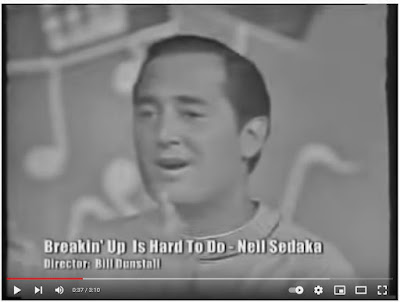
Facebook is down world-wide this morning, so while you’re anxiously waiting for it to come back up so you can jump back into PrattleSpace, here to cheer you up is Neil Sedaka


A Day Without Facebook. It seems almost impossible to imagine.

Friday, October 1, 2021

Talking Shop: Eric's Writing Challenge Update 14

So, I missed last's week update entirely (more on that below). Let's jump right in with the writing challenge update.

To date, I've written approximately 68650 word toward the 87500 word goal. That puts me about 76% of the way toward the finish line. I wrote about 6250 words over the last two week. I'm not sure what the week by week breakdown was, but it works out to about 450 words per day. 

Now, for the Rinn's Run Update

Total Words Written: 75000 words (approximately)

Total Chapters completed: 35 and change

Percentage completed: Around 94% (theoretical out of 80,000)

Okay, so why did I miss last week's update and why is my word count low? I've been pushing myself pretty hard the last 5 or 6 months. There were a lot of 14-16 hour days in there, which translates to 18 hour days when you add in all the non-work stuff we all need to do. I don't take many days off, unless you count the days that migraines keep me from doing anything. Long story short, I hit a fatigue wall. Obviously, I didn't go comatose since I made progress on the book, but my body had had enough.

I spent most of last week sleeping 12, 14, sometimes 16 hours a day. As you might imagine, that pretty effectively obliterated my routines. I was operating at about 40 percent of the productivity level I was before that. This week, it was better. I'm hoping that next week will get back to something resembling normal. I'm generally of the mindset that you can power through most days with enough willpower and caffeine. That's usually true in my experience, as far as it goes. That said, there are limits to how long and hard you can push the body in the wake of a growing sleep deficit. For me, it seems that number is five or six months. Lesson learned.

On the good news front, though, I think there's a good chance I'll finish the first draft of the space opera this week. 

 _______________________________________________

Eric Dontigney is the author of the highly regarded novel, THE MIDNIGHT GROUND, as well as the Samuel Branch urban fantasy series and the short story collection, Contingency Jones: The Complete Season One. Raised in Western New York, he currently resides near Dayton, OH. You can find him haunting obscure sections of libraries, in Chinese restaurants or occasionally online at ericdontigney.com.

Wednesday, September 22, 2021

Family Matters

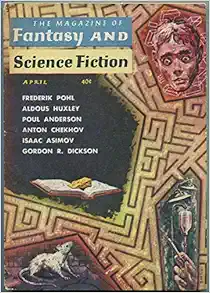
“Cyberpunk” has been much on my mind lately, or more accurately, in my face. I’ve received the usual batch of fall semester queries from students writing papers, a few more requests from various publishers seeking reprint and/or translation rights—one of which was worth taking seriously, so I did, and I’ll have more to say about that book when we get closer to the publication date—and one request from an incredibly dedicated fan who had turned up a nice clean copy of the November 1983 issue of Amazing Stories and wanted me to sign it, specifically in the white space at the top of page 94.

Oh. That means I have to look at page 94 again.

Here, for your reference, is what the top of page 94 looks like. Note the introduction that George Scithers wrote nearly 40 years ago for the original magazine publication of the story. Please read it closely.


And now, the story that some of you have heard or read before, but most probably have not. 

___________________________

I no longer remember the name of the con. It was somewhere around thirty years ago and I want to say it was a WorldCon, but I really don’t remember. What I do remember is that I was with a bunch of other mid-list, mid-life, and mid-career pros, we were in the professional SF/F writer’s natural habitat—the hotel bar—and we were having just a great old time, drinking heavily and swapping divorce horror stories. My first wife, Nancy, had just kicked me out, changed the locks, and filed for separation, and to be honest, I deserved it. In those days I was Bruce Bethke, Semi-Famous Science Fiction Writer, and I was a real jerk.

What struck me at the time was how casually everyone there took the news. It was as if it was a rite of passage, or an occupational requirement, or perhaps even a milestone on the road to success. “Okay, you’ve just sold your fifth novel. Time for your first divorce.” “Ha ha, SFWA: we put the fun in dysfunctional!” Ben Bova gave me a signed copy of his book, Survival Guide for the Suddenly Single. The then-editor of the SFWA Bulletin asked me to write an article on how to protect your intellectual property rights in a divorce. A certain editor who shall remain nameless, assuming I was broke and desperate for cash, tried to talk me into a book deal, ghostwriting for a certain well-known media personality who had a burning desire to see his name on the cover of an SF novel but no actual time to write, knowledge of writing, or discernible writing talent. It was a wonderful evening of back-slapping camaraderie.

Later, when I sobered up, it began to disturb me. It wasn’t just that being a writer seemed to be toxic to marriage and family: it was how readily the writers I knew (and at the time, being on the SFWA board of directors, I knew hundreds of successful writers) accepted this toxicity. I realized I could count on my fingers all the writers I knew who had intact first marriages and functional families. By and large my peers were women whose cats were their surrogate children; women who had had one or two children with male gametes supplied by one or more long-gone donors; men who would never get married and father children because they just didn’t swing that way; or worst of all, really successful male writers who had been married, but were now perfectly content to let their children be raised by their ex-wife’s next man. Or woman. Or whatever.

That’s when it struck me. The problem wasn’t that being a writer is somehow toxic to marriage and family. It was a matter of selection bias. My peer group was composed of divorced SF/F writers because we were all, every one of us, people who believed it was more important to our careers for us to be there, at that con, drinking with our fellow writers and editors in a hotel bar, than at home with our wives and families.

This, in turn, explained a nascent trend I at first thought I was only imagining I was seeing. The world of SF/F—at least, the social, con-going, dedicated fandom part of it—was not just family-neutral, but in the process of turning actively family-hostile. And the problem wasn’t just with passing trends in genre fiction, or the idiosyncrasies of the current batch of editors who bought it, or the greedy bastard publishers who printed it. The problem was the writers.

¤

It was too late to save my first marriage. The best I could hope for was to try to have a good post-marriage for the sake of my daughters. Later I remarried, and added a step-son and another son to the family. I worked—really worked—at being a good husband and father, and quit going to cons, unless I could go with my family. The last major con we went to was Dragon Con, and we went as a family.

Emily would have loved Dragon Con. She grew up to be a costumer, a crafter, and a devoted fan of all things Harry Potter. We lost Emily in late September of 2009—suddenly, from a natural cause that was undiagnosed, unpredictable, unpreventable, and apparently had been waiting years for the opportunity to kill her.

People often ask why I don’t try to put together a complete collection of all my short stories from the 1980s and 1990s. That photo at the top of this column is the reason. Whenever I try to do it, I get as far as the introduction George Scithers wrote for the original magazine publication of “Cyberpunk” and then I grind to a stop. Other people look at my publication credits and see a bunch of short stories, some of them pretty good, some Nebula-nominated, some even world famous. What I see is all the time I stole from my daughters’ childhoods and all the damage I did to my first marriage, chasing the mirage of being Bruce Bethke, Semi-Famous Science Fiction Writer.

¤


A few people know that in 2010, when we went to Dragon Con, it was between the time Karen (my second wife) was diagnosed with breast cancer and the first round of what’s turned out to be an eleven-year odyssey of surgery, chemotherapy, radiation treatments, and then more of the same. Karen has beaten the odds so far: when she was first diagnosed she was told to expect that she had two more years, five tops, and eleven years later she’s still here and still in the fight.

What even fewer people have known until recently is that in December of 2012, my first wife, Nancy, was diagnosed with renal cell carcinoma. After a five-and-a-half year battle, she left this world in August of 2018.

For those of you who have asked why I don’t go to WorldCon anymore or why I really don’t give a crap about any of the many cat-fights and pissing contests that are forever going on inside the world of SF/F writing and fandom: seriously, are you kidding? You think that stuff is important?

¤


Thirty-eight years later, we know some of the answers to the questions George Scithers posed in his introduction to “Cyberpunk.” Nancy and Emily now sleep for eternity, side-by-side in a small churchyard cemetery in rural Minnesota.

As for me? You can’t fix yesterday. But you can learn from experience, and try to pass on what you have learned.

This was my experience. Learn from it.


Monday, September 20, 2021

A View from the Geek: Do Your Own Research Vs. Do Your Research • By Eric Dontigney

As a fiction writer, you must strive for verisimilitude. It’s the gold standard, that appearance of or resemblance to truth or reality. It’s even more important when you delve into speculative fiction. The more outrageous the story you plan to tell, in terms of breaks from understood physics, the more time you must spend grounding and cloaking the rest of the story in the garments of truth. It’s why writers spend so much time on the details. Mind you, they don’t need to be familiar details. Science fiction and fantasy thrive on building new worlds. The catch is that the details must make sense. They must be consistent.

Maybe it’s all the years of striving for verisimilitude in my fiction. Maybe I just had better-than-average teachers. Maybe it was all those years studying philosophy with its unusually rigorous demands for arguments that make sense. Maybe it’s all of those things that make me want to do physical violence on people when I see the phrase, “Do your own research,” bandied about on the Internet. It would take more words and space than is practical here to unpack everything that underlies that phrase, so I’m just going to hit the highlights.

The underlying assumption of that phrase is that you cannot trust the things that so-called authorities tell you. At best, those authorities are misguided. At worst, they’re actively engaged in a national or even global conspiracy to deceive you into doing something that is not in your best interest.

And people say that speculative fiction writers push the edges of plausibility. Let’s pause and consider how well people keep little secrets. On the whole, people who aren’t sociopaths are terrible at it. It’s routinely obvious when someone is keeping a secret, even if you don’t know about exactly what. Half the time, the person keeping the secret winds up telling someone else the secret and then swearing that person to secrecy. Considering how well person one kept that secret, it’s sort of baffling that they think person two will do a better job. These are for small, non-dangerous secrets.

So, let’s consider how likely it really is that the employees of the 200 or so governments in the world are successfully keeping a conspiracy under their hats. How likely is it that every last one of those millions of people is actively lying to everyone they know on daily basis and doing it successfully? How likely is it really that not a single one of those people have been struck by a crisis of conscience and released definitive evidence of the conspiracy to a news outlet? Yeah, it’s about as likely as you winning the lottery. Actually, you have about a one in fourteen million chance of winning the lotto on average. On balance, you probably have better odds of winning the lotto than the odds of a global conspiracy being kept secret for any length of time.

Setting aside that there is about zero chance of a global conspiracy staying secret, let’s look at how you’re supposed to deal with these lying conspiratorial authorities.

The apparent explicit cure to this problem is to “do your own research.” Yet, no one really digs into what that entails. Let’s take something like, oh, I don’t know, vaccinations against a global pandemic as our case in point. How does one “do their own research” about vaccinations for a global pandemic? I don’t have a multimillion-dollar laboratory at my disposal. Do you? I also don’t have a Ph.D. in biology, chemistry, biochemistry, or an MD. So, even if I did own a private laboratory by some fluke, I wouldn’t know what to do with it. I wouldn’t know how to test vaccines or how to interpret the results if, by some science magic, those results simply appeared. I have zero expertise in epidemiology. So, I have no way to correlate the result I do not have, from research I cannot conduct, in the expensive laboratory I do not own to said pandemic.

Of course, the “do your own research” crowd doesn’t actually mean that you should do your own research. What they mean is that you should go out and find a source, any source, no matter how unreliable that source, that confirms your existing position. That is not doing your own research. That’s nothing more than proactively confirming your assumptions.

Doing your research means that you find reliable sources. In our society, that generally means you rely on the actual research conducted by people who are actual experts in their fields. Yes, that does put you on somewhat shaky ground in terms of pure logic. Relying on expert opinions is a logical fallacy known as appeal to authority, but it’s the best we can do until everyone can master every subject. No, your high school and/or college biology and chemistry classes do not make you an expert on things like vaccinations…unless you’re an actual biologist or chemist or doctor engaged in vaccination research. But, if that’s the case, you’ve become an authority and we’re all bickering about how you either are or aren’t a sadistic conspirator trying to wiretap our brains with the nanotechnology you’ve embedded in those dastardly vaccinations. (Yes, it hurt my soul to write that last sentence.)

“What about when there’s dissenting research?” Screeches someone from the slathering horde. “That’s proof, PROOF, that the authorities are lying!” 

Yeah, it’s not. Science and medicine don’t operate in the realm of absolute, unassailable truth. That’s philosophy. Specifically, it’s a reference to the ideas of Platonic realism that assert that there are pure forms of things that exist in some abstract realm. These Platonic forms, assuming they exist at all, are absolute, unassailable truth. They are the thing perfected, but only as an abstract idea. Contravening research certainly doesn’t carry the weight of a priori knowledge that you can demonstrate as true sans any reference to experience and through logic alone. Science and medicine are a posteriori ventures. They literally accumulate knowledge through experience. They investigate the observed effect to determine the cause. It’s imperfect, but not insidious on the whole. 

That means that when there is dissenting research, you must weigh that research against the whole body of similar research. If 99% of the research performed with good experimental controls all come up with similar conclusions, that dissenting research is probably wrong or accidentally measuring an aberration. That’s what doing your research looks like. It means you listen to what the actual experts on a topic say. You consider the weight of evidence supporting their claims. Then you act on the best information available. Taking that 1% of research as proof that everyone else is lying doesn’t make you smart, or a rebel, or dedicated to freedom. It’s just evidence of ignorance.

  _______________________________________________

Eric Dontigney is the author of the highly regarded novel, THE MIDNIGHT GROUND, as well as the Samuel Branch urban fantasy series and the short story collection, Contingency Jones: The Complete Season One. Raised in Western New York, he currently resides near Dayton, OH. You can find him haunting obscure sections of libraries, in Chinese restaurants or occasionally online at ericdontigney.com.


Sunday, September 19, 2021

Talking Shop: Eric's Writing Challenge Update 13

So, I meant to do this Friday and got caught up doing the work that pays the bills. Then, I meant to do this yesterday and got caught up doing the work that pays the bills and working on the book. So, here is the update. Better late than never.

Let's start with the writing challenge.

To date, I've written about 60,400 words toward the end goal of 87,500. That puts me about 69% of the way there. I wrote about 4,000 words this last week, which works out to about 571 words a day across 7 days. 

Now for the Rinn's Run Update.

Total words written: 68,750 (approximately)

Total Chapters completed: 33 (almost 34)

Percentage complete: Around 91%

Things got more or less back to normal this last week in terms of the writing. I didn't write as much as I wanted to, but that happens. Sometimes, you just have to buckle on the day job stuff. That was last week for me. On the good side, I didn't need to backtrack again. (Yay!) I'm moving part one along toward it's conclusion. It may come in a bit over 75,000 words, but shouldn't exceed 80,000. I figure that by the time it goes through editing, it'll be back down in the 70,000 to 75,000 words range. If all goes semi-according to plan, I think the first draft will be complete this week.