Showing posts with label writing theory. Show all posts

Monday, February 13, 2023

RFP: Big Ideas in Science Fiction

CALL FOR SUBMISSIONS.

There, that ought to get your attention. Actually, this is a Request For Proposals, or if you prefer, Pitches. As we work to reanimate Stupefying Stories, one thing I’ve been pleased with and would like to develop further has been Guy Stewart’s series of non-fiction posts on topics like Creating Alien Aliens and Mining the Asteroids and the like. For as long as I’ve been in this business—and that’s been nearly 50 years now—science fiction has always claimed to be “the literature of ideas.” It purports to be the one field of literary endeavor that is unafraid to examine the big ideas about science and the future of humanity, to ask the questions no one else dares to ask, to present the most dangerous visions, to boldly go—

When I look at what’s being published, though, the genre as a whole seems to come up way short of its stated ambition. (And don’t even get me started on the evident paucity of imagination in video-media SF.) Considered more dispassionately, print-media science fiction might more honestly be described as “the literature of tropes,” stuck in a ±40-year time loop between the Astounding of the late 1930s and the Asimov’s of the early 1980s, churning back and forth through the same old ideas with only very slight variations with each new iteration. Robots, aliens, space ships, utopia, dystopia, more robots, weirder aliens, better spaceships, lather, rinse, repeat… Except for steampunk, which began as a Great Leap Backward to reboot the genre all over again with Jules Verne but ended up producing only another tired and clichéd fashion motif for cosplayers.

As it happens, in addition to science fiction, I also read Science News. And the further we progress into the real future while simultaneously retrogressing back to John Campbell in our entertainment, the more it bothers me that the gap between science fiction writers and real science is becoming an unbridgeable chasm.

Perhaps this is a stupid idea. Perhaps the denizens of SF fandom will be happier, and thus we will be better paid for our work, if we stick to recapitulating ideas that were already old when they were adapted to become Star Trek scripts in the 1960s. Another dispassionate look at the realities of the current SF marketplace would seem to support that assertion. But seriously, is this all modern science fiction has to offer? Remakes of what was successful in the past, only with slight variations to suit the conceits of the contemporary audience?

Hence this RFP. I would like to start running a weekly series of short* but fairly serious think pieces examining the conceits and assumptions that underlie our genre, with an eye towards what still works, what desperately needs to be updated or replaced, and which honored old tropes of the genre should be taken out to the edge of the camp, shot, beheaded, their corpses burned, and the ashes buried in unmarked graves, to ensure that they never rise to trouble the living again.

Does this sound like something you’d like to be a part of? I’m not looking for finished articles now, just pitches for what you might like to write about. If you have an idea, drop me a line at stupefyingstories@gmail.com. Target length and payment rates are TBD at present, as I’m still trying to gauge the level of interest in this concept. 

Introspection is a scary thing, I know, but I sure hope there is more to this genre than the same old $#!+. I don’t want to be publishing stories about @#*($&*ing crashed flying saucers forever. Even if the USAF is shooting down UFOs over Lake Huron right now.


* Target length is a real issue. While I’m inclined to equate serious thinking with longer articles, here in ADHD World, anything over 250 words long seems to seriously tax the readers’ attention span. Is that also part of the problem? Modern readers can’t stay focused long enough for the writer to develop a new idea and a coherent argument, so we skip to recycling old tropes and writing in cinematic shorthand? E.g.,

[EXTERIOR, DAYLIGHT, BLUE SKY, SCATTERED CLOUDS: An F-22 Raptor sweeps into view. Zoom in on the pilot, USAF Captain Melissa Strongwill (she/her), who is intently staring ahead. Cut to 3/4 view from behind her, showing what she's seeing.]

STRONGWILL: I have a solid radar lock.

CONTROL: (crackly voice over radio) Weapons free. You are cleared to engage.

STRONGWILL: Fox One!

[Missile streaks out from F-22, impacts briefly glimpsed octagonal UFO, big explosion, UFO veers down and right, trailing smoke and obviously out of control.]

STRONGWILL: Got it! The target is going down! Repeat, the target is going down!

CONTROL: That’s confirmed. We’re tracking it. It’s going to splash about ten miles offshore. The Coast Guard has been alerted.

[etc., etc., proceed with Standard Plot #7. UFO crashes, sole occupant is rescued and imprisoned in secure facility, STRONGWILL is brought in to meet and interview alien, comes to realize that this was all a terrible mistake, the alien is humanoid, intelligent, peaceful, ambiguously gendered but very beautiful in an exotic way, STRONGWILL helps alien escape, engages in a mix of fish-out-of-water comedy, rom-com misunderstandings, chase scenes with menacing men-in-black type agents, in thrilling final reel chase scene helps alien make rendezvous with rescue craft and escape in the nick of time, and is left standing in a wheat field, pining for the hermaphroditic pansexual alien who has won her heart and opened her mind, while the MIB agents watch helplessly as the craft soars away.]

AGENT: (talking into radio) The alien got away. (radio garble) Captain Strongwill? Yes, we caught her.


STRONGWILL: (turns around to face agent) (in voice that's almost a growl) My pronouns... are they and them.

[MUSIC UP: David Bowie, "Starman"]

[ROLL CREDITS]

C’mon, admit it. Haven’t you already paid to see this movie at least three times? Wouldn’t you pay to see it again, if this time the script played up the alien’s gender fluidity and wry amusement at “primitive” human sexual morality?


Monday, August 1, 2022

Talking Shop: The Fourth Wall • By Eric Dontigney

Most people are familiar with the concept of the fourth wall, even if they don’t recognize it by name. It’s essentially a convention of performances (theater, television, and film) that an invisible wall exists between the audience and the performers. The audience can see through this wall, allowing them to participate vicariously in the action, but the characters remain unaware of the audience, thereby preserving the integrity of the false reality they inhabit. While violations of this rule are fairly common in ancient Greek theater right on up through Shakespeare (Hamlet’s soliloquy, anyone?), the practice of breaking this fourth wall fell out of favor starting in the 19th century and throughout the 20th century. It is also, not surprisingly, a basic convention of fiction writing.

There are some notable exceptions. Deadpool is one high-profile example of a character who not only addressed the audience (often for comic value) but is also full cognizant that he is a fictional character occupying a fictional universe both in the comics and onscreen. Bugs Bunny, Monty Python, and the British and American incarnations of House of Cards, all deploy violations of the fourth wall to varying degrees of effectiveness. You even see it in literature with The Princess Bride as a prime example. Terry Pratchett arguably violated the fourth wall with his footnotes in the Discworld books, although that’s a gray area. Readers could theoretically ignore the footnotes to avoid interrupting the narrative. On the whole, though, it’s a rule that most writers adhere to without giving it much thought. Why? Is there a good reason to avoid breaking the fourth wall?

There is at least one good reason to avoid breaking the fourth wall: the delicacy of suspension of disbelief. Even in visual media, where verisimilitude is arguably easier to achieve, it doesn’t take much to break suspension of disbelief. You only need one character to do something or use something that doesn’t fit with the established reality to bring the whole house of cards tumbling down. Maintaining it with books or short stories is, in theory, even harder because the connection between the narrative and the audience is carried on the much more tenuous thread of naked text. Shatter that suspension of disbelief and there is a good chance that the reader will simply put the book down in favor of something easier or more immediate, like surfing the Internet or updating their social media profiles.

Beyond that basic concern, there is also a practical element for the author. Violating the fourth wall means that the author must disengage from the existing narrative while writing to put in that authorial aside. Some authors may find it simple to dive right back into the narrative, but other writers may struggle to reacquire whatever flow they achieved while working on the narrative in the first place. Given that breaking the fourth wall generally provides only limited value, it makes sense that authors typically avoid it on principle.

So, is there ever a time when violating the fourth wall does make sense? There are a handful of times when this tactic can make sense and provide some value. Books written in the first person (a common conceit in genres like urban fantasy and mystery novels) tolerate breaking the fourth wall pretty well. The reader accepts that the story is being related after the fact in some fashion. A detective may be preparing case notes or a magical hero might be relating the tale in some manner of journal. The exact method of the retelling isn’t usually made explicit, but that it is a retelling underpins the first-person approach. That allows the narrator to address the reader without necessarily acknowledging the reader. The hero is only explicitly addressing whatever in-universe audience they expect to hear or read the recounting. That allows the narrator to break from the retelling momentarily to, for example, challenge the in-universe audience member and reader by proxy to try something if they think it sounds easy.

The only other time it really works and provides value is when it’s an established element of the storytelling from the outset, à la Terry Pratchett’s footnotes. This is a more dangerous move because, frankly, you risk alienating readers who expect a more traditional narrative approach. It can work, but you should go into that approach with the expectation that you’ll get pushback from some readers. On the whole, though, your best bet is to reserve breaking the fourth wall for narrative situations that tolerate it well, such as the first-person narrative.

________________

Stupefying Stories is supported by the generosity of readers like you. If you appreciate the kind of programming we’re bringing you, please show it by clicking this link or the button below to make a donation today. All major credit cards are accepted, and all donations go directly towards paying the authors and artists who create the content that you’re enjoying on this site. Literally, all donations go straight into the PayPal account from which we pay our authors and artists.

 __________________________________________________

Eric Dontigney is the author of the highly regarded novel, THE MIDNIGHT GROUND, as well as the Samuel Branch urban fantasy series and the short story collection, Contingency Jones: The Complete Season One. Raised in Western New York, he currently resides near Dayton, OH. You can find him haunting obscure sections of libraries, in Chinese restaurants or occasionally online at ericdontigney.com.


SHAMELESS ADVERT: If you like Harry Dresden or John Constantine, you’ll love THE MIDNIGHT GROUND. READ IT NOW!


Thursday, April 21, 2022

Tips from a Pro: Eric Dontigney - The Writer’s Mindset

It’s an odd sort of thing to think of oneself as a professional in the world of writing. There are few, if any, clear lines of demarcation. After all, consider all the novelists who moonlight as college professors, lawyers, or scientists…wait, maybe I’ve got that relationship inverted. Oh well. The point is that it’s hard to know when you’re a pro. Writers don’t really get licenses or certifications the way you see in other professions. Frankly, that’s a real problem in the credential societies that most developed world countries have become. 

At best, you get writing adjacent certifications. Copywriters can take courses around certain kinds of writing or skills that support their writing. Maybe you head over to HubSpot Academy and get certified in their Content Marketing course. For speculative fiction writers, maybe you try to snag a spot in one of the big workshops, like Clarion, Taos ToolBox, Gotham Writers’ Workshop, or Odyssey. If you love capital L literature, you get yourself an MFA at the low, low price of lifelong debt. 

Yet, none of these degrees, certifications, or workshops actually make you a professional writer. They might help you skill up in certain ways, and there is value in that. Honing your craft is part of the process. But…but, the primary difference between the amateur and professional writer is what I think of as the Writer’s Mindset. There isn’t anything mystical or magical about the writer’s mindset. You don’t need a guru to get there. You don’t even need to firewalk to get it. In fact, it’s almost hideously mundane. 

The Writer’s Mindset is about treating your writing career as a career. It involves annoying things like going to work every day. You must check your email and reply to clients or editors in a prompt manner. You meet deadlines. I know, I know, that sounds a lot like work and almost nothing like that Romantic Ideal of sitting around on a couch and waiting for the muses to strike you with brilliance. Yet, if you look at people who make a successful go at writing for a living, in any area of writing, this is how they handle their business. 

Stephen King talks about it in his memoir, On Writing, with his 2000 words per day goal. Kevin J. Anderson, the author of something like 150 books, advises people to not make excuses and get on with the writing. David Badalucci talks about setting goals and developing good habits, like blocking out time every day for writing. In other words, professional writers don’t treat their writing like a hobby. As a general rule, people take time for their hobbies. They make time for their careers. You can blow off your hobby as often as you want, but you can’t blow off your job very often before you won’t have it anymore. 

Feeling discouraged, yet? If not, good for you. It means you’re at least open to the idea that writing professionally is work, and you’ll have to make some sacrifices along the way. If you are feeling discouraged, it means you probably bought into some of that Romantic Ideal thinking, but all hope is not lost. You can adapt how you think about things. That’s the miracle of neural plasticity at work. Of course, I’ve been talking about all of this in general terms. I can hear you saying, “Great generalizations. But give us specifics, Dontigney!”

Okay, that’s fair. Here are some specifics that can help you adopt the Writer’s Mindset. 

  1. You must set a writing schedule.
  2. You must keep to your writing schedule, barring a genuine emergency. I’m talking blood spurting, house on fire, we must go to the bomb shelter because bombs are literally falling from the sky right now, kinds of emergencies. The kind of emergencies that you would leave a day job to go handle. If it doesn’t rise to that level, it’s probably an excuse. 
  3. The phrase “writer’s block” must leave your vocabulary. Every other kind of professional does their job on demand, which means that you can as well. 
  4. You must investigate your industry. This is for fiction writers, so think things like agent preferences, editor preferences, and industry trends. This information may not alter your current writing projects, but it may inform subsequent projects.
  5. If you get a (reasonable) deadline from an editor, meet it. Meeting deadlines makes you the “no-hassle” writer. People like working with the “no-hassle” writer. Nobody likes working with a prima donna. (Caveat: this does not apply to film-to-book adaptations. Read about Bruce’s experience with that here.)
  6. Accept that not every writing day is going to be fun. It will feel like work sometimes, maybe often, and you need to keep doing it anyway. 

Now, mind you, this advice is aimed specifically at people who want writing as a career. It’s okay to treat writing as a hobby. A lot of people do. The tradeoff you make with that choice is that very few people ever manage to make a living at their hobby. Making the transition means incorporating some of the less pleasant aspects of day jobs into what was your cool, fun hobby. If you can come to terms with that, you have a shot at becoming a professional writer. 

__________________________________________________

Eric Dontigney is the author of the highly regarded novel, THE MIDNIGHT GROUND, as well as the Samuel Branch urban fantasy series and the short story collection, Contingency Jones: The Complete Season One. Raised in Western New York, he currently resides near Dayton, OH. You can find him haunting obscure sections of libraries, in Chinese restaurants or occasionally online at ericdontigney.com.


SHAMELESS ADVERT: If you like Harry Dresden or John Constantine, you’ll love THE MIDNIGHT GROUND. READ IT NOW!

Friday, November 19, 2021

Talking Shop: Turning Bad Ideas into Good Ones • By Eric Dontigney

Yesterday’s post focused on what geek queen Felicia Day refers to as “chocolate fountain” people. That is, creative types for whom ideas flow like a chocolate fountain. For those people, the problem is never having or coming up with ideas, it’s sorting out the really good ideas from the not-so-great ideas. What about people who don’t have that idea machine in their brain? What if you’re one of those people for whom the very occasional idea is the only idea you get? If you can’t count on a steady stream of ideas and the one idea you do have isn’t awesome, what’s the next step? In other words, can you turn bad ideas into good ones?

The good news is that, yes, you largely can turn not-so-great ideas into better ones. Case in point. Legend has it that Jim Butcher’s Codex Alera books started out life as a challenge that he could write a good book from two bad ideas. The bad ideas were Pokemon and the mythical Roman Lost Legion. For anyone who hasn’t read the books, here’s a very brief precis.

The books follow Tavi, a young man raised on a farm in the hinterlands of a very Roman Empire-esque society. The people of Alera (a major continent on the alien world of Carna) bond with furies – elemental spirits – that grant them magical powers. As Tavi grows, he becomes more deeply enmeshed in the political strife afflicting the Aleran Empire.

On the surface, this sounds like a textbook coming-of-age fantasy series. So, what did Butcher do to elevate the bad ideas into something more interesting? First things first, he made Tavi the only person in all of Alera who didn’t have a Pokefury. This let him make his main character a natural outsider and something of a freak in the eyes of the rest of society. That allows for the main character to provide an audience-friendly perspective on the culture.

It also creates lots of ground for character development across the books. The main character simply faces challenges that no one else faces. For example, if everyone else uses fury-magic to turn on the lights, what is your lead character supposed to do? How does the main character handle conflict if the standard method of settling disputes is a Pokefury fight? What kind of occupation can he have if all occupations rely on Pokefury magic?

Next, Butcher built a world that had some conflict designed into it. Since this is based on the Lost Legion, the Alerans are transplants to this alien world. They had to displace someone when they arrived. That gave Butcher some history to weave into the story. There are still extant native species on the planet. They don’t necessarily love the Alerans. This sets the stage for either low-level or higher-order military conflict.

By doing all of that, Butcher gave himself a lot of advantages in turning a couple of ho-hum ideas into a story that people would want to read. How can you do the same with your speculative fiction idea?

“What if” questions are your friend. What if I gave my main character a real or perceived major flaw? What if I change the setting? What if I make the bad guys superhuman or supernatural? What if I make the bad guys sympathetic? What if I make the good guys less sympathetic?

The answers to those what-if questions prompt more and more specific questions. What if I make the bad guys sympathetic prompts questions like:

  • How do I make them more sympathetic?
  • How do those sympathetic features alter their culture/society?
  • How do those sympathetic features alter their interactions with the main characters?

Now, look at the question of what if I make the good guys less sympathetic. That prompts questions like:

  • Can the good guys instill loyalty in the main character?
  • How far will that loyalty really go?
  • What factors might prompt an apparent betrayal by the main character?

The big takeaway here is that the devil is in the details. The more questions you ask about the characters, culture, good guys, and bad guys, the more details you get to work with in the story. By the time you get done mixing and matching those pieces, you’ll often find that your not-great idea has turned into something much more interesting.

__________________________________________________

Eric Dontigney is the author of the highly regarded novel, THE MIDNIGHT GROUND, as well as the Samuel Branch urban fantasy series and the short story collection, Contingency Jones: The Complete Season One. Raised in Western New York, he currently resides near Dayton, OH. You can find him haunting obscure sections of libraries, in Chinese restaurants or occasionally online at ericdontigney.com.


SHAMELESS ADVERT: If you like Harry Dresden or John Constantine, you’ll love THE MIDNIGHT GROUND. READ IT NOW!

Wednesday, November 10, 2021

Re: Point of View • by Bruce Bethke


This may come as a surprise, but I still study the craft of writing. 

I am… many years old. My work has been published professionally in a wide variety of venues since the 1970s. I have seen my work hit the bestseller lists and be nominated for and win awards for decades.

Yet I still study the craft. In part it’s to understand why I do the things I instinctively choose to do when I write. In part it’s to learn how to write better. Some writers have careers like ballistic missiles: they launch with great initial noise and excitement and then are content to coast along on a parabolic trajectory, repeating their crowd-pleasing shticks and tricks for as long as they can, until at the ends their careers they come crashing down and leave nothing but a smoking crater with bits of wreckage scattered all about.

Me, I’m always hoping to take my writing up to the next level. 

One thing I have struggled with in my own stories is the point of view. I have written and sold stories in both first-person and third-person p.o.v.—and second-person, too, come to think of it—but my most natural storytelling voice is first-person. I attribute this to my storytelling method. When I tell a story, I’m not me, telling the story in my voice. I’m performing a character, and telling the story in his voice.

While this seems to work for me—I’ve sold and seen published most of the stories I’ve written this way—I also feel this is a limitation. Most really successful fiction is written in third-person, and something I read recently suggested the reason for this. When you read a story written in first-person, one of the all-time great factors contributing to plot tension is removed from the equation. With first-person, you know the p.o.v. character survives to the end. The story then becomes about the p.o.v. character’s interaction with someone else, which immediately puts the reader two steps removed from any possible source of really strong emotional engagement.

Does this matter? The book I was reading suggested a test. Take a scene you’ve written in first-person and rewrite it in third-person (and in past tense, if needed). Then compare the two versions and ask yourself, as a reader, which scene has more energy?

For this exercise, I intentionally chose the opening scene from one of the most languid stories I’ve ever written, “Life in a Drop of Pond Water.” The original version and the rewrite follow. 

______________________

Original:

Shafts of long afternoon sunlight spear through the water, illuminating my world with a thousand delicate shades of green and amber. A school of gambusias glide past, oblivious to my presence, and shatter the sunlight into a glorious blizzard of mirror shards and sparkles. Floating just beneath the surface, I patiently wait for the minnows to leave, then return my watchful gaze to my tribe, as they browse among the sweet hyacinths and follow the weedy contours down into the safe, dark depths. My smiling face, the fixed expression of our kind, hides the scheming mind of a worried patriarch.

It does not help that my mind is haunted by distant and surreal memories of life on the land.

With no sense of urgency, I feel the need to breathe again and give my flukes a twitch. Face breaks surface: I draw deep, rasping breaths, the sunlight blinding my eyes, the raw air burning the delicate linings of my nostrils. Each time I break surface I hope that this is the time my instincts will drive me to submerge. And each time, I linger.

For here, at the surface, I can almost believe that I was once a human. For a few precious minutes, I can shrug aside the worries of a people and consider the colossal arrogance of one Dr. Eugene Meier, Professor of Mammalian Recombinetics, who so loved his creatures that he took their form upon himself and went down among them. And yet, not fully trusting his handiwork, he held back his truest self: When the memories get too strong, I must force myself to admit that I am not Eugene Meier and I have never been human. I am a thing of his construction: a modified manatee whose skull is threaded through with wires, filaments, and electronic pieces; a unique, living mind enslaved by his personality software construct. At some deep, primal level, I still remember life as an innocent beast, and I resent the fear and doubt that he has burned into my mind.

Still, if it did not augur such great danger for my people, I would find it amusing that the human who shares my memories now walks the shores of this pond, observing us and noting the details he wants to change in the next generation…

______________________


Rewrite:

Shafts of long afternoon sunlight speared through the water, illuminating Eugene’s world with a thousand delicate shades of green and amber. A school of gambusias flowed past, oblivious to his presence, and shattered the sunlight into a glorious blizzard of mirror shards and sparkles. Floating just beneath the surface, Eugene waited patiently for the minnows to leave, then returned his watchful gaze to his tribe, as they browsed among the sweet hyacinths and followed the weedy contours down into the safe, dark depths. His smiling face, the fixed expression of his kind, hid the scheming mind of a worried patriarch.

It did not help that his mind was haunted by distant and surreal memories of life on the land.

With no sense of urgency, Eugene felt the need to breathe again and gave his flukes a twitch. His face broke the surface: he drew deep, rasping breaths, the sunlight blinding his eyes, the raw air burning the delicate linings of his nostrils. Each time he broke the surface he hoped that this would be the time his instincts drove him to submerge. And each time, he lingered.

For here, at the surface, he could almost believe he was once human. For a few precious minutes, he could shrug aside the worries of a people and consider the colossal arrogance of one Dr. Eugene Meier, Professor of Mammalian Recombinetics, who so loved his creatures that he took their form upon himself and went down among them—and yet, not fully trusting his handiwork, he’d held back his truest self. When the memories got too strong Eugene forced himself to admit that he was not Dr. Meier and had never been human. He was a thing of Dr. Meier’s construction: a modified manatee whose skull was threaded through with wires, filaments, and electronic pieces; a unique, living mind enslaved by Dr. Meier’s personality software construct. At some deep, primal level, he still remembered life as an innocent beast, and he resented the fear and doubt that Dr. Meier had burned into his mind.

Still, if it did not augur such great danger for his people, Eugene would have found it amusing that the human who shared his memories now walked the shores of this pond, observing his creations and noting the details he wanted to change in the next generation…

______________________

Questions for Discussion: 

  1. Does the change from first-person present-tense to third-person past-tense improve the flow of the story?

  2. Does the stronger differentiation between Eugene and Dr. Meier foreshadow a possible conflict between the two? Does it increase the sense of potential risk to Eugene?

  3. If you were reading this in print and the last paragraph fell at the bottom of the page, which version makes you more interested in turning the page to find out what happens next? 

Submitted for your consideration,
~brb

Monday, October 11, 2021

Exploring An Old, Old Story…Daniel Keyes and “Flowers for Algernon” by Guy Stewart

I tripped down memory lane this week reading ALGERNON, CHARLIE, AND I by Daniel Keyes…

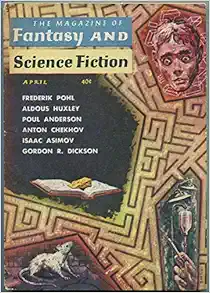
I was in junior high when our class read a version of this story written as a play. Honestly? The story did something to my head and I never forgot it after that. I read it as the Hugo-winning novelette much, much later. I’d like to see if I can get this issue of F&SF, but we’ll see. I’ve been collecting too many books and stuff lately!

At any rate, I’ve even gone so far as to write a contemporary, middle-grade novel with a similar theme, though updated. THE RECONSTRUCTION OF MAI LI HASTINGS is about a young teen who helps his mother with his adopted sister, a developmentally disabled young adult who can do nothing for herself.

While all of my brothers and my sister were born in possession of all of the faculties our Human society recognizes as normal, I spent two years working in a facility that “…follows a person-centered, active support approach to ensure that the individuals with disabilities we serve have a hand in directing their services and a voice concerning their future. We place no limits on what a person is capable of accomplishing.”

I worked as a regular caregiver and eventually became a supervisor of the night shift. As a regular caregiver, I was responsible for eight residents – everything from assisting with daily life skills to doing their laundry. As a supervisor, I was required to be familiar with the entire facility’s 32 residents because I was required to do the job of caregiver for any one of the four units if a regular called in sick.

I took my experiences there, my job as a middle school teacher, and my science education, and wrote the novel. I wanted to look at Charlie Gordon’s story from a different angle – the sibling, CJ, of a kid who needed full-time care, who was Mai Li, when she was home; and who went to a day-program when she wasn’t at home.

Before working in the facility, I’d also been certified as a Nursing Assistant and had worked part time as a nurse’s assistant at a nursing home.

All of those observations poured into THE RECONSTRUCTION OF MAI LI HASTINGS.

After reading ALGERNON, CHARLIE, AND ME, I think I know why I wrote my story. “Flowers for Algernon” was last reprinted in February of 2018, in an admittedly obscure volume called The Science Fiction Hall of Fame, Volume One, 1929-1964. Your average adolescent isn’t going to pick that volume up and “discover” Daniel Keyes’ story.

Also, recent developments in neuroscience surfaced in late 1999 when Keyes stumbled across an article by Dr. Joe Z. Tsien (then at Princeton), who had genetically engineered a “smart” mouse. The concept, while different, was remarkably like what the doctors in Keyes’ story did to Algernon, the eponymous mouse in the short story. The mouse’s surgery led to the same kind of surgery being performed on Charlie.

Of course, it was successful in the novelette and novel. But it has also been done in mice in reality…The question I have is if Tsien ever read “Flowers for Algernon”. While the article doesn’t mention it, I DO note that Tsien got his doctorate about ten miles from where I’m writing this – the University of Minnesota – Twin Cities; and we’re a pretty big SciFi and Fantasy community with some big names coming from here – including one of my all-time favorites, Clifford D. Simak, Poul Anderson, as well as Gordon R. Dickson, and more recently, Patricia Wrede, Lois McMaster Bujold, and Emma Bull among others, including four prominent Black speculative fiction authors: DC Edwards, Briana Lawrence, Marlon James, and André M. Carrington.

Who knows, maybe someone in Tsien’s doctoral program said, “Hey, you ever read ‘Flowers for Algernon’?”

In ALGERNON, CHARLIE, AND I, Keyes wrote, “I write in hope that, long after I’m gone, my stories and books, like pebbles dropped into waters, will continue to spread in widening circles and touch other minds. Possibly other minds in conflict with themselves.” Yep, I like that. Those might be good words to adopt for myself – and a good sketch of a target I can aim at.

Reference: https://en.wikipedia.org/wiki/Joe_Z._Tsien, https://twincitiesgeek.com/2020/02/4-minnesota-sci-fi-and-fantasy-books-by-black-authors-for-black-history-month/

_____________________

Guy Stewart 
is a husband supporting his wife who is a multi-year breast cancer survivor; a father, father-in-law, grandfather, foster father, friend, writer, and recently retired teacher and school counselor who maintains a writing blog by the name of POSSIBLY IRRITATING ESSAYS (https://faithandsciencefiction.blogspot.com/) where he showcases his opinion and offers his writing up for comment. He has 72 stories, articles, reviews, and one musical script to his credit, and the list still includes one book! He also maintains GUY'S GOTTA TALK ABOUT BREAST CANCER & ALZHEIMER'S, where he shares his thoughts and translates research papers into everyday language. In his spare time, he herds cats and a rescued dog, helps keep a house, and loves to bike, walk, and camp.

Friday, July 23, 2021

Talking Shop: Producing Good Writing • By Eric Dontigney

Photo by fauxels from Pexels
Good writing is one of those topics that comes up a lot in relation to books and especially among writers, yet remains one of the more ineffable goals of the craft. I always think of Supreme Court Justice Potter Stewart’s famous declaration about pornography that “I know it when I see it” as the general standard for good writing for most people. Of course, it’s not nearly as simple as that. Brilliant writing truly is ineffable. There is a quality about it that transcends the trappings of whatever genre a piece of writing happens to find itself in.

Charles Dickens’ A Christmas Carol falls into that category. Depending on which edition you have on hand, it only runs about 100 pages. Yet, its ongoing impact is almost incalculable. It has been performed in theaters almost continuously for the better part of the last 60 years. It has been adapted for live-action films around 20 times and animated features around 8 times. It’s been adapted for live-action television 22 times and animated television 9 or 10 times. It’s had four opera adaptations and two ballet adaptations. Who knows how many radio adaptations there have been over the decades.

Just a few of the luminaries of stage and screen who took on roles in these many and sundry performances include Sir Laurence Olivier, George C. Scott, Orson Welles, Basil Rathbone, Jonathan Winters, James Earl Jones, Sir Patrick Stewart, Sir Alec Guinness, Mark Gatiss, and Albert Finney. While you might not recognize all of those names, you probably recognize many of them as film, stage, or TV heavyweights of the past or present. It’s a list that includes people who have won Oscars, BAFTA awards, Grammy awards, Tony awards, Emmy awards, and Olivier awards. There is at least one certifiable genius in the person of Orson Welles. All of this for a 100-page, Victorian ghost story about a grumpy old misanthrope who goes on an involuntary redemptive journey. Yes, there is genius in those pages.

No, you are not likely to ever reach those dizzying heights of magnificence. Good writing, though, that is something that you can aspire to and reach. Unlike genius, which seems to come out of some fluke of genetic lottery winning, good writing comes out of practice and study. No, I’m not just saying that. I consider myself a decent to good writer, so let me offer what insight I can into how to one goes from a bad or mediocre writer (which is where we all start) to a good writer. To write well, you need to understand the craft.

Here’s a short list of the books I’ve read on the craft of writing that I consider worth the time.

Zen in the Art of Writing by Ray Bradbury

The Elements of Style by Strunk and White

On Writing by Stephen King

Writing Down the Bones by Natalie Goldberg

On Writing Well by William Zinsser

Bird by Bird by Anne Lamont

I’ve also read dozens of books on writing well for specific contexts, such as blogging, screenwriting, comic book writing, and copywriting/marketing. I’ve read hundreds, if not thousands, of articles and blog posts on the craft of writing in general and for specific genres or non-fiction areas. I still make a regular study of the craft. Up next on my reading list are Robert McKee’s Story: Substance, Structure, Style and the Principles of Screenwriting and Alice LaPlante’s The Making of a Story: A Norton Guide to Creative Writing. At present, I’m also working my way slowly through Neil Gaiman’s Masterclass, The Art of Storytelling.

You shouldn’t just read about writing, though. You should read all kinds of things, all of the time. Let me say this now. If all you read is the genre you want to write, you will probably never rise above the okay-to-decent level of quality. Genres have tropes and tropes are really useful for placing your stories into a context that readers will recognize and accept. If those tropes are all you know, though, you can only be derivative. You aren’t armed with the information you need to do something special. Read novels from other genres than the ones you write. Personally, I like mystery novels. I also read books that fall more into the area of literature, such as The Shipping News, Jitterbug Perfume, Anne Hogan’s Mean Spirit, or any of Herman Hesse’s compact and occasionally haunting novels.

Reading more traditional novels is important for learning about character development because it plays a more prominent role. It’s closer to the surface and not obscured by fantastical or science fictional elements, so you can get a better look at it. Reading fiction also gives you a subconscious education in areas like plotting, pacing, and even style, although you will hopefully depart to your own place with style if you stick with writing long enough.

You should read non-fiction as well. Why non-fiction? Because a lot of non-fiction is written by some really stellar writers. Hit up some articles in a magazine like The Atlantic or The New Yorker. Some of those are as compelling as or more compelling than any thriller novel you’ve read. That’s all in the writing. Top-flight journalism will teach you things about concision in writing that entire semesters of college composition courses never will. Plus, you take in all those lessons at a nearly subconscious level. You won’t recognize where you learned these things as you’re writing. They’ll just sneak in while you’re thinking about plot.

Non-fiction also gives you a bigger imaginative palette to pull from while you write. Let’s say you write a scene in a graveyard. If you don’t know anything about headstones, your graveyard scene becomes generic. If you happen to know that sandstone and slate were popular headstone materials a century or so ago, you can talk about how erosion has triggered delamination (where layers of the rock separate) and obscured the writing on the headstones. That, in turn, can open up introspection about the impermanence of all things, or let the main character wonder about who the people were, or simply highlight the age or poor maintenance of the graveyard, depending on your narrative needs. All of that from knowing a little about headstones and how different kinds of stones weather or cope with acid rain.

Of course, that’s all theory. Theory can tell you about writing or about how you can write well, but only practice will let you learn how to apply all those theoretical lessons. Hang with me here. Why do you think professional athletes practice nearly every day? It’s not because they love practicing. It’s because it’s the only way they can improve. So, how do I practice? I write, all the time, nearly every single day. I write non-fiction professionally and fiction as a very, very serious hobby. It’s been about five years since I last did it, but the last time I added up my estimated output of writing it came in at over 2 million words. That was just the stuff that had survived on my desktop computer. I suspect by now the actual number is closer to 4 or 5 million words.

I’ve ghostwritten thousands, possibly even as many as 10,000, blog posts and articles. I’ve written marketing copy, content for landing pages, and news briefs. I’ve written about medical science, DIY projects, software, cloud computing, alternative energy (ask me what I know about solar panels sometime if you really need a nap), business finance, personal finance, food, employee recruiting, and fashion. Writing all of that and writing it to deadlines is one of the big reasons why I don’t put much stock in writer’s block. If you walk into every day assuming that you will write (fiction or non-fiction), you’re going to find out that you’re right most days. If paying your rent and buying food depends on your writing, you’ll tell all that Romantic Era crap about inspiration to take a hike because you literally cannot afford for some ephemeral muse to go off and have a good pout while you don’t write.

I’ve also written dozens of short stories (most of them bad), four published novels, and a novel masquerading as a short story collection that come in at about half a million words. I’ve probably written about the same amount in either forthcoming (as yet unfinished) or never to see the light of day prior novel manuscripts. So, when I tell you that you need practice, I’m not just parroting something I read somewhere once. It’s what I’ve done and it works. As much as I love my first novel, Falls, it’s nowhere near as good as The Midnight Ground. Yeah, it reads like an Eric book, and it’s a passable urban fantasy, but it’s also chock full of weaknesses that I’d never allow in a book I wrote now. What’s the difference? About 300,000 words of practice writing fiction in-between the two books, along with a million or two million words of non-fiction, and reading a couple of hundred novels, and studying the craft of writing.

You can see the same kind of progression in other writers who have a steady output. Go read Jim Butcher’s first Harry Dresden book sometime, then skip ahead to book 8, then skip again to book 14 or 15. Sure, all the elements that make a book a Jim Butcher book are present in that first Dresden novel, but you can see the quantum leap in quality when you skip ahead. If you want a truly fair example of progress, read his first Dresden Files book and his first Cinder Spires book. There’s a 15-year gap between Storm Front (Dresden #1) and The Aeronaut’s Windlass (Cinder Spires #1) and it shows.

So, what’s the secret to good writing? There is no secret. It’s just work and a lot of it. You study the craft and glean what you can about the essentials of plotting, character building, and world-building. If you really want to punish yourself, you can delve into theme and symbolism, but I find those things tend to work themselves out without a lot of conscious input from the writer. You must also read whenever you get a chance. Read novels. Read piles of novels. Read piles of novels outside your genre or genres. Read piles of non-fiction, be it books, articles, think pieces or high-quality journalism. You’ll learn information that you can use in your books later and pick up some more lessons on structuring lean writing. Write all the time. Write on your lunch breaks. Write after work. Write all kinds of things. Write short stories. Write novellas. Write vignettes. Write flash fiction. Write bad novels that you don’t want to show anyone. Then write better ones that more effectively apply the lessons you’ve learned and the craft you’ve studied. Write a few million words aiming for a constant improvement and application of everything your conscious and subconscious have accumulated. Odds are pretty good that, if you aren’t producing good writing by then, you’ll be well on your way.

 _______________________________________________

Eric Dontigney is the author of the highly regarded novel, THE MIDNIGHT GROUND, as well as the Samuel Branch urban fantasy series and the short story collection, Contingency Jones: The Complete Season One. Raised in Western New York, he currently resides near Dayton, OH. You can find him haunting obscure sections of libraries, in Chinese restaurants or occasionally online at ericdontigney.com.


Friday, July 16, 2021

Talking Shop: Death in Speculative Fiction • by Eric Dontigney

Death is a complex subject in speculative fiction, in large part because speculative fiction covers so much ground. There are simply so many ways to circumvent death in speculative fiction, be it magic, divine intervention, or super-science. Even Frank Herbert played around with the conventions of death by resurrecting Duncan Idaho over and over again as a ghola and allowing these clones to recover their memories through magi-science-mumbo-jumbo. Hey, just roll with it, people, because Duncan Idaho is awesome.

Unfortunately, all these opportunities to circumvent death -- and the rampant overuse of resurrection in the comics medium, in particular -- has taken a lot of cognitive jolt out of killing characters in your science fiction and fantasy novels. People blow off the deaths because, somewhere in the back of their minds, they don’t really think these characters are gone. That puts a certain onus on the writer. It’s on you to establish, very early on, that death has permanence in your speculative fiction universe.

There are several ways you can do this. You can have characters reminisce about dead family members, dead friends, or dead lovers. You can have a death in someone’s past be a driving force for their actions now. You can kill a character early on and have it be the psychological trauma that death is for people who don’t take resurrection for granted. Or, you can just make it apparent that some of your characters live in legitimate terror of death.

Just take care that you filter these things through the characters’ personalities and livelihoods. If your character is the walking, talking embodiment of a weapon of mass destruction in terms of personal combat, they’re going to have a very different relationship with death than that uptight waiter in the snooty restaurant or the maternal woman who chides your main character for not smiling enough. Yet, these disparate perspectives also offer you an opportunity to reinforce the idea that death is final in your universe.

It also means that any plans to introduce resurrection into your story must be very carefully planned out. After all, if you treat it casually, so will your readers. That’s one of the big reasons why, thus far, I’ve never resurrected a character that I can recall. I might, might, do it in one of my upcoming novels, but here are the basic rules I’ve set for myself when dealing with resurrection.

  1. It should be exceedingly rare.
  2. It should be exceedingly difficult.
  3. It should make sense within the context of the story.
  4. It should come at a massive (emotional or spiritual) cost.
  5. It should fundamentally alter the personality of the person who is resurrected.

I picked these as my baselines because they force me to treat death as permanent in my fiction. It also forces me to think through exactly how deep a relationship two characters must have for one to be willing to pay that huge cost. I added that last rule because I don’t think returning from beyond the veil should have zero consequences. If I read a book that included a resurrection that didn’t alter the resurrected character, I’d just assume the writer was being lazy. That doesn’t necessarily mean a change for the better. A change for the worse might actually be more interesting, but they absolutely should change in some meaningful way.

I also added that last one as a kind of subtle punishment for the character who instigates the resurrection. Sure, they’re getting a version of the person back, but they aren’t really getting back the person they lost. I think of it as the price of messing with the natural order. It also opens up some interesting ground for rearranging relationships. After all, the person your character brings back might not appreciate being dragged back from the great beyond.

If there is a big takeaway here, though, it’s that you must make your readers believe that death matters in your books. You must make them believe that, if a beloved character dies, they aren’t going to be all better by the end of the book. It’s the only way you can reclaim the cognitive jolt of death in your speculative fiction books and stories.

 _______________________________________________

Eric Dontigney is the author of the highly regarded novel, THE MIDNIGHT GROUND, as well as the Samuel Branch urban fantasy series and the short story collection, Contingency Jones: The Complete Season One. Raised in Western New York, he currently resides near Dayton, OH. You can find him haunting obscure sections of libraries, in Chinese restaurants or occasionally online at ericdontigney.com.


Tuesday, July 13, 2021

“Poe Turns the Screw” • by Jason Wittman


The esteemed Mr. Bethke informs me that someone requested an expansion of my response to his “Why do you write?” post, in which I described how watching the (very bad) 2020 movie The Turning inspired me to write a story called “Poe Turns the Screw.” Specifically, he requested, “a blog post that is part review of The Turning, and then goes into the Edgar Allan Poe take on The Turn of the Screw and then goes into [your] writing process.”

To be clear, it wasn’t the reasons the movie was bad that inspired me to write the story, merely the fact that it was bad, so I don’t think a review of The Turning is strictly necessary.  But a request is a request.

I’ve been obsessed with Henry James’s The Turn of the Screw (about a young governess who defends two children named Miles and Flora from a pair of ghosts who might or might not actually be there) ever since seeing a comic book version of it in my middle school library. (Aspergians like myself tend to have such obsessions.)  I have DVDs of all but one film adaptation of the story, including The Innocents (1961), starring the late, great Deborah Kerr, widely considered to be the best. So when I heard The Turning was coming out in early 2020, I naturally wanted to see it.

It’s...bad. But the tragedy is that it could have been decent if not for the ending. (Spoilers ahead, obviously.) In the climax, after Peter Quint pushes the housekeeper Mrs. Grose over the railing (yes, this movie has railing kills), Kate (the governess) grabs the two kids, puts them in her car (this movie updates the story to 1994) and drives away. And as the car hurtles down the road... the camera zooms back... and it turns out we’re seeing a painting Kate got in the mail from her mentally ill mother. Mrs. Grose turns out to be still alive, and the kids turn out to be fine. But Kate... well, the camera zooms into her eye, through which we see her in the mental asylum where she last saw her mother. There’s her mother, drawing pictures on the floor. Kate looks at her...and screams. The End.

What makes this ending especially bad is that it contradicts what went before it. For instance, at 22:47 into the movie (yes, I bought the DVD because I wanted to see the alternate ending, which is the ending they should have gone with), a creepy mannequin moves on its own when nobody is in the room. At 34:39, Peter Quint is visible in the background. Kate is in the room, but she doesn’t see Quint, doesn’t realize he’s there. And at 1:12:37, Kate is standing at the bathroom sink. She bends down to wash her face...and the ghost of Miss Jessel (the previous governess) appears in the mirror. But she’s gone by the time Kate looks back up. Again, Kate has no idea she’s there.

So all this would indicate that the ghosts exist independent of Kate’s perception of them, right?  Well, not according to the ending.

The badness of that ending bounced around in my head long after I left the theater. As a writer, I find it boggling that such bad writing gets green-lit to be made into a major motion picture. (Although, since the alternate ending was much better, I have to think Executive Meddling was heavily involved.) And that thought kept bouncing around like a neutron in a nuclear reactor... and then my eyes rested on a novel on my bookshelf, Florence & Giles, by John Harding. It has a review blurb on the cover: “Imagine The Turn of the Screw reworked by Edgar Allan Poe” -- The Times.

For the record, I disagree with the blurb. Florence & Giles is a brilliant novel, I highly recommend it, and it’s definitely influenced by The Turn of the Screw, but I don’t see Poe in it at all. (And I know my Poe. I can recite “The Raven” from memory. Another Aspergian obsession.) But when I saw that blurb, it combined in my head with the badness of The Turning... and like THAT, an entire story materialized, all but fully formed in my head, in which various elements of Poe stories were grafted onto the basic plot of The Turn of the Screw

The beginning premise is from Henry James: a young governess is hired to look after two children at a remote country estate. But instead of Miles and Flora, the children are named Roderick and Madeleine Usher, and they are being kept at the Usher estate to protect them from the Red Death, a plague that is sweeping the countryside.

(Also for the record: I started this story long before COVID-19 reared its ugly head. The pandemic did not influence my story in any way.)

The governess, unnamed in The Turn of the Screw, is here named Miss Prospera, after Prince Prospero in Poe’s “The Masque of the Red Death.”  The children’s late parents (who play a much larger role in my story) are named Montresor and Fortunata—and if you’ve read “The Cask of Amontillado,” you can guess how that marriage ends. The female ghost is named Miss Morella, who plays a larger nemesis to the governess in my story than the male ghost, who is named... But why spoil the story?

Normally, when I write, I manage to churn out three handwritten pages a day. (That’s right, I do my rough drafts in longhand. Cursive. You might think I do that so people born in this century won’t be able to read it, but no. Ideas just flow better for me from the tip of a pen.) But this story was a gusher, more like five or six pages a day. And when it was done, I had an 11,000+ word story. Then I typed it up on my computer, and let it sit on my hard drive for a few weeks while I went back to the novel I was writing. Then I looked at it again with fresh eyes, trimmed off some excess wordage, and started sending it off to magazine editors.

You know, when you think about it, it’s kind of weird that I’ve been asked to write what amounts to a making-of documentary about a story that has yet to see publication, penned by an author who is not exactly a household name—heck, Jim Theis is more famous than me. But I suppose this post could also be viewed as a sales pitch. Magazine editors take note!

¤     ¤     ¤

Jason D. Wittman lives and works in Minnesota. He has had fiction published in Scifi.com and Baen’s Universe, as well as in Stupefying Stories. He has also had two games published by Steve Jackson Games. 

___________________

In a world...


Where the Soviet Union won WWII, England is now a Soviet satellite, some magic actually works (sometimes), and Premier Kruschev is going eyeball-to-eyeball with President Patton—

The last surviving member of His Majesty’s Dragonslayer Corps is called out of retirement, because it seems dragons aren’t extinct after all and one has taken up residence in a prominent Politburo member’s country estate. Read the rest in THE SHE-DRAGON OF BLY, by Jason D. Wittman, just one of the terrific tales in STUPEFYING STORIES 22!

Available now in paperback, on Kindle, or free for Kindle Unlimited subscribers.


Tuesday, July 6, 2021

A View from the Geek: Do SFF Authors Have a Moral Obligation? • By Eric Dontigney

Photo by Nathan Cowley from Pexels

I recently ran across this article that makes the argument, gently perhaps, that science fiction authors have an obligation to address climate change. As someone with a philosophy background, I found the thesis a little dubious. So, I considered the argument and decided to abstract away from the issue of climate change and ask a broader question.

Do science fiction or speculative fiction authors have a moral obligation to address the pressing issues of their time in their fiction?

I want to stress that “in their fiction” part because that’s a very different question than whether authors as individuals have moral obligations to address pressing issues as they carry out their personal lives. Depending on what theology or morality you ascribe to, the answer to the question of whether or not people owe moral obligations to not be awful, destructive, and abusive to their fellow human beings and the planet is almost always yes. Yes, they do have those moral obligations. There are some exceptions, but they aren’t considered mainstream moral codes, so I won’t dig into them.

The question of whether those obligations extend into authors’ professional lives in terms of their fiction is another matter entirely. The very question of what, if any, obligations an author has is pretty nebulous beyond putting words on the page. Even that “words on the page” thing is pretty loosely interpreted. After all, Harper Lee was called an author and she only published two books in her entire life. Specific kinds of authors have some additional obligations. Non-fiction authors are, in theory, obligated to stick with the facts as they are known at the time. Religious authors are generally obligated to stick within the parameters of their religions. But what about SFF authors? There are some general guidelines about good writing in genre fiction, but obligations? Not so much.

In fact, beyond writing a book that will hopefully generate revenue for themselves or their publishers, I’m hard-pressed to find any obligations (moral or otherwise) that you can ascribe to SFF authors. When you get right down it, authors aren’t even obligated to write a good story. It’s bad for sales and their careers, but they aren’t obligated. So, where does this idea that SFF authors are obligated to write about pressing issues come from? Authors aren’t doctors or lawyers who take on binding, professional ethical obligations.

I think what’s happening is actually a couple of related problems. First up, is an inversion of Kant’s famous formulation that “ought implies can.” In its original formulation, this means that to be obligated to perform an act, one must first be capable of performing an act. So, I cannot be morally obligated to dive into deep water to save a drowning child if, for example, I do not know how to swim myself. What seems to be happening here is a belief that “can implies ought.” Basically, since SFF authors can write about pressing issues, they are morally obligated to write about them. To express how stupid an idea this is, let me give you a corollary. Since you can give away all the money in your bank account, you are morally obligated to give away all the money in your bank account. Can does not imply ought.

There also seems to be a pretty fundamental category error going on here. A category error happens you ascribe properties belonging to one thing to another thing. In this case, it’s an issue of individual moral obligations and professional moral obligations. People are saying that the kinds of personal ethical obligations most people have are actually an author’s professional obligations. In other words, people conflate authors’ personal obligations to other people or the planet with a professional obligation to talk about the problems of other people or the planet.

I’ve also seen supposed moral arguments that anytime someone has the power to affect change and doesn’t, that they have failed some moral test. There are all kinds of flaws with that line of reasoning. One of the biggest problems is the idea that SFF authors have the power to affect change. It’s just not so as a general rule. First of all, there is an implicit assumption there that every SFF novel can affect change with no consideration given to the readership of said novel. There is another implicit assumption that every SFF author has the skill to talk about pressing issues in a meaningful way that isn’t condescending. There is a third implicit assumption that every SFF author has in-depth knowledge about a pressing issue. There is a fourth implicit assumption that every SFF author has the skill to weave that discussion into a fictional framework without detracting from the story. None of those implicit assumptions will hold up to scrutiny. There are probably hundreds, if not thousands, of SFF novels out there that try to talk about pressing issues inside the context of the story and fail spectacularly.

Beyond all of that, there is the question of whether or not SFF authors have moral obligations to themselves. What if, for example, a SFF author simply doesn’t want to write about pressing issues? What if they find joy in writing about benevolent space rogues rescuing princesses and toppling monolithic evil empires? What if trying to write about pressing issues negatively affects their mental health? While some level of self-sacrifice is standard issue in moral systems, it’s a very damn demanding system indeed that mandates you put a metaphoric bullet into the head of your professional quality of life and/or damage your mental health. It’s so demanding, in fact, that few rational people would sign on for it. It’s certainly too demanding for a group as heterogeneous and amorphous as SFF authors.

No, this claim that SFF authors somehow owe it to the world to write about pressing issues is not only absurd, it’s irrational. While there might be some public benefit when SFF authors elect to write about pressing issues, it should be left to those authors who want to write about issues and have the skill to do it well.

_______________________________________________

Eric Dontigney is the author of the highly regarded novel, THE MIDNIGHT GROUND, as well as the Samuel Branch urban fantasy series and the short story collection, Contingency Jones: The Complete Season One. Raised in Western New York, he currently resides near Dayton, OH. You can find him haunting obscure sections of libraries, in Chinese restaurants or occasionally online at ericdontigney.com.