Showing posts sorted by relevance for query breast cancer. Sort by date Show all posts

Tuesday, May 4, 2021

A Twelve-Step Program for Writers • Part 5


In 1997, in a few minutes of whimsy, I knocked off twelve lines of highly concentrated and somewhat snarky advice for writers seeking to develop or repair their writing careers. To my surprise these words of wisdom remain available on the SFWA web site. To my even greater surprise Guy Stewart has taken the time and trouble to explicate them in depth. Herewith, Guy’s Commentaries.

—Bruce Bethke

The fifth step:

We have proclaimed to God, to ourselves, and to anyone else who would listen the exact nature of the many failings of our former editors and publishers.

Before I go on here, I should say that I have a deep and abiding respect for Bruce as a writer, an editor, a teacher, and especially as a friend.

I hesitate to presume anything so rash as that I “know him”. Our lives have intersected a number of times, in several ways, and at more than a few venues. We’ve lunched together, worked together, and argued. But I cannot presume to know him because much of our relationship is mostly through the Internet these days.

On the other hand, I do know that he has a razor sharp sense of humor, a critical and perceptive eye, and I take anything he says seriously.

However, I do NOT take everything he says at face value!

When WORKING together, I interpret his comments to mean exactly what he says. In personal commentary, I ALWAYS take his comments to be carefully and clearly expressed. When we discuss the state of the world however, I take what he says as I would take a grain of sand (some would say “salt”, but I’ve learned his crystals aren’t that small, so I’ll say sand here and imply that it is a granite crystal): a possible irritant designed to elicit honest discussion or to simply make me think.

A bit of background before I go on: I am the oldest child in my family, first born male child and a son of privilege. I married into a family in which I was the last adult before the children were counted and figured sometimes I BELONGED at the children’s table at Thanksgiving.

As the usual oldest, I was always cast as the part of a parent, or the shoemaker or the princess’s father in high school. I had one friend who was older than me and mobs of friends who were younger. I was consistently cast in the role of “mentor” and have been my entire life. I had no older brother; I had no one to kick my metaphorical ass when I made stupid choices or decisions.

From the beginning, Bruce became my mentor. He’s not a lot older than me (I got to be a grandfather first!); but as far as writing and life experience, he is indeed my mentor. His wife was diagnosed with breast cancer before mine was and as a result, he was able to pull me up beside him and be a shoulder on which I could lean. He was an “award-winning author” first; published first; created a genre-defining word first; and was an editor first.

All of this I say to point out that I don’t take EVERYTHING he says as serious and sometimes have to search a bit to find the meaning.

The meaning here, if I may be so bold as to speak it, is that we should refuse to burn our bridges no matter how awful our experience. By this I do NOT mean that we be doormats to whims of agents and editors, I mean that gossip, slander (even if it’s true), and bad-mouthing someone is NEVER appropriate; not because “today’s junior prick is tomorrow’s senior partner” (in case you were wondering, it’s a line from WORKING GIRL) but because nothing ever happens in a vacuum and everything is fodder for character building.

Bruce is a smart man; he has learned from experience. He takes what he has learned and passes it on. Sometimes he passes it on without embellishment and sometimes he makes me dig for meaning. This is a “dig for meaning” kind of wisdom.

And if it wasn’t meant that way? Meh. That’s how I’m going to take it!


Guy Stewart is a husband supporting his wife who is a multi-year breast cancer survivor; a father, father-in-law, grandfather, foster father, friend, writer, and recently retired teacher and school counselor who maintains a writing blog by the name of POSSIBLY IRRITATING ESSAYS (https://faithandsciencefiction.blogspot.com/) where he showcases his opinion and offers his writing up for comment. He has 72 stories, articles, reviews, and one musical script to his credit, and the list still includes one book! He also maintains GUY'S GOTTA TALK ABOUT BREAST CANCER & ALZHEIMER'S, where he shares his thoughts and translates research papers into everyday language. In his spare time, he herds cats and a rescued dog, helps keep a house, and loves to bike, walk, and camp.


NEXT THURSDAY: Step 6, We are entirely ready to let someone else take the blame for the way our last book tanked. 

Tuesday, April 27, 2021

A Twelve-Step Program for Writers • Part 3


In 1997, in a few minutes of whimsy, I knocked off twelve lines of highly concentrated and somewhat snarky advice for writers seeking to develop or repair their writing careers. To my surprise these words of wisdom remain available on the SFWA web site. To my even greater surprise Guy Stewart has taken the time and trouble to explicate them in depth. Herewith, Guy’s Commentaries.

—Bruce Bethke

The third step:

We have made a decision to turn our lives and our professional careers over completely to our New Agent. God help us.

As I’ve only had a FIRST agent, this is a tough one to comment on, so I’ll have to rely on the blogosphere:

“I gratefully signed with an agency, and we sold my first and second novels…in a two-book deal. But within twelve months, the blush of first love rubbed off the bloom, and I discovered that my first agent was not my match.” (http://www.themillions.com/2012/11/finding-true-love-finding-a-literary-agent.html)

“I was about to give up hope and on the verge of falling into a deep depression, when a big fat letter showed up from…a Literary Agency… “Dear Sir, I have read your most extraordinary book and would love to represent you”…someone thought my novel was ‘Extraordinary,’ so I read [in] the contract proposal…that he wanted $1800 to do some polishing of the novel…” (http://williammanchee.net/myfirstliteraryagent.html)

“…the first agent who took me on was a paragon of imperfection…we communicated only by phone, fax, or letter…She said my first novel was brilliant…I trusted her…she or her assistant rarely returned a call or replied to a fax…I never received a single copy of a rejection letter...The relationship was a black hole…I sent her a registered letter ending the relationship.” (http://www.huffingtonpost.com/lev-raphael/first-kill-all-the-litera_b_1935093.html)

From what I can tell so far, God IS the only one who can help here…I don’t mean that in a bad way, but as a Christian, I have a decent idea about what I can control and what I have to leave in His hands. I can’t control anyone but myself (and if you put me in a room with a fresh Boston Cream Pie, I cannot even guarantee that…)

So according to Bruce Bethke, that is exactly what I’m going to be doing!


Guy Stewart is a husband supporting his wife who is a multi-year breast cancer survivor; a father, father-in-law, grandfather, foster father, friend, writer, and recently retired teacher and school counselor who maintains a writing blog by the name of POSSIBLY IRRITATING ESSAYS (https://faithandsciencefiction.blogspot.com/) where he showcases his opinion and offers his writing up for comment. He has 72 stories, articles, reviews, and one musical script to his credit, and the list still includes one book! He also maintains GUY'S GOTTA TALK ABOUT BREAST CANCER & ALZHEIMER'S, where he shares his thoughts and translates research papers into everyday language. In his spare time, he herds cats and a rescued dog, helps keep a house, and loves to bike, walk, and camp.


NEXT THURSDAY: Step 4, We have made a searching and fearless inventory of every old unsold scrap and fragment of manuscript in the bottoms of our filing cabinets, in hopes of finding something we can sell to somebody, somewhere. 

Thursday, April 22, 2021

A Twelve-Step Program for Writers • Part 2


In 1997, in a few minutes of whimsy, I knocked off twelve lines of highly concentrated and somewhat snarky advice for writers seeking to develop or repair their writing careers. To my surprise these words of wisdom remain available on the SFWA web site. To my even greater surprise Guy Stewart has taken the time and trouble to explicate them in depth. Herewith, Guy’s Commentaries.

—Bruce Bethke

The second step:

We believe that an Agent far greater than Our Last Agent can restore us to publications, sales, and critical acclaim.

While I have seen this happen, I’m not sure that Bruce personally experienced this. For the entire time I’ve known him, he has been represented by Ashley Grayson Agency.

I haven’t had an agent long enough to wonder what “an Agent far greater” would be like. So far working with my agent has been a great experience. She understands me and after a few tries, I began to see what she was trying to tease out of my writing.

Hearsay is a different story altogether and while I’d never name any names, I have heard lots of stories. Also, if you’d like to read about bad agent experiences, you can read about them on plenty of author’s and writer’s group web sites.

What I’ve heard is that the agent doesn’t make or break you. For example, I’ve never had an agent before, yet I have written and gotten work published in some of the best markets: ANALOG, CRICKET, CICADA as well as others (including an article in THE WRITER). All of that without an agent.

What I’ve heard is that you and your agent are a team with different areas of expertise. Your agent may no longer want to be a full-time writer, editor, or publisher but they know the industry well enough and have enough connections within the industry—as well as knowing what editors and  publishing houses want—to have a good idea of where to direct your work.

Agents have also built a level of trust with editors at publishing houses and when they send a piece to an editor, the editor knows that the manuscript has been edited to within an inch of its life! They know that all that needs to happen now is for them to sit down and find out if this piece will fit the company’s goals and programs.

The gist of it is, is that the writer produces the best and most original piece of literature that they can. They tell their story as clearly as possible. They pay attention to all the things first time writers have drilled into their heads (whether by teachers, mentors or by reading about writing: dialogue. pace. plot. characterization. milieu. originality.).

Working together, the writer and agent form a team. For many, it’s a lifetime thing: besides Bruce, writer Anne McCaffery and her agent Virginia Kidd worked together for decades. But like everything else, blaming your non-success on anyone but yourself is an exercise in futility as the only person you can change in this world is yourself. I suppose that would be the best anecdote to go with this second step of Bruce Bethke’s Twelve Step Writer’s Program…


Guy Stewart is a husband supporting his wife who is a multi-year breast cancer survivor; a father, father-in-law, grandfather, foster father, friend, writer, and recently retired teacher and school counselor who maintains a writing blog by the name of POSSIBLY IRRITATING ESSAYS (https://faithandsciencefiction.blogspot.com/) where he showcases his opinion and offers his writing up for comment. He has 72 stories, articles, reviews, and one musical script to his credit, and the list still includes one book! He also maintains GUY'S GOTTA TALK ABOUT BREAST CANCER & ALZHEIMER'S, where he shares his thoughts and translates research papers into everyday language. In his spare time, he herds cats and a rescued dog, helps keep a house, and loves to bike, walk, and camp.


NEXT TUESDAY: Step 3, We have made a decision to turn our lives and our professional careers over completely to our New Agent, God help us. 

Wednesday, July 19, 2023

“Inspiration” • by Guy Stewart


Rashad was at Deepwoods Writers Retreat for inspiration. Leaning back in the chair, he stared into space and muttered, “Why is this so hard?”

Another Retreater stopped, laptop under her arm, and said sympathetically, “Writer’s block?”

“I paid for inspiration!” He dismissed her.

“Uh, sorry.” She fled as he tipped until his cheek pressed against his keyboard, staring at desolation. A rainbow striped unicorn appeared. “Cliché,” he sighed.

“Nope, Toilet.”

Bolting upright, Rashad exclaimed, “What?”

“Toilet the Unicorn. So, these writer’s blocks you’ve been whining about? They’re a gift. They’re not for walls! The blocks your grandkids leave on the floor? Sure, they kill our feet! But the kids imagine they’re building Towers to the Stars!”

“What?”

Toilet sighed, “Dullard Humans,” then vanished.


Guy Stewart is a husband supporting his wife who is a multi-year breast cancer survivor; a father, father-in-law, grandfather, foster father, friend, writer, and recently retired teacher and school counselor who maintains a writing blog by the name of POSSIBLY IRRITATING ESSAYS (https://faithandsciencefiction.blogspot.com/) where he showcases his opinion and offers his writing up for comment. He has 72 stories, articles, reviews, and one musical script to his credit, and the list still includes one book! He also maintains GUY'S GOTTA TALK ABOUT BREAST CANCER & ALZHEIMER'S where he shares his thoughts and translates research papers into everyday language. In his spare time, he herds cats and a rescued dog, helps keep a house, and loves to bike, walk, and camp.


The Pete Wood Challenge
is an informal ad hoc story-writing competition. Each month Pete Wood spots writers the idea for a story, usually in the form of a phrase or a few key words, along with some restrictions on what can be submitted, usually in terms of length. Pete then collects the resulting entries, determines who has best met the challenge, and sends the winners over to Bruce Bethke, who arranges for them to be published on the Stupefying Stories web site.

You can find all the previous winners of the Pete Wood Challenge at this link.

This month’s challenge was to write a 125-words-or-shorter flash fiction piece keying off the words “writer’s block,” whatever the writer might interpret those words to mean. While normally the challenge is open only to members of the CODEX online writer’s group, this time Pete decided to up the ante by inviting the members of the Stupefying Stories Secret Inner Circle to submit entries as well. The results have been… interesting.

Thursday, May 6, 2021

A Twelve-Step Program for Writers • Part 6


In 1997, in a few minutes of whimsy, I knocked off twelve lines of highly concentrated and somewhat snarky advice for writers seeking to develop or repair their writing careers. To my surprise these words of wisdom remain available on the SFWA web site. To my even greater surprise Guy Stewart has taken the time and trouble to explicate them in depth. Herewith, Guy’s Commentaries.

—Bruce Bethke

The sixth step:

We are entirely ready to let someone else take the blame for the way our last book tanked.

As I only HAVE one book, I can’t exactly address this. My ONLY book is still being sold even though (as I talked about earlier), the contract I signed was essentially a work-for-hire and they continue to print copies (it’s ranked #1,775,076 today!) and sell it. So I can’t actually say it tanked…it’s just that I signed a stupid deal and have absolutely no one to blame but myself. I stopped promoting the book ages ago because I have little desire to lend my name to a poor deal I made when I was young.

So then, I’ll move on to the present. I have a science fiction manuscript that made it out of the slush pile at BAEN BOOKS. My agent is confident that VICTORY OF FISTS will sell somewhere. (It never did…) I had a short, kids’ science fiction story in the January issue of CRICKET MAGAZINE, and have had several more as well as appearing a half-dozen times in ANALOG Science Fiction & Fact. So what’s up now?

I’m looking at my platform whilst reading the book CREATING YOUR WRITER’S PLATFORM (http://www.barnesandnoble.com/w/create-your-writer-platform-chuck-sambuchino/1111306282?ean=9781599635750) in which Chuck Sambuchino forces me to ask the question: “What is my visibility as an author?”

That’s what a platform is.

It’s relation to the sixth step of the Twelve Step Program should be obvious, but if it’s not, it goes something like this: If you’re invisible as an author, then your book will tank.

Apparently, the halcyon days of book promotion tours on the publisher’s penny are gone forever. In fact, as far as doing tours at all, there are fewer and fewer places that a flesh and blood writer can go to. If there’s nowhere for a writer to go, then how do we let people know that we’ve written a book?

One way, I suppose would be to talk to all the people you see, but as a writer sees few people in a day, that’s sort of a moot point. How about the people you email, text, FB or otherwise interact with in cyberspace? How many of you have been to a webinar? (Scary fact: the dictionary program of Word RECOGNIZES THE WORD WEBINAR AS A REAL WORD AND IT IS ALREADY A PART OF THE STANDARD DICTIONARY!) How many of you even knew what a webinar was in 1990? (According to the online dictionary, the word is a portmanteau of “webcast seminar” and was coined in the early 90s.)) How many of you have led a webinar? (I can now say that I have – several times.)

With the birth of the cyber platform comes the necessity of having some sort of online presence. That of course, has created an industry dedicated to creating a class of cyber etiquette for authors. How many times can I mention my writing before my friends and online contact begin to block me—or worse yet, start to mark my FaceBook posts and emails as SPAM or junk?

So, in this cyber world, is Bruce’s Sixth Step even a valid statement anymore, because the only answer possible is that I AM THE ONLY ONE WHO CAN PROMOTE ME!


Guy Stewart is a husband supporting his wife who is a multi-year breast cancer survivor; a father, father-in-law, grandfather, foster father, friend, writer, and recently retired teacher and school counselor who maintains a writing blog by the name of POSSIBLY IRRITATING ESSAYS (https://faithandsciencefiction.blogspot.com/) where he showcases his opinion and offers his writing up for comment. He has 72 stories, articles, reviews, and one musical script to his credit, and the list still includes one book! He also maintains GUY'S GOTTA TALK ABOUT BREAST CANCER & ALZHEIMER'S, where he shares his thoughts and translates research papers into everyday language. In his spare time, he herds cats and a rescued dog, helps keep a house, and loves to bike, walk, and camp.


NEXT TUESDAY: Step 7, We humbly hope our new publisher will not find out what we said about our last publisher. 

Thursday, April 29, 2021

A Twelve-Step Program for Writers • Part 4


In 1997, in a few minutes of whimsy, I knocked off twelve lines of highly concentrated and somewhat snarky advice for writers seeking to develop or repair their writing careers. To my surprise these words of wisdom remain available on the SFWA web site. To my even greater surprise Guy Stewart has taken the time and trouble to explicate them in depth. Herewith, Guy’s Commentaries.

—Bruce Bethke

The fourth step:

We have made a searching and fearless inventory of every old unsold scrap and fragment of manuscript in the bottoms of our filing cabinets, in hopes of finding something we can sell to somebody, somewhere.

Oooo…

Sitting beside me is a MS I will read then send to my agent—even after she told me she’d be happy to handle my NON-science fiction stuff, but just didn’t know what to do with my science fiction.

A bit of history, though. The reason it was never submitted...well, it WAS submitted. I worked with the editor of CRICKET BOOKS on it for nearly a year. She would send pages of suggestions, I’d rewrite and send the changes back. She’d make fewer changes, etc. All very cool and above-board.

Then something happened that I have never understood. I’ve pondered it for 11 years and I still don’t understand what happened.

Someone else published my book.

It’s true. Once day I was writing, happy as a clam, with a very possible publication contract approaching. A week later, the editor said I’d done good work, but we were done.

My book was an historical/fictionalized recounting of the Great Hinckley Fire of 1895. The event was not only full of excitement, but terrifyingly horrible. The same editor I was working with purchased and published a shortened version of the story in CRICKET MAGAZINE (where not only was it the lead story of the July 2001 issue, she also bought a “fact” sidebar! In my mind, I was practically THERE!)

Then the “other” book came out and not only did it recount the adventures of Maggie—but my character was named MEG…

That was eleven years ago. The “other” book is out of print, the author hasn’t written anything new in years and my novel, while similar, just needs a bit of brushing and polishing...as a time travel novel for YA.

I also sent off a short story that might or might not be dead. See, I “trunk” stories all the time. Most of the time it’s because they’re hideously bad. But sometimes I “trunk” them (I should probably change that. “Trunk” is an antiquated reference to taking a paper manuscript, tying it with twine and tossing it in an old-fashioned, round-topped sort of giant suitcase sort of like a pirate’s treasure chest)…sometimes I archive them because even though I LIKE them a lot, no one else seems to.

As has been my experience in the past, I just have to find the right someone. For example, “Mystery on Space Station Courage” was written specifically for HIGHLIGHTS FOR CHILDREN. They weren’t interested. When I sighed and sent it to the second market, CRICKET bought it and the relationship there was a long-standing one and the editor has moved on.

I had written “Peanut Butter and Jellyfish” specifically for ANALOG and while the editor thought it was nice, he didn’t buy it. I sent it around, then archived it. When I stumbled across a newer market whose audience was exactly the one I was aiming at, I sold it for a little bit of cash to CAST OF WONDERS in England. They made a podcast out of it that was fantastic!

While Bruce meant #4 tongue in cheek, I think I know him well enough to see that there’s a grain of real advice in there that has gotten me sales in the past—and just might get me sales in the future, as long as I stir in a modicum of honesty when evaluating those old stories…


Guy Stewart is a husband supporting his wife who is a multi-year breast cancer survivor; a father, father-in-law, grandfather, foster father, friend, writer, and recently retired teacher and school counselor who maintains a writing blog by the name of POSSIBLY IRRITATING ESSAYS (https://faithandsciencefiction.blogspot.com/) where he showcases his opinion and offers his writing up for comment. He has 72 stories, articles, reviews, and one musical script to his credit, and the list still includes one book! He also maintains GUY'S GOTTA TALK ABOUT BREAST CANCER & ALZHEIMER'S, where he shares his thoughts and translates research papers into everyday language. In his spare time, he herds cats and a rescued dog, helps keep a house, and loves to bike, walk, and camp.


NEXT TUESDAY: Step 5, We have proclaimed to God, to ourselves, and to anyone else who would listen the exact nature of the many failings of our former editors and publishers. 

Monday, October 11, 2021

Exploring An Old, Old Story…Daniel Keyes and “Flowers for Algernon” by Guy Stewart

I tripped down memory lane this week reading ALGERNON, CHARLIE, AND I by Daniel Keyes…

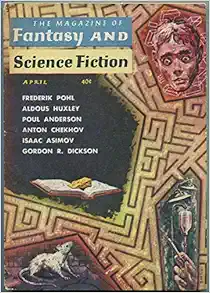
I was in junior high when our class read a version of this story written as a play. Honestly? The story did something to my head and I never forgot it after that. I read it as the Hugo-winning novelette much, much later. I’d like to see if I can get this issue of F&SF, but we’ll see. I’ve been collecting too many books and stuff lately!

At any rate, I’ve even gone so far as to write a contemporary, middle-grade novel with a similar theme, though updated. THE RECONSTRUCTION OF MAI LI HASTINGS is about a young teen who helps his mother with his adopted sister, a developmentally disabled young adult who can do nothing for herself.

While all of my brothers and my sister were born in possession of all of the faculties our Human society recognizes as normal, I spent two years working in a facility that “…follows a person-centered, active support approach to ensure that the individuals with disabilities we serve have a hand in directing their services and a voice concerning their future. We place no limits on what a person is capable of accomplishing.”

I worked as a regular caregiver and eventually became a supervisor of the night shift. As a regular caregiver, I was responsible for eight residents – everything from assisting with daily life skills to doing their laundry. As a supervisor, I was required to be familiar with the entire facility’s 32 residents because I was required to do the job of caregiver for any one of the four units if a regular called in sick.

I took my experiences there, my job as a middle school teacher, and my science education, and wrote the novel. I wanted to look at Charlie Gordon’s story from a different angle – the sibling, CJ, of a kid who needed full-time care, who was Mai Li, when she was home; and who went to a day-program when she wasn’t at home.

Before working in the facility, I’d also been certified as a Nursing Assistant and had worked part time as a nurse’s assistant at a nursing home.

All of those observations poured into THE RECONSTRUCTION OF MAI LI HASTINGS.

After reading ALGERNON, CHARLIE, AND ME, I think I know why I wrote my story. “Flowers for Algernon” was last reprinted in February of 2018, in an admittedly obscure volume called The Science Fiction Hall of Fame, Volume One, 1929-1964. Your average adolescent isn’t going to pick that volume up and “discover” Daniel Keyes’ story.

Also, recent developments in neuroscience surfaced in late 1999 when Keyes stumbled across an article by Dr. Joe Z. Tsien (then at Princeton), who had genetically engineered a “smart” mouse. The concept, while different, was remarkably like what the doctors in Keyes’ story did to Algernon, the eponymous mouse in the short story. The mouse’s surgery led to the same kind of surgery being performed on Charlie.

Of course, it was successful in the novelette and novel. But it has also been done in mice in reality…The question I have is if Tsien ever read “Flowers for Algernon”. While the article doesn’t mention it, I DO note that Tsien got his doctorate about ten miles from where I’m writing this – the University of Minnesota – Twin Cities; and we’re a pretty big SciFi and Fantasy community with some big names coming from here – including one of my all-time favorites, Clifford D. Simak, Poul Anderson, as well as Gordon R. Dickson, and more recently, Patricia Wrede, Lois McMaster Bujold, and Emma Bull among others, including four prominent Black speculative fiction authors: DC Edwards, Briana Lawrence, Marlon James, and André M. Carrington.

Who knows, maybe someone in Tsien’s doctoral program said, “Hey, you ever read ‘Flowers for Algernon’?”

In ALGERNON, CHARLIE, AND I, Keyes wrote, “I write in hope that, long after I’m gone, my stories and books, like pebbles dropped into waters, will continue to spread in widening circles and touch other minds. Possibly other minds in conflict with themselves.” Yep, I like that. Those might be good words to adopt for myself – and a good sketch of a target I can aim at.

Reference: https://en.wikipedia.org/wiki/Joe_Z._Tsien, https://twincitiesgeek.com/2020/02/4-minnesota-sci-fi-and-fantasy-books-by-black-authors-for-black-history-month/

_____________________

Guy Stewart 
is a husband supporting his wife who is a multi-year breast cancer survivor; a father, father-in-law, grandfather, foster father, friend, writer, and recently retired teacher and school counselor who maintains a writing blog by the name of POSSIBLY IRRITATING ESSAYS (https://faithandsciencefiction.blogspot.com/) where he showcases his opinion and offers his writing up for comment. He has 72 stories, articles, reviews, and one musical script to his credit, and the list still includes one book! He also maintains GUY'S GOTTA TALK ABOUT BREAST CANCER & ALZHEIMER'S, where he shares his thoughts and translates research papers into everyday language. In his spare time, he herds cats and a rescued dog, helps keep a house, and loves to bike, walk, and camp.

Tuesday, February 8, 2022

Creating Alien Aliens, Part 13 A: Iconic Alien vs Iconic Human, and How China and India Fit Into Creating Alien Aliens...

Five decades ago, I started my college career with the intent of becoming a marine biologist. I found out I had to get a BS in biology before I could even begin work on MARINE biology; especially because there WEREN'T any marine biology programs in Minnesota.

Along the way, the science fiction stories I'd been writing since I was 13 began to grow more believable. With my BS in biology and a fascination with genetics, I started to use more science in my fiction.

After reading hard SF for the past 50 years, and writing hard SF successfully for the past 20, I've started to dig deeper into what it takes to create realistic alien life forms. In the following series, I'll be sharing some of what I've learned. I've had some of those stories published, some not...I teach a class to GT young people every summer called ALIEN WORLDS. I've learned a lot preparing for that class for the past 25 years...so...I have the opportunity to share with you what I've learned thus far. Take what you can use, leave the rest. Let me know what YOU'VE learned. Without further ado...


What could be a more iconic battle between Human and Alien than Batman vs Superman?

I’ve never been a big fan of the movie versions of the DC universe, preferring to get my super hero fix in the Marvel universe. That being said, I HAVE enjoyed some of the DC movies: “Shazam!”, “Wonder Woman 1984”, and “Green Lantern”.

According to the TARGET website, the plot of “Batman vs Superman” is as follows, “Fearing the actions of a god-like Super Hero left unchecked, Gotham City’s own formidable, forceful vigilante takes on Metropolis’s most revered, modern-day savior, while the world wrestles with what sort of hero it really needs. And with Batman and Superman at war with one another, a new threat quickly arises, putting mankind in greater danger than it’s ever known before.”

IMDb summarizes the movie as follows: “The general public is concerned over having Superman on their planet and letting the ‘Dark Knight’ - Batman - pursue the streets of Gotham. While this is happening, a power-phobic Batman tries to attack Superman. Meanwhile, Superman tries to settle on a decision, and Lex Luthor, the criminal mastermind and millionaire, tries to use his own advantages to fight the ‘Man of Steel’”.

That other threat isn’t mentioned in either one of these synopses, but IS in the Wikipedia entry: “…unleashing a monster genetically engineered from DNA from both Zod's body and his own…” So, somehow, the ultimate horror is a Human/alien hybrid? Zod/Luthor’s hybrid is worse than the half-breed Human/Vulcan, STAR TREK’s Spock?

Hmm….can you say “double standard”?

At any rate, “Batman vs Superman” lays out a major problem we as Humans face – we respond negatively when faced with the alien. From the Online Etymology Dictionary: “alien (adj.) c. 1300, ‘strange, foreign,’ from Old French alien ‘strange, foreign;’ as a noun, ‘an alien, stranger, foreigner,’ from Latin alienus ‘of or belonging to another, not one's own, foreign, strange,’ also, as a noun, ‘a stranger, foreigner,’ adjective from alius (adv.) ‘another, other, different,’ from PIE root *al- (1) ‘beyond.’

“Meaning ‘residing in a country not of one's birth’ is from mid-15c. Sense of ‘wholly different in nature’ is from 1670s. Meaning ‘not of this Earth’ first recorded 1920. An alien priory (mid 15c.) is one owing obedience to a religious jurisdiction in a foreign country.” (Now THERE’S a story idea!)

I could look at any number of conflicts in the US and abroad, but I think I’ll keep this more academic than personal.

How about the current conflict between the Great Empires? NO! Not the US and Russia! Both of those are waning, though one of them doesn’t realize it yet. The current major conflict is between China and the United States with India waiting patiently in the shadows. The maneuvering between these empires are probably as close as we’ve come to a conflict between Humans and Interstellar Aliens. It also highlights the difficulty SF writers have had in creating truly alien peoples rather than just “Humans in funny masks and makeup”.

Let’s start with China first – and we no longer have to wonder what an alien society would be like…let’s start with naming TEN ways China and the US are different (and if you’re really brave, name TEN ways India is different from the US and different from China (20 things in total)…you start, I'll be back with my lists next week...


Guy Stewart is a husband supporting his wife who is a multi-year breast cancer survivor; a father, father-in-law, grandfather, foster father, friend, writer, and recently retired teacher and school counselor who maintains a writing blog by the name of POSSIBLY IRRITATING ESSAYS (https://faithandsciencefiction.blogspot.com/) where he showcases his opinion and offers his writing up for comment. He has 72 stories, articles, reviews, and one musical script to his credit, and the list still includes one book! He also maintains GUY'S GOTTA TALK ABOUT BREAST CANCER & ALZHEIMER'S, where he shares his thoughts and translates research papers into everyday language. In his spare time, he herds cats and a rescued dog, helps keep a house, and loves to bike, walk, and camp. He thinks out loud in print at: https://faithandsciencefiction.blogspot.com/

Tuesday, October 29, 2024

“Looking Backward: Part 2” • by Bruce Bethke


Stupefying Stories is a by-product of chemotherapy.

It seems morbid to put it this way, but it’s true. I never planned to become a magazine editor. After 30 years in the publishing industry, as both a writer and an editor, I was really quite fed up with the whole SF/F scene and happy to walk away from it. When Karen and I incorporated Rampant Loon Media LLC, it was with the idea that we were doing so to a.) explore this emerging new world of electronic publishing, b.) by publishing non-fiction, and in particular, cookbooks.

There, that’s a trade secret for you. If you want to tell stories, write fiction. If you want to make money, and write a book that people will treasure for years, return to often, give as gifts to friends, and pass down to their children, write a good cookbook. Say, Gourmet Kosher Vegan Stir-Fry on a Budget. Seriously.

I wasn’t completely out of the genre. I still liked to read the stuff, and still had a lot of professional writer friends. I’d begun a blog, which in time became The Friday Challenge, a sort of ad hoc writer’s group project very much like The Pete Wood Challenge, only bigger, more complicated, and ultimately more unwieldy and nearly impossible to manage.

I didn’t plan to get back into SF/F publishing. When we produced the very first issue of Stupefying Stories, it was mostly as a lark. We expected it to be a one-off, and it was (mostly) filled with past Friday Challenge winners. We thought it would be fun to see if we could duplicate the look and feel of an old-school pulp magazine—and we found that we could, and it was—but it was expensive fun, so we decided not to do that again.

If you’re wondering why we called the thing Stupefying Stories: our origin story is right here, in the cover story, “It Came From The Slushpile,” my frequently anthologized and even optioned for a screenplay short story from the 1980s. The gag, which got cut from the story as finally published, was that our “original” publisher back in the 1940s had started out with a thesaurus and an alphabetized list of superlatives—amazing, astounding, fantastic, incredible, etc., etc.—and worked his way down to “stupefying” before finding a pulp magazine name that was not already taken.

In hindsight, perhaps I should have given the name more thought.


COUNTDOWN SALE THIS WEEK!
E-BOOKS STARTING AT JUST 99¢!


SUNDAY 10/27 ~ THURSDAY 10/31!
TELL YOUR FRIENDS!


This is where chemotherapy enters the story. Literally, between the time we signed off on the printer’s galleys and the time the bindery delivered the finished books, Karen was diagnosed with advanced lobular invasive breast cancer. We put no time or energy into promoting Stupefying Stories: It Came from the Slushpile because we were far too busy dealing with her medical problems. After recovering from the initial surgery, she began daily chemotherapy, and as someone with a four-novel-a-week habit, she quickly found that schlepping around her usual bag filled with print books and magazines was exhausting. 

So, purely to save weight and wear and tear on my wife, I bought her a Kindle.

That device was a revelation. Up to that point I’d been thinking about publishing in conventional terms. That first Kindle showed me that it might—just might—be possible to publish genre fiction in a way that made some kind of economic sense.

§

A year later, in October of 2011, Stupefying Stories was reborn, this time as a direct-to-ebook title. Unfortunately, a number of fundamental problems were baked-in right from the start.

1. I really should have given that name more thought.

2. No one was truly in charge of the thing. We started out with a sort of editorial collective, composed mostly of Friday Challenge regulars, and no unified vision of what we were trying to do. As a result, we were always going off in six different directions at the same time. (For a while, my title was, “Executive Cat-herder in Chief.”)

3. …and doing so very slowly. We had a terrible time reaching consensus and making decisions.

4. We gave little thought to what the Stupefying Stories brand meant, beyond, “stories that most of us agree we like, right now.”

5. The great thing about working with a staff of volunteers is they begin with lots of energy and enthusiasm. The bad thing is they burn out quickly. The challenge is to keep volunteers engaged, after the point at which the fun turns into work. Having been on the Boards of Directors of several volunteer-staffed 501(c) non-profit corporations, I knew this but didn’t address it, because—

6. In hindsight, it was madness to try to do this while we were playing whack-a-mole with Karen’s cancer.


COUNTDOWN SALE THIS WEEK!
E-BOOKS STARTING AT JUST 99¢!


SUNDAY 10/27 ~ THURSDAY 10/31!
TELL YOUR FRIENDS!


It’s impossible to overstate how tightly Stupefying Stories is entwined with the story of Karen’s cancer journey. Our erratic publishing history is a direct reflection of the ebb and flow of her health. She’d go into remission; we’d become optimistic again and start putting out new books. A new lesion would pop up; we’d have to let the magazine slide while we dealt with that. 

We never gave up, because she never gave up. She loved the magazine, because she loved genre fiction and loved to read. (When we first moved in together and merged our libraries, all those decades ago, she had more science fiction books than I did.) At the end, when she was in the ICU and the cancer had robbed her of her ability to read, she had me get her a pile of preschool workbooks, because she was determined to learn to read again.

As the cancer progressed, and slowly took away her life piece by piece, reading and talking about stories and planning new issues had become some of the last things we could still do together. Her fingerprints—as well as her editorial mark-ups and comments scribbled on Post-It notes—were all over the manuscript for Stupefying Stories #25, which is why I had to switch the publication order and release Stupefying Stories #24 first. After she died it took me a long time to be able to look at the manuscript for SS#25 again.

§

In the beginning, the Stupefying Stories brand meant, “Stories that most of the people in the Friday Challenge collective agree that they like, for now.” As time went on, it came to mean, “Stories that Bruce and Karen Bethke like.” I have written before about how so many of the stories that over time became fan favorites were ones she picked out of the slush pile and insisted I read. 

That’s over now. We’re down to the Stupefying Stories brand meaning, “Stories that Bruce Bethke likes.”

So what does Bruce Bethke®, Award-winning Author and Cyberpunk Legend, like?

While doing this deep dive through our years of online content, I’ve started picking out stories that are both online and good examples of the sorts of stories I’d publish more of, if I could get them. Beginning with…

“Tech Support,” by John Oglesby


“No Accounting for Taste,” by Lance J. Mushung

Oh, what the heck. Let’s just save time and link to all of
Lance’s stories now. We’ll feature other writers tomorrow.

“Space Program,” by Lance J. Mushung

“Searching for Home,” by Lance J. Mushung

“Shapes of Power,” by Lance J. Mushung

“Subversion,” by Lance J. Mushung


And while you’re reading these, I’ll continue to ponder what I want the Stupefying Stories and Bruce Bethke® brands to mean, going into 2025 and beyond.

I’m still not certain about those names, though.


THIS WEEK ONLY! FREE E-BOOK GIVEAWAY!


SUNDAY 10/27 ~ THURSDAY 10/31!
TELL YOUR FRIENDS!


Tuesday, April 20, 2021

A Twelve-Step Program for Writers • Part 1


In 1997, in a few minutes of whimsy, I knocked off twelve lines of highly concentrated and somewhat snarky advice for writers seeking to develop or repair their writing careers. If you have any familiarity with 12-step programs these lines should seem familiar; to my surprise, these words of wisdom remain available on the SFWA web site. To my even greater surprise Guy Stewart has taken the time and trouble to explicate them in depth, so without much further ado, I will turn this space over to Guy, to present his in-depth commentary. [Nota bene: the dates may seem a little off. I’m not sure exactly when Guy began writing his commentaries.]

—Bruce Bethke

The first step:

We admit that we are powerless over publishers, and that our careers have become completely unmanageable.

This has a peculiar sharpness right now as I have a story that has been received at ANALOG since June. I’m at 129 days since that reception—beyond the number at which they recommend we inquire. I did that several days ago and I haven’t heard since. DUOTROPE gives the range of response times between 5 minutes and 231 days—though the average for a rejection is 23 days and the average for an acceptance is 95 days. (Note: They did not take the story nor has it sold since…)

As I know I am powerless to sway editors, it makes it all the more difficult that former editor Stan Schmidt (who accepted the three stories I’ve had published in ANALOG) retired and managing editor Trevor Qachri ascended to the throne. The question now is: does he like my writing enough to buy my work or not? (Turns out he likes my work just fine!)

I’d submitted HEIRS OF THE SHATTERED SPHERES: EMERALD OF EARTH to Andrew Hartwell, editor at HarperCollins Children’s Book in October of 2011. Not having heard anything by March 27 the following year, I sent a query at which time he said he’d get to it soon. I heard from him on July 20, 2012—four days after my new agent, Karen Grencik (Red Fox Literary) emailed him about it. (The book still hasn’t been published, but I’m hopeful!)

It’s a good thing for me that my writing has not become a career. My career as a teacher with a slight change of venue recently to become a school counselor. (And since writing this, I’ve retired!) But I’d like my career to be as a writer. At least my second career as I contemplate retirement. (As the Enterprise computer said in STAR TREK:Enterprise, “Working…”)

All right, I know now that I am helpless when it comes to editors. So what does the Twelve Step plan say for writers?

The “real” first step of AA reads, “We admitted we were powerless over alcohol—that our lives had become unmanageable.”

In terms of the Writer’s 12 Steps?

This means that the first step is the biggest step. The intent here is to break through a writer’s denial that editors have anything to do with their writing. It’s a decision to make a change, to see if the compulsion to have a writing career is detrimental. To free us from a desire to please a particular editor. (This is different than writing to editorial specs. They have a magazine to put out. ANALOG isn’t going to publish a straight up sword and sorcery story—there has to be a solid science connection.)

“We admitted” is a declaration, an acceptance of our condition as writers. It’s a realization that we need help, and it implies that we are now pursuing a solution, a life-changing surrender, our biggest admission to the world. And surprisingly enough, this step can keep us in reality all by itself. A writer who fully internalizes the first step is well protected against that consistent belief that they are in control.

This is an argument against a writer’s typical line of insane thinking: that all I have to do is write a really fabulous book and it will get published. Once we do get published despite the odds, our devious minds can be planning a full-scale return to the belief that all we have to do is write. It’s this line of thinking that shows us the unmanageability in our lives: that even if we are clean for a period of time, both our obsessive and our compulsive nature leave us no way to manipulate or wiggle our way out of a relapse.

The first step is our greatest defense against relapse, because it clearly reminds us of what we are inviting back into our lives if we choose to think we are in control again.

While I may be reading way more into Bruce’s humorous piece, there is more than a grain of truth here as I continue to write and continue to send my stuff to editors.

Does any of this resonate with your condition?


Guy Stewart is a husband supporting his wife who is a multi-year breast cancer survivor; a father, father-in-law, grandfather, foster father, friend, writer, and recently retired teacher and school counselor who maintains a writing blog by the name of POSSIBLY IRRITATING ESSAYS (https://faithandsciencefiction.blogspot.com/) where he showcases his opinion and offers his writing up for comment. He has 72 stories, articles, reviews, and one musical script to his credit, and the list still includes one book! He also maintains GUY'S GOTTA TALK ABOUT BREAST CANCER & ALZHEIMER'S, where he shares his thoughts and translates research papers into everyday language. In his spare time, he herds cats and a rescued dog, helps keep a house, and loves to bike, walk, and camp.

COMING THURSDAY: Step 2: We believe that an Agent far greater than Our Last agent can restore us to publications, sales, and critical acclaim.

Sunday, February 21, 2021

MICHAEL SHAARA: Wishing for THE KILLER ALIENS • by Guy Stewart

[Editor’s note: A while back I sent Guy Stewart a book and a challenge, regarding a certain one-time science fiction writer who left the genre and went on to become a Pulitzer Prize-wining author in the mainstream world. Herewith, the result. ~brb]

¤    ¤    ¤

He never won any awards with us—no Hugo, no Nebula (oh, that’s right, he’d stopped writing SF by 1966 and gone on to pen seventy stories for people who read those silly magazines like Redbook, Cosmopolitan, Playboy and the Saturday Evening Post…) no Locus Poll (oops, those didn’t start until 1971…Shaara was long gone by then)—leaving nothing to remind us that we’d had a great writer do his apprenticeship among us, the SF community. Somewhere around 1954, he wrote a story that Galaxy, F&SF, and Astounding rejected out of hand after publishing seven other stories of his. Shaara himself thought, “…this may be the best I’ve ever done.” But we didn’t want it. Published finally, grudgingly in Fantastic Universe in 1957, Shaara had already started moving toward people who enjoyed what he was writing.

That story, “Death of a Hunter,” wasn’t the best he could do. Twenty years later, the world saw the publication of his Civil War novel, The Killer Angels. An intimate novel of the Battle of Gettysburg in the style of Stephen Crane’s The Red Badge of Courage, Angels became his best. Winning the Pulitzer Prize in 1975, the award came as a stunning surprise because The Killer Angels had been a commercial flop—then went on to became a full-length feature film after his death in 1988 and has been required reading for more military organizations than you can shake a stick at ever since.

We lost Michael Shaara because in part, the editor at Galaxy thought his readers wouldn’t like “Death of a Hunter.” They wouldn’t like it because he thought it was “too serious, too gloomy.” Of course, the SF of the time tended toward the positive salvation of humanity through the application of technology. Shaara’s work didn’t flow in that vein—it wasn’t about glittering machines and conquering the planets, the stars and the galaxies. His work was about people and their response to the forces in their lives. That phase of popular SF didn’t arrive for another twenty years.

Admittedly, he also wrote better after 20 years of practice. Compare these two descriptions of the alien:

“It was a great black lump on a platform. The platform had legs, and the thing was plodding methodically upon a path which would bring it past him. It had come down from the rise and was rounding the gorge when Dylan saw it. It did not see him. If he had not ducked quickly and brought up his gun, the monkey would not have seen him either, but there was no time for regret. The monkey was several yards to the right of the lump on the platform when he heard it start running; he had to look up this time, and saw it leaping toward him over the snow.” (p 32, “Soldier Boy,” 1954)

“To be alien and alone among white lords and glittering machines, uprooted by brute force and threat of death from the familiar earth of what he did not even know was Africa, to be shipped in the black stinking darkness across an ocean he had not dreamed existed, forced then to work on alien soil, strange beyond belief, by men with guns whose words he could not even comprehend. What could the black man know of what was happening? Chamberlain tried to imagine it. He had seen ignorance, but this was more than that. What could this man know of borders and state’s rights and the Constitution and Dred Scott? What…” (p 180, The Killer Angels, 1974)

Both passages are one hundred and eleven words long but it is clear that Shaara had come into his own by the time he wrote The Killer Angels. The prose vibrates like a quartet’s string bass played in an intimate curtained chamber, while “Soldier Boy” twangs like a banjo in a clapboard dance hall.

Is there anything we could have done to keep him with us—perhaps allowing the growth of an early Mary Doria Russel or Stanislaw Lem? Unlikely. SF hadn’t matured enough by then to admit to literary aspirations. Shaara himself alludes to this in the afterword of Soldier Boy, the only collection of his short fiction still in print. He says, “Very little I wrote has ever moved me so much as being with Neilson when he killed those two in the mountains. I felt for the first time in my writing life, that maybe I was growing up, and maybe I’d done something truly worth doing…”

Fifty-eight years later, Shaara’s work has stood the test of time as The Killer Angels enjoys consistent sales and continues to illuminate one of the bloodiest battles in American history. As good as it is, I cannot help but wonder what Michael Shaara might have given the SF community, had we encouraged him to explore the darker reaches of humanity’s battle with technology.


Guy Stewart is a husband supporting his wife who is a multi-year breast cancer survivor; a father, father-in-law, grandfather, foster father, friend, writer, and recently retired teacher and school counselor who maintains a writing blog by the name of POSSIBLY IRRITATING ESSAYS (https://faithandsciencefiction.blogspot.com/) where he showcases his opinion and offers his writing up for comment. He has 72 stories, articles, reviews, and one musical script to his credit, and the list still includes one book! He also maintains GUY'S GOTTA TALK ABOUT BREAST CANCER & ALZHEIMER'S where he shares his thoughts and translates research papers into everyday language. In his spare time, he herds cats and a rescued dog, helps keep a house, and loves to bike, walk, and camp.

Tuesday, November 9, 2021

Creating Alien Aliens, Part 4: Speculative Biology and What It Mean To Be “Human”

Five decades ago, I started my college career with the intent of becoming a marine biologist. I found out I had to get a BS in biology before I could even begin work on MARINE biology; especially because there WEREN'T any marine biology programs in Minnesota.
Along the way, the science fiction stories I'd been writing since I was 13 began to grow more believable. With my BS in biology and a fascination with genetics, I started to use more science in my fiction.
After reading hard SF for the past 50 years, and writing hard SF successfully for the past 20, I've started to dig deeper into what it takes to create realistic alien life forms. In the following series, I'll be sharing some of what I've learned. I've had some of those stories published, some not...I teach a class to GT young people every summer called ALIEN WORLDS. I've learned a lot preparing for that class for the past 25 years...so...I have the opportunity to share with you what I've learned thus far. Take what you can use, leave the rest. Let me know what YOU'VE learned. Without further ado...


My current work-in-progress (wip) and a couple I just finished deal specifically with speculative biology. The wip looks at the possibility that there are only two sapient civilizations in our part of the galaxy – Humans (which we know about) who are animals (some more so than others…) and the WheetAH who are “plantimal aliens” who are best described as “short, needle-less, barrel cactus-shape” crossed with mobile extraterrestrial plants distantly related to Euglena, Volvox, pea aphids, green sea slugs, and spotted salamanders. Obviously, they also have vastly different ways of viewing the universe and card-carrying members of the Plant Kingdom. I call this the WheetAh-Human Universe.

A story I just finished will eventually have Humans joining (as provisional sapients, currently) a Unity of Sapients. Some of the aliens I’ve invented: “*ting* – planet bound, crystalline lifeform that communicates by phased radio pulses.”; “Benkaithanintanis – a space-living, asteroid-sized intelligence”; “Field-of-Dreams – a semi-autonomous intelligent plant/amoeba that occupies thousands of hectares on its home world and colonies. It communicates through chemically induced dreams.”; “Kifush – they’re some sort of disconnected intelligence, ‘system non-integrated colonial arthropod’. A monstrous pill bug holding the leashes of smaller pill bugs of various sizes.”; “Leviathan – ocean-going “eel” that communicates entirely by taste.”; “Pak/Gref – primate-descended mobile, sensory/cognition invasive Gref “units” of a massive ocean-born “worm”, the Pak.”; “Ybraith – neon Nautiluses suspended from balloons”; and the “Zham Woyi – Queen mother is giant sea star with square limbs studded with crystalline prisms that refracted light and trailing a parachute, made of lead and leaded crystal.”

I haven’t worked out all of the biology yet (I have it for the Pak/Gref, the Benkaithanintanis, as well as the WheetAh, and the Shabe, giant kangaroo-octopus-like intelligences), but I’ve got several of them sketched out.

The last is Confluence versus Empire which is currently confined to exploring one planet, a puffy Jupiter called River. I sometimes refer to this as the River Universe.

On River, there are no aliens, but Humans have split into two factions that coalesced into civilizations. In the Confluence of Humanity, genetic engineering is practiced to the edges of possibility. ANYTHING is legal and manipulation of the Human genome has created people capable of living anywhere that flesh and blood might be stretched to fit.

The Empire of Man has laws that all boil down to one essential paradigm – anyone who is less than sixty-five percent Original Human DNA is “not human” and without rights. Time has eroded the sharpest edges of that law. People who are slightly less than 65% can get an education, own property, and have a few other civil rights, but in essence, they are not truly Human. The Imperial Family maintains its Original Human DNA at 95%. DNA stored from the early 21st Century Human Genome Project, is the Imperial Standard (some modifications for health and life extension purposes are permitted.)

So, those are the three Universes I write in. All three have challenges and are fun to work in. I’ve had stories from all three published at one time or another, so my work is at least somewhat believable.

One last thing, in creating alien aliens, I’m not sure I ONLY mean aliens who are obvious. In my reading, I’ve found that by changing a single paradigm, you end up with people who are, by all appearances and most behavior, entirely Human. However, their underlying beliefs and behaviors are as alien to me as say, James Cambias’ lobster-like, intelligent Ilmatarans. Miles Vorkosigan’s world appears “normal” to us, but the underlying assumption, that children produced via something called a “uterine replicator” are totally normal…and makes for alien (and entertaining!) thinking.

In future posts, I’ll go into details for my WheetAH, one or two the Unity aliens, and a few of the Humans of the Confluence of Humanity. The question I ask myself every time I create a conflict or alliance between these sapients is: “Is being Human a matter of strict biology, no matter how speculative – or is ‘Human’ more a reflection of thoughts, words, and deeds?”

Later…

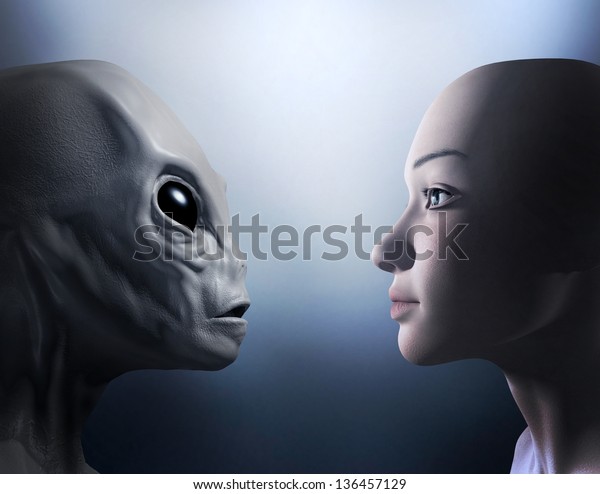
Image: https://image.shutterstock.com/image-illustration/alien-human-600w-136457129.jpg


Guy Stewart is a husband supporting his wife who is a multi-year breast cancer survivor; a father, father-in-law, grandfather, foster father, friend, writer, and recently retired teacher and school counselor who maintains a writing blog by the name of POSSIBLY IRRITATING ESSAYS (https://faithandsciencefiction.blogspot.com/) where he showcases his opinion and offers his writing up for comment. He has 72 stories, articles, reviews, and one musical script to his credit, and the list still includes one book! He also maintains GUY'S GOTTA TALK ABOUT BREAST CANCER & ALZHEIMER'S, where he shares his thoughts and translates research papers into everyday language. In his spare time, he herds cats and a rescued dog, helps keep a house, and loves to bike, walk, and camp. Image 2: https://blogger.googleusercontent.com/img/b/R29vZ2xl/AVvXsEiIWSRIn0aP8R1M7NXFKRKFP1GAJBoTK1DUjXKA5a2b38je1SAeO6Ipni9Osb-wEFra4ic8udTbHT-EeZgzFrzFNSGHlA9Dj4VRzzk_WzA8fBj95qeKmjIpjekqiysmra74pjctiKLrtebF/w150-h200/164054184_900009080544732_2810066332651630100_n.jpg

Tuesday, March 1, 2022

Creating Alien Aliens, Part 15: If You Put All This Together – How Do You Get A Believable Alien?

Five decades ago, I started my college career with the intent of becoming a marine biologist. I found out I had to get a BS in biology before I could even begin work on MARINE biology; especially because there WEREN'T any marine biology programs in Minnesota.

Along the way, the science fiction stories I'd been writing since I was 13 began to grow more believable. With my BS in biology and a fascination with genetics, I started to use more science in my fiction.

After reading hard SF for the past 50 years, and writing hard SF successfully for the past 20, I've started to dig deeper into what it takes to create realistic alien life forms. In the following series, I'll be sharing some of what I've learned. I've had some of those stories published, some not...I teach a class to GT young people every summer called ALIEN WORLDS. I've learned a lot preparing for that class for the past 25 years...so...I have the opportunity to share with you what I've learned thus far. Take what you can use, leave the rest. Let me know what YOU'VE learned. Without further ado...

HOW Do I Do It?

First: Aliens and Humans HAVE to interact closely; there have to be more aliens than Humans; it needs to be a BROADLY threatening situation.

Second: The function of aliens in science fiction is to explore HUMANS. To do that, they have to interact with Humans and be a metaphor of something profound that I’m trying to say. There has to be humor.

Third: Aliens need to be rational; at the least they have to have a possibility of rational thought. In the Alien franchise, the Xenomorphs aren’t given a chance to show their “Human” side.

Fourth: By changing a single paradigm, Humans can become aliens. For example, are children produced via something called a “uterine replicator” totally normal?

Fifth: You need to answer the question: Is being Human a matter of strict biology, no matter how speculative – or is ‘Human’ more a reflection of thoughts, words, and deeds?

Sixth: It takes effort to think like an alien – sticking tentacles on an alien doesn’t make it ALIEN…until you think about the implications, like “How does this alien play baseball?”

Seventh: Ask yourself: “Why would I want to read about an alien that was so different I couldn’t possibly connect with it in any way?”

Eighth: How does the world look through the eyes of a representative of your alien? Sink into ALTERNATIVE senses and imagine the stories that can happen to your alien characters.

Ninth: Alter a single Human behavior then spend time imagining the impact that single change would have on an alien society. You can start with altering a technology you are familiar with and then playing with the implications – but follow them in all of the implications, not just the ones you want to demonize!

Tenth: How would you REALLY try and communicate with Dolphins, Chimpanzees, Dogs, Cats, Elephants? (No smart aleck-y answers! How would we go about really communicating with them?) Pick one as an exercise…

Eleventh: What if ET were microscopic? How would intelligent microbes sense the world? How would the communicate? (For an excellent treatment of these questions, read THE CHILDREN STAR, (1999) Joan Slonczewski.)

Twelfth: WHY would aliens even consider coming to Earth? What’s a LOGICAL reason for invading? Property. Power. Wealth. Probably not as WE understand it, what would be something we WOULDN’T understand?

Thirteenth: An invasion is only an invasion if someone survives it and names it as such. Is objection or manifest destiny – what other things would drive aliens? To answer the question, I would have to create an alien from their DNA outward.

Fourteenth: While parasitic aliens seem unlikely, is that just our omnivore
orientation speaking? How about an intelligent alien tapeworm that has a host THAT WE FIND ATTRACTIVE? These lovely hosts are about as smart as a dog, certainly not starship builders. I have to look beyond my prejudice of ALL life forms if I’m going to create a believable alien.

Fifteenth: Look at a Human society that you don’t understand at ALL – or even a person from a political party you hate. TRY and look at the world through their eyes…OK keep it simple. Look at some military action the society you don’t understand and see if you CAN understand.

Sixteenth: What do your aliens value: Family? Race? Conformity (not the wimpy “conformity” Americans practice. HARD CORE conformity…)? Ideology? Treatment of children? Make yourself study your culture from that alien POV.

Seventeenth: What is it that makes us Human? Pick ONE thing and twist it hard.

OK – that’s what I have so far. You might want to review the specific essay to get the full gist of what I’ve briefly summarized here. Or just take it, tweak it, and run with it!

From this point on, CREATING ALIEN ALIENS will become an irregular feature. I've shared pretty much everything I can think of. For the rest, check out and read books that have believable aliens in them! If you have questions, just post in the COMMENTS below and I'll do what I can to answer them! Thanks for following along this amusing journey!

Image: https://image.shutterstock.com/image-illustration/alien-human-600w-136457129.jpg

Guy Stewart is a husband supporting his wife who is a multi-year breast cancer survivor; a father, father-in-law, grandfather, foster father, friend, writer, and recently retired teacher and school counselor who maintains a writing blog by the name of POSSIBLY IRRITATING ESSAYS (https://faithandsciencefiction.blogspot.com/) where he showcases his opinion and offers his writing up for comment. He has 72 stories, articles, reviews, and one musical script to his credit, and the list still includes one book! He also maintains GUY'S GOTTA TALK ABOUT BREAST CANCER & ALZHEIMER'S, where he shares his thoughts and translates research papers into everyday language. In his spare time, he herds cats and a rescued dog, helps keep a house, and loves to bike, walk, and camp. He thinks out loud in print at: https://faithandsciencefiction.blogspot.com/