Sunday, March 20, 2022

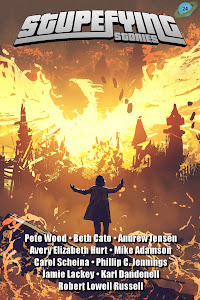
Reminder: Last Chance to get Stupefying Stories 22

Stupefying Stories #22 has reached the end of it’s contract life and goes out of print at the end of this month. To close it out with a bang, we’ve lowered the price of the Kindle edition to just 99¢ and made it free for Kindle Unlimited subscribers. 

(Personally, I think you should get the print edition, as it looks much cooler.)

Stupefying Stories #22 features:

THE SHE-DRAGON OF BLY • by Jason D. Wittman

In an alternate timeline in which the Soviet Union won WWII, England is now a Soviet satellite, some magic actually works, and Premier Kruschev is going eyeball-to-eyeball with President Patton, the last surviving member of His Majesty’s Dragonslayer Corps is pulled out of retirement because it seems dragons are not extinct after all, and one has taken up residence in a prominent Politburo member’s country estate. Here there be dragons, indeed!

GROUNDSKEEPER • by Kirstie Olley

A beautiful princess, kidnapped and locked away in a sorcerer’s tower. A deadly labyrinth, filled with traps and monsters. So, Mr. Handsome Prince, before you go charging in there with your sword swinging, did it ever occur to you to wonder who *maintains* the labyrinth?

RAIN CHARMER • by Gef Fox

Gef is one of our original contributors, beginning with “A Wolf Like Leroy” in Stupefying Stories #8. “Rain Charmer” is his latest story for us, and it’s a wonderful little contemporary fantasy about... well, about rain. And about being careful what you wish for.

OHOTSUKU-KAI • by NM Whitley

A terrific next-century science fiction tale set in a world in which the United States is still recovering from the effects of the Second Civil War, the Japanese, Koreans, and Russians are all jostling for position in the Chinese shadow, and someone has discovered a new power source that seems too good to be true...

UPON THE BLOOD-DARK SEA • by Auston Habershaw

Now here be a tale of pirates, dark magic, and darker deeds, spun by master storyteller Auston Habershaw, whose name you may recognize from his appearances in F&SF, Analog, and Galaxy’s Edge, or from his many epic fantasy novels. One of his first published stories, though, was THIEF OF HEARTS in Stupefying Stories #7, and he’s been a frequent contributor ever since.

THE FISHERWOMAN • by C.J. Paget

Pirates, ghosts, kids on a summer adventure: what’s not to like? Loads of fun.

THE YIN YANG CRESCENT • by Ian Whates

A paranormal mystery caper, set in a world in which parallel versions of London exist in overlapping space/time but only those with the gift can cross between them, and a stolen magical artifact might have the power to destroy them all. The chase is on!

WITH POSSUM YOU GET FREE WERE-FI • by Mark Keigley

A terrific hard-SF generation ship story with Keigley’s usual totally out of left field “Whoa, didn’t see that coming!” twist. Clever ideas; great fun—albeit with a dark edge that should stick with you long after you’ve finished the story.

GLAMOUR FOR TWO • by Judith Field

Finally, we end this issue with GLAMOUR FOR TWO, another sweet and clever little contemporary fantasy story from Judith Field. We’ve been in love with Judith’s writing ever since THE PROTOTYPE first showed up in our inbox. If you haven’t yet read her short-story collection, THE BOOK OF JUDITH, this story will be a good introduction. If you have read it, you’ll be happy to know that this is her first new “Court & Anderson” story in years.

From magic to mystery, to science fiction so hard it clanks, here are nine tales to chill, thrill, excite and amuse you. Always fresh and entertaining, never formulaic or predictable, Stupefying Stories is the terrific reading you’ve been looking for!

Saturday, March 19, 2022

A little something for the weekend?

Sorry, no long post today. I had every intention of writing a brilliant column this morning but then got the chance to spend time with my grandchildren instead. Among other things, we went into the collection and picked out a few books for them to take home. The grandson left with Robert Heinlein’s Farmer in the Sky while the granddaughter took Patricia Wrede’s Dealing with Dragons.

Days don’t get much better than this.

Friday, March 18, 2022

Emerald of Earth – CHAPTER 11: Deeper Into SOLAREX

Almost-thirteen Emerald Marcillon lives with her parents, who have dug up evidence of aliens in Chicxilub Crater in Yucatan, they have found artifacts that point to a long-ago alien war. An alien artificial intelligence called Inamma has survived that war. It tries to steal the artifacts that when assembled, can destroy all of Humanity. But it can’t find them and kills Emerald’s parents. Emerald escapes and is taken into Earth orbit to the SOLAR EXPLORER. Inamma follows Emerald into space, and the ship’s captain, who is also her great-aunt, tries to hide her from Inamma. Emerald holds the key to the artifacts. Emerald is not the best at making friends, but manages to make a few on SOLAR EXPLORER. When her friends and crew members find what Inamma is, they fight together to protect the artifacts.

(I’m posting Fridays, because if you like what you see and you’re a parent/aunt/uncle/friend of the family, you can forward, text, Instagram, or tiktok the story to your child/niece-nephew/friend-of-the-family – and your significant young adult would have Friday night, Saturday, and Sunday to read it, so it won’t interfere with the Homework Schedule.)


By chance, she got to the intestine elevator just as a group of noisy fans dressed in neon green tumbled out and sprinted down the hall. Emerald got in, studied the “buttons”, then jabbed the one at the bottom marked C. Rashida wasn’t sprinting down the hall screaming for people to “Grab her! She’s not supposed to be here!”

The doors squelched shut and the bolus started to move.

By the time she reached the Core of the ship, she was calm again. She knew Rashida couldn’t be directly behind her – the bolus was still stood open for Emerald, jammed with a stick that had been laying nearby. Straight ahead was stupid Jump mob, staring into the air where a life-sized holographic projection of the game was going on. To her right, the mob crowded a real playing field – football, she supposed, though it looked like it could be used both for regular football – Americans called it “soccer” for some reason – and normal world football.

To her left, there was nothing but forest and several gravel covered paths that ran off into it. She ran, crossing the grass, then joining the trail. Running had never been a problem for her. She liked to run when people let her. She and Dad spent hours running beaches along the Gulf when she was eleven. Her and Mom would literally run together into Telchac Puerto -- Mom would take it easy! -- before the military infiltrated their research station. Then they banned anyone from her family from going into any town. They’d become prisoners in their own home.

She scowled and veered from thoughts of Mom and Dad and focused on the soldiers.

She still had no idea why they showed up when they did. It wasn’t like Mom and Dad hadn’t been preaching their “Shattered Spheres” theory. And the knife-footed robot had followed the soldiers. She didn’t remember soldiers at the dig site. Then again, she didn’t notice a lot of things. Had they been there all along and she just hadn’t noticed until recently – when her own age had gotten closer to the age of the newest soldiers? Or were the making Mom and Dad argue more? Were the soldiers somehow the cause of the arguments?

It finally penetrated her intense focus on her parent’s arguments that she could hear voices. She slowed down, then stopped, noticing her surroundings for the first time. The forest was gone, the ground was drier and the trees more stunted and farther apart. She wasn’t sure, but it felt warmer, too.

In the distance were a group of young people – most of them older than her. One kid came out of a stand of tall savannah grasses and ran up to the others who appeared to be picking something off of the trees, skidding to a halt. Chubby, huffing and puffing, he wasn’t dressed like them. Most of them flicked the bugs, banking them off a funneled collection bottle which made a hollow popping sound. One of the boys flicked a bug at the kid, who batted it away irritably.

She stared in surprise. An elderly man squatted apart from them, ignoring the confrontation, examining a different tree using a magnifying glass. She recognized him as well. He’d been to the Chicxulub station a year or so ago. Dr. Antoine Clerck. She also remembered he’d been condescending to Mom and outright rude to Dad – whom he thought was a servant.

Emerald squatted down and waddled closer to the group, stopping beside what was supposed to be an African termite mound. It wasn’t. She’d seen arboreal termite mounds in trees in the Yucatan jungle. There were bugs all over it. This one only looked like it was alive.

The chubby kid who’d just run up stopped and the box he was carrying, with some kind of drooping wires and antennae taped together with gray tape swung around from his back.

He caught it deftly then ran up shouting, “Doctor Clerck, I can count your ants by registering them on this energy scanner I invented last night!”

The group stood up straight as one. The oldest boy cried, “No, Zech!” He tried to wave the younger boy off. When the boy named Zech ignored him, the oldest guy took off running, dragging two of the girls after him. Another boy retreated with them.

Zech pressed a button.

Every ant on the tree exploded at the same time, sending a miasma of vaporized formic acid into the still, hot air. The rest of the group scrambled to get away, screaming and choking.

Emerald thought the tree looked like it had been engulfed in a thunderhead.

Zech made weak thunder sounds and said, “Oops.” He flashed a fake smile, tears from the slowly dissipating formic acid cloud streaming down his face.

The group stared at him incredulously. After the coughing fit, a boy who’d been standing near Dr. Clerck called from a safe place, “Nice job, Yuck-ariah. You just fried Dr. Clerck’s favorite bug bush!”

Dr. Clerck’s face had turned an unusual shade of red beneath a thin halo of gray hair. He stepped forward, absently patted the other boy on the shoulder and said, “You have a magnificent ability of understating the obvious, Hood.” Crossing to the boy named Zech, he held out his hand. The boy backed up, hugging the scanner. Dr. Clerck actually growled as he said, “Give me your machine, Mr. Brewbub.” He stepped back.

Zechariah Brewbub? She felt sorry for him for an instant. It wasn’t a name she’d forget any time soon.

“I will not wait another instant to call Security on the emergency band if you do not hand that thing over to me. There are ten thousand hectares of cultivated land on this ship. The work we do here is the single most important thing anyone does on this ship. Your...toy can destroy us all!”

Zech gave it to him. Dr. Clerck took the box, examined it intently then dropped it on the ground and jumped on it six times, grunting, muttering and cursing out loud once. The rest of the kids looked startled. The older man picked up the pile of debris before the small robot scurrying out of a tree trunk arrived to clean up the mess, handed them to Zechariah, saying, “You’re fired, Mr. Pubtub. Don’t come back or I will have you court martialed, confined to quarters, and executed before a firing squad!” The boy looked at him, stunned. Dr. Clerck pointed down ship and shouted, “Go!”

Emerald looked up as an immense Zeppelin thrummed as it flew low over them, stirring the air. The cloud of formic acid from the exploded ants blew over the group of kids and Dr. Clerck, driving them into the forest, screaming and cursing.

Hanging his head, Zech walked away into the savannah, off the gravel path and stopped at a different fake termite mound. He patted the side of it and a door opened up. He stepped in and was gone.

Emerald felt sorry for him – but she also didn’t want to cross paths with him. He was obviously someone to avoid. She waited a bit, wiping her wrist across her forehead. It was hot in this part of SOLAREX. It hadn’t been this hot in the Core by the 3V screen.

She scurried across the grassland and did the same thing Zech had done, patting the termite mound. The bolus inside was still disgusting, but she’d watched carefully when Rashida was choosing a floor. She had no doubt Rashida or SOLAREX security could find her wherever she went but she was tired of Rashida. She punched a random button and the doors squelched shut.

This one was larger than the one she’d been in the first time. It slid faster, too. She could just feel the acceleration this time. After a few minutes, she jammed the button again.

When it didn’t slow, she started to be afraid…

Image: https://blogger.googleusercontent.com/img/b/R29vZ2xl/AVvXsEg0apPONo8JzRISufFs1p-gZFYlV3wz92HxAZGGbjRwiAXxX3J8oKGf7JwmOETPGjr9JWwKL3r_5iMto5npeYPIeaj8SMgAs5idy_9WKD63CCdJUO8ITjfdeZJntMnTg1anXTU-FXTS97c/s320/Heirs+of+the+Shattered+Spheres+Emerald+of+Earth++++300dpi.jpg

Guy Stewart is a retired teacher and counselor, with science fiction for young people and adults published in ANALOG Science Fiction and Fact; podcast at CAST OF WONDERS; and in CRICKET the Magazine for Children. For links to his other works, go to https://faithandsciencefiction.blogspot.com/. For an interview about EMERALD OF EARTH, try this: http://www.writersandauthors.info/2015/09/interview-with-guy-stewart.html

Thursday, March 17, 2022

Sci-Fi vs Western: Clash of the Genres


Ever since the subject of Wild Wild West came up again, I’ve been thinking critically about the dichotomy between science fiction and the Western pulp genre. I’ve developed a theory that I think I will write more about later, but right now, I’m wondering why Western motifs and thematic elements work so well for horror and with such difficulty in hard science fiction. 

My memory is colored by the fact that I spent a lot of money on our spinoff anthology series, Tales From The Wild Weird West, only to have it fail in development and never reach release. Looking back at the facts of the matter, though, we’ve actually published quite a bit of fiction that veers into Western territory. Some examples:

“The Dead Barn,” by Amy Caylor - A Western post-zombie-Apocalypse story currently out in Stupefying Stories #23. 

“Rain Charmer,” by Gef Fox - A clever little tale of being careful what you wish for, currently out in Stupefying Stories #22. I’d call this a story with a Native American motif, except that Gef is Canadian, so the proper term is First Nations.

“The New Herd,” by Lilliana Rose - Snarky, fun; better yet, it’s free, as it snuck in during one of the periods when we were trying to reboot SHOWCASE as a webzine. Read it now!

“Princess Nicotine,” by John Skylar - A cyberpunk Western, if you will. Published in SS#18, which is now out of print. Too bad you missed it.

“I Live the Warrior’s Life,” by Robert Lowell Russell - Plenty of people write stories in which the veil between worlds is pierced and monsters from the Other Side cross over into our world. Robert had the imagination to realize that in North America we’d get things from the Eastern Woodlands folklore, and they had some real nightmares. This story was so good we made it the cover for SS#16.

“Long Cold Wish,” by Laura DeHaan - Also in SS#16, a really creepy and first-rate paranormal mystery that I’ll probably tap for our Best of anthology, if we ever do one.

“Red Dust and Dancing Horses,” by Beth Cato - Just because a girl is growing up under a dome on Mars, that doesn’t mean she can’t be obsessed with horses, does it? This one first appeared in SS#5 and has been anthologized so many times since then that it almost seems unnecessary to reprint it, but I am really proud that we were the first to publish this one.

This is just a short list of the stories that spring immediately to mind. I’m sure there have been more. 

Last Chance: Stupefying Stories 22 is going out of print

One of the fundamental mistakes I made when I created Stupefying Stories was stipulating that the e-books would have a limited shelf-life. As a result, STUPEFYING STORIES #22 has reached the end of its contract life and goes out of print on April 1st.

To (so to speak) close the books on SS#22, therefore, we’re running a 99-cent sale. For the next two weeks, STUPEFYING STORIES #22 can be yours for the lordly price of 99¢ USD, or free if you’re a Kindle Unlimited subscriber. But act soon, because as of April 1st, it’s gone forever. 

And now, the advertising copy.

In a world...

Where the Soviet Union won WWII, England is now a Soviet satellite, some magic actually works (sometimes), and Premier Kruschev is going eyeball-to-eyeball with President Patton—

The last surviving member of His Majesty’s Dragonslayer Corps is called out of retirement, because it seems dragons aren’t extinct after all and one has taken up residence in a prominent Politburo member’s country estate. Read the rest in THE SHE-DRAGON OF BLY, by Jason D. Wittman, just one of the terrific tales in STUPEFYING STORIES 22!

Available now in paperback, on Kindle, or free for Kindle Unlimited subscribers.   


Wednesday, March 16, 2022

Wild Wild West Revisited: A Few Last Words


Previously: Part One | Part Two

Whenever we talk about the Wild Wild West fiasco, I usually let it slip that one of the reasons why I found the project appealing was that someone over at Warner Books suggested that if the book was a commercial success, it could lead to a series of WWWest-branded steampunk westerns, to be authored by yours truly. 

Whether this idea was mere speculation or bait to get me to sign the contract doesn’t matter now. The movie flopped. The book flopped. Even if the movie and book had been wildly successful, though, the people who owned the Wild Wild West intellectual property had sold all other book rights to another publisher, thus there would never be another Warner Books Wild Wild West novel. End of story.

Still, whenever we wander through the back roads of this particular bit of my personal history, someone invariably asks, “Well, why not write your own non-WWWest steampunk western novels?” After all, there are tons of successful SF/F series out there that are basically Not Exactly Star Trek, or Not Quite Star Wars, or Not Entirely Starship Troopers. The sheer volume of Not Precisely Tolkien novels that are out there—and selling very well, thank you—boggles the mind. So why not write Not Close Enough to Wild Wild West to be Actionable?

Even my own interior monologue, which I hope you can’t hear, chimes in to amplify and add to the question.

You’ve loved the Desert Southwest ever since you first visited Arizona in 1964. Your heroes have always been cowboys. [No, they weren’t. Shut up, Willie.] You’ve always been fascinated by the historical period from the end of the American Civil War to the beginning of World War I. It was a time of incredibly fast technological innovation and scientific advancement, coupled with dramatic social and political ferment. Why not write your own series of western steampunk adventures?

Off the top of my head, I can think of at least five compelling reasons.

1. The time to have done this was twenty years ago. 

At that time we would have been talking about developing a series that was already pre-sold to a major publisher, that had at least some promotional and advertising muscle behind it, and for which there would have been a decent on-signing advance. If I was to attempt to do these novels now, I’d have to do them on spec, and either hope to find a publisher or more likely self-publish them. That’s something I don’t have the time or patience to do now.

2. Western fiction ain’t quite dead yet, but it’s coughing blood and lookin’ a mite peaked. 

Louis L’Amour Western Magazine is dead and buried. Western Story is but a dim memory. A very small handful of fiction magazines devoted to publishing new Western content still exist—e.g., Frontier Tales—but they pay in contributor’s copies and/or chump change. If you look for a Western section in your local bookstore, you’ll find it’s full of Louis L’Amour and Zane Grey reprints, and maybe a few Larry McMurtry or Tony Hillerman novels. If you look for Western fiction online, you’ll find far more cowboy and cowgirl porn than you ever thought possible. Yippee-ti-yay, ride ‘im, Reverse Cowgirl!

There is a subgenre of Weird Westerns, but it’s quite small, has a limited readership, and is mostly full of horror stories.

3. Steampunk isn’t dead, but it sure does smell funny.

When steampunk began, with Gibson and Sterling’s The Difference Engine, it did so with a genuinely interesting sci-fi premise: “What if Charles Babbage’s mechanical computers had actually worked, and brought serious computational power to Victorian-era society?”

Sadly, while steampunk began with great promise, it quickly became apparent that after a very short list of seminal works (e.g., Paul Di Filippo’s Steampunk Trilogy), it really did not have much to say. Even faster than cyberpunk decayed into LitRPG, steampunk became a style: all set-dressing, no substance. Instead of interesting excursions into possible alternate histories we got clockwork and corsets, which ultimately morphed into steampunk-flavored paranormal romance.

Admittedly that subgenre sells well, but it bores the living crap out of me.

4. You can’t fight the legacy of Bat Durston, Space Marshal.

Science fiction fans do not like Western in their science fiction. Do not, do not, do not. To some extent this is because of John W. Campbell Jr. and how he actively worked to deform the science fiction genre and make it a thing apart from all other pulp genres, but even more so it’s the fault of Horace Gold, founding editor of Galaxy magazine. I could go on and on at great length about this, and perhaps another time I will, but I want to get this column finished today. Therefore, suffice to say that I want you to imagine this scene:

[EXTERIOR, DAYLIGHT: A busy city street corner. A science fiction fan, head-down in a pulp magazine as he walks, rounds the corner and accidentally collides head-on with an equally distracted Western fan coming from the other direction.]

WESTERN FAN: “Hey! You got science fiction in my Western! What is this weird shit?”

SCI-FI FAN: “Hey! You got Western in my science fiction! It smells funny!”

BOTH, IN UNISON: “I HATE IT!”

5. Finally…

To put it simply: you cannot write a period Western—even an alternate-history period Western—without including Native American characters. And while I’ve lived my entire life around Native Americans, gone to school with, worked alongside, and even been related by marriage to Native Americans, I know that just as soon as I write a Native American character, some idiot White Savior is going to take it upon herself to school me on what a horrible person I am for doing so, given that I myself am not a Native American.

Seems far-fetched? In the world of 1999, it might have been. But we live in the world of now, where the NCAA can force the University of North Dakota “Fighting Sioux” to change their name and mascot, even though a significant percentage of the student population is Sioux, and at least two tribal councils passed resolutions supporting the old name and objecting to changing it.

Like I need to deal with that aggravation…

_______________

For every example, someone can always cite a counter-example. Most science fiction fans reading this likely will jump straight to Firefly and say, “See! We can accept Western themes in science fiction!”—in the process completely disregarding the fact that Firefly was a dismal flop in its initial run and only became a fan favorite and cult classic years later, when it was re-released on DVD. A few others might cite Cowboys & Aliens, which I’ll admit I have watched, and classify as stupid fun. (Aliens have come here to steal our gold? Seriously, were they inspired by watching Battlefield Earth?)

Personally, I would rather direct your attention to the TV series from which I lifted the above photo, of beloved science fiction and horror movie star Bruce Campbell, in The Adventures of Brisco County, Jr. 

To which you’re most likely to respond, “Huh? Never heard of it.”

Wherein lies the problem. For me to write my own series of steampunk westerns would not just require me to write the books, and would not just require me to create yet another new subgenre: I would have to create an entirely new audience.

Believe me, that’s a lot harder than it looks.

Tuesday, March 15, 2022

Talking Shop: Embracing the Anti-Hero • By Eric Dontigney

There is a terribly thin line between an anti-hero and a straight-up villain. It’s a line that Craig Schaefer admirably straddles in his Daniel Faust series. Faust is our protagonist in the books, and he reads a bit like a knock-around hero at first. As time goes by, though, you realize that this guy is no kind of hero. He’s a magic-fueled criminal. And he’s not some soft-shoe criminal who only commits crimes that don’t hurt anyone.

He’s a sometimes grifter, sometimes street hustler, sometimes thief, and occasionally a thug for hire. He’s routinely violent, up to and including murder. In other words, this is the guy you expect your hero to fight. So, how do you take a guy with his moral compass pointing due west and make him a protagonist? Just as importantly, why would you want to?

Making a guy like this sympathetic takes a bit of dancing in terms of plotting and character development. The antagonist or antagonists in the story must be demonstrably worse than him. Their demonstrable worse-ness must generally happen on the page. Their goals must either be sufficiently evil in themselves or require a level of evil that makes your protagonist’s misdeeds pale in comparison. In essence, you need to set up the conflict in such a way that readers look at the protagonist and think, “Yeah, I wouldn’t want to invite that guy to a barbecue, but I would gladly dump high-proof liquor on the people he’s squaring off against if I saw them on fire.”

The trickier question for a lot of writers is why you would want a central character like that in the first place. Why not pick a more traditional hero? It comes down to latitude. Book and film storytelling has progressed enough over the decades that we’re generally willing to accept a certain level of violence from heroes. Heroes can beat people up. If necessary, heroes can even kill. On the whole, though, we expect a certain degree of restraint from heroes.

With a small handful of exceptions, Superman could kill most of his antagonists out of hand. Giving him that extraordinary level of power means balancing it out with an extraordinary level of restraint. If he just offed every bad guy he ran across, he’d look abusive and tyrannical. We wouldn’t see him as a hero. That dramatically circumscribes the range of actions available to him. It also limits the ways a writer can resolve the central problem in the story.

When your protagonist would be the bad guy in literally any other story, those limitations largely vanish. Your character can be charming and even kind in some ways, but you can also have them shoot out someone’s kneecaps to get information without violating the reader’s expectations. You can have them throw someone off a building as an object lesson. They can commit crimes for personal enrichment as part of the plot and readers will just nod along with it because, hey, he is a criminal.

It also frees up the protagonist to say things that you just cannot have a legitimate hero say. If someone is rude to a hero, we expect them to just take it or try to defuse the situation. An anti-hero, on the other hand, can shoot off at the mouth with something like, “If you speak to me that way again, I’m going to gut you with a nine iron.” It’s kind of amusing, kind of horrifying, and upends the expected social conventions. Plus, it’s sort of entertaining for writers to dream up these kinds of lines. In short, using an anti-hero as your protagonist creates opportunities that you don’t get with more traditional good guys.

__________________________________________________

Eric Dontigney is the author of the highly regarded novel, THE MIDNIGHT GROUND, as well as the Samuel Branch urban fantasy series and the short story collection, Contingency Jones: The Complete Season One. Raised in Western New York, he currently resides near Dayton, OH. You can find him haunting obscure sections of libraries, in Chinese restaurants or occasionally online at ericdontigney.com.


SHAMELESS ADVERT: If you like Harry Dresden or John Constantine, you’ll love THE MIDNIGHT GROUND. READ IT NOW!


Saturday, March 12, 2022

A little something for the weekend?


“King Kong doesn’t stand a chance,” the Kid said. “Godzilla is a gigantic, primordial, atomic fire-breathing monster. King Kong is just a big gorilla. Realistically, Godzilla—”

Wait. Stop right there. “Realistically” and “Godzilla” don’t belong in the same sentence. They barely belong in the same universe. If you’re going to think realistically about anything involving Godzilla, you’re wasting your time. On the descending scale of scientific stupidity there’s science, junk science, redneck science, Star Trek science, Doctor Who science, Forteanism, and somewhere way down at the bottom of the stack, just a slim step above a consensus of leading public policy experts, there’s Godzilla science.

So let’s have no more attempts at thinking realistically about this movie, okay? Let’s just accept it for what it is: a giant monster slug-fest in which a major modern world-class city—in this case, Hong Kong, not Tokyo—gets stomped into rubble. This is the movie you’ve been waiting for ever since the second Pacific Rim movie turned out to be such a disappointment. This is the movie that Legendary Pictures has been building up to ever since they released their 2014 Godzilla reboot, followed by Kong: Skull Island (2017) and Godzilla: King of the Monsters (2019). This is the next chapter in a continuing story and a direct sequel to King of Monsters, and yet you need not to have watched any of the previous movies for this one to make as much sense as it’s ever going to make.

The plot is—aw hell, who cares, it’s a Godzilla movie. It has all the intellectual depth and drama of a WWF tag-team match. Anything the human characters do or say is just there to move the point-of-view along from one titanic set-piece battle to the next.

Legendary has done one fairly clever thing with this series in general and this movie in particular. In his past incarnations, King Kong has always had just one story, and it’s a recapitulation of the plot of Sir Arthur Conan Doyle’s 1912 novel, The Lost World. To wit:

  1. Expedition to uncharted place find fantastic land where giant ancient animals still survive

  2. Expedition captures one such giant animal and takes it back to civilization to show it off

  3. Said giant animal breaks loose and goes on rampage through city only to be killed in the end

  4. Oh yeah, and there’s a romantic subplot between two of the human characters, but who cares?


I mean seriously, how many times have you seen that story?

For this iteration of Kong, though, Legendary has done one thing that is decently creative. Instead of a giant gorilla and yet another regurgitation of the Lost World plot, they’ve made Kong a gigantic primitive hominid. He’s an intelligent, tool-using creature, the last known descendant of a race of such beings, and he is quite capable of communicating with humans when he wants to, thanks to [SPOILER ALERT!] an adorable little deaf girl who has taught Kong sign language.

That is the nicest touch in this movie. The major problem with this movie, and I hesitate to say it, is Millie Bobby Brown. In Godzilla: King of the Monsters, her character, Madison Russell, was absolutely central to the story and to the development and resolution of the plot. In this movie, though—

Honestly, she’s given nothing important to do. So instead she spends a lot of time running around, pursuing a sub-plot involving a paranoid podcaster that eventually produces one meaningful reveal, but her part could just as easily have been cut completely from the film and replaced with about thirty seconds of exposition.

RECOMMENDATION: Gorgeous CGI, titanic giant creature battles, lots of rubble and destruction; inside this ponderous two-hour behemoth there’s a really good 90-minute action movie roaring with rage and demanding to be let loose. Don’t stream this one. Go to your local Redbox and rent the disc—or better yet, buy it, as you can probably get the used Blu-Ray for about three bucks now—and then you can watch it at your leisure and fast-forward through all of Millie Bobby Brown’s frenetic but meaningless scenes. 


Friday, March 11, 2022

Wild Wild West Revisited, Part 2

A few years after the interview in Part One appeared, an earnest young writer by the name of Kimberly interviewed me for an article about the business of writing movie novelizations. Apparently she was under the impression that this was the sort of writing career one could aspire to have. While I tried to let her down gently, I later learned that there actually is an organization called the International Association of Media Tie-In Writers, and that people actually do actively want to get this sort of work. With that in mind, then, and using Kimberly’s interview as my point of departure, here’s Part Two.
 

(Unused original cover art)


Q: What is your process for writing a novelization, and how does it differ or compare to the movie?

A: Writing a novelization is a lot like selling your soul to Satan, except that in the case of the novelization your literary soul gets remaindered within three months and pulped inside of a year.

Understand, very few writers do screenplay novelizations or media tie-in novels because they want to. Rather, they do them because some publisher comes up to them and dangles a contract and a wad of cash before their eyes, and it looks like easy money. It's also worth noting at the outset that novelization and media tie-in work never goes to aspiring writers just starting out or devoted fans of some movie or TV series. The contracts go to what we call mid-list or mid-career writers, which is to say, writers like me: writers who have an established publication history, and who have proven that they can write competent fiction and deliver it on schedule, but who are not currently experiencing what you might call commercial success.

So the Deal with the Devil works like this: in exchange for your writer's soul, you get offered the chance to do a book that is almost guaranteed to be a huge, best-selling, commercial success. Confronted with this, most writers think "Okay, I'll do just one. Then, once I've got a best-seller on my resumé and the fans know who I am, I'll go back to doing "real" books."

Of course, as in all deals with the devil, there is at least one hidden catch, and the most important one is this: if the book is a huge, commercial, best-selling success, it gets credited to the media franchise that spawned it, whereas if the book tanks, it gets blamed on the writer. The other major catch is that there turns out to be little or no crossover in readership. People who buy media tie-in books very rarely pay attention to books set outside of their favorite movie, TV, or gaming universe. For example, Mike Stackpole tells me people send him fan mail all the time gushing, "I've read ALL your books!" when what they really mean is they've read all his BattleTech books and have absolutely no clue that he's ever written anything else and no interest in reading anything else anyway.

Oops. I don't seem to have answered the original question. Okay, the process for writing a novelization from a screenplay goes something like this:

  1. The publisher pitches you on the deal, being careful to give you little or no actual information about the project because "you haven't signed the non-disclosure yet."

  2. With greed in your heart and dollar signs in your eyes, you sign the book contract, and the studio responds by sending you a non-disclosure agreement that would choke your attorney's horse.

  3. You sign that behemoth, and then they send you the script. You read it, grab your forehead as if in pain, gasp out, "Omigod, what have I gotten myself into?", and call your editor to point out the six most salient things that make the novel utterly unworkable and hopelessly asinine. Your editor relays your concerns to the studio, and a week or two later some under-assistant studio liaison calls back to say, "What idiot sent you that script? I'll Fedex the real script out to you first thing tomorrow."

  4. Two weeks later the so-called "real" script finally arrives, and it's even worse than the first one.

  5. Repeat steps 3 and 4 five or six times, until you finally realize the grim truth: that a script is just the starting point from which a collective of producers, directors, actors, editors, and other personnel work towards the finished product. Movie productions typically keep a staff of screenwriters on or near the set, and the script is re-written constantly as the film goes through the stages of pre-production, primary filming, and post-production. The director and actors will try things and decide something reads great in the script but doesn't work on-camera; somebody will improvise something and the director will decide that's better than what was scripted and branch off in that direction; scenes will get cut because a stunt goes awry or a special effect isn't working; in many cases unbelievably mundane things will force changes, such as an actor being unable to pronounce a certain word or say a certain line with a straight face or a key prop or bit of set dressing turning out to look laughably bad on-camera.

  6. This, of course, works a certain hardship on the novelization writer, as you come to realize that not only are you trying to document the precise surface topography of a moving river, but that because of the long lead times involved in print production and distribution you also have to have this thing finished six months before the movie hits the cineplex, which means the book is generally declared done while the movie is still in post-production. This accounts for a lot of the differences between a movie and its attendant novelization. Movies are typically edited one last time in response to the audience reactions at test screenings, and this final edit can sometimes be quite late and drastic. (Hence the popularity of "Director's Cuts" on DVDs.) In the case of WILD WILD WEST, they were still rewriting key bits of dialog and overdubbing scenes 30 days before the movie was released.

  7. Finally, you have to realize that a full-length film script contains about one-third of the actual content of a full-length novel. If this seems odd to you, think of the last book you liked that got adapted into a film and remember how much of the book was left out. This means that the writer of a novelization has to come up with a LOT of fluffy filler to expand the story out to book length, without including anything that might possibly contradict the direction the film might take as it evolves in post-production.

  8. Oh yeah. Then, at the end of the process, the producer or director typically has the right to read the novelization and demand changes, although they're also typically far too busy snorting coke and banging starlets to do so, so the job typically gets dumped on some junior under-assistant co-producer who's still struggling to finish reading that Batman comic book he bought back in 1996, when he thought he had a shot at working for Tim Burton.

Does this sound like fun yet?

Q: Is there a specific target audience novelizations seem to attract, or do you intend to attract a specific audience?

A: Novelizations are, for lack of an adequate English word, tchotchkes. For the movie studio, they're a little -- and I mean little -- extra spot of cash on the side and little extra promotional oomph for the film. For the publisher, they're a chance to piggyback off of and get a little taste of the (hoped for) success of the movie and to sell a lot of cheaply printed and readily disposable copies. For the reader: ah, that's the mystery. As far as I can tell, novelizations sell to people who just can't get enough of a specific movie or TV series and want to spend more time in that universe, in the company of their imaginary friends.

Q: How do you receive royalties or contract rights to the work?

A: It depends on the contract. In all cases, the book is a work-for-hire and the writer has no intellectual property rights. The publisher ultimately owns both the underlying intellectual property and the actual work, and can do whatever they like to it up to and including hiring another writer to completely rewrite the whole wretched thing. In the best of cases, the writer gets a decent advance payment and royalty rate that's typically about half the rate for an original book. In the worst cases, of which there are many, the writer gets a flat fee for writing the book and no royalties ever.

If the contract does include royalties, royalty accounting is typically done on an annual basis and a check is sent to the author at that time. This means that the first royalty check typically arrives 12- to 18-months after the book is released, if ever.

Q: Do you feel that novelizers are not as well-accepted in the literary world as writers of original work? Or do you consider the novelization your original work?

A: Well, why should we be? It's embarrassing to write a novelization. Writers do them for the same reasons actresses do nude scenes or sleep with producers; because they think it will help their career or because they really, really, desperately need the money. Unfortunately, all it does is establish that you are the sort of writer who will do anything for money. So you do get a lot of offers afterwards, but they're not the sort of offers you want.

Q: Is this a hobby or a pastime? What is your full-time job? Is novelizing not a stable-enough career?

A: For me, writing a novelization was more like the last gasp of a dying fiction career. For other writers I know, it's become a full-time job and most of them resent that it takes them away from their "real" writing.

It can be a stable career, but it's not one I'd recommend. If someone wants to make money writing, they're far better off writing non-fiction, as non-fiction pays better and generally involves dealing with sane and ethical people, not Hollywood studio execs.

After my ghastly experience with WILD WILD WEST, I decided to demote writing fiction to "hobby" status and go back to my previous career, which is working in software R&D.

Q: We have been told that there are some celebrity novelizers out there. Can you name a few, besides yourself of course, who are famous for writing these works?

A: The only one I can think of off the top of my head is Alan Dean Foster. Ron Goulart is said to have written a bunch, though generally under pseudonyms. Tim Zahn, Mike Stackpole, Kevin Anderson, and Daffyd ab Hugh are all pretty well-known for their Star Trek and Star Wars spinoffs, as are a few others.

I think everybody who has tried to make a career of writing fiction has dipped their toes in these fell waters once or twice, or if not this, then written a romance novel or maybe some biker porn. As I said earlier, it looks like easy money and a good way to draw attention to your other books.

I think the saddest and craziest case I know of is Terry Bisson, who got tapped to write the novelization of JOHNNY MNEMONIC. I mean, imagine that: Bisson -- who is a brilliant but under-rated writer -- winds up writing the novelization based on the screenplay based on the short story by William Gibson. How much weirder can it get?

There is a writer's joke about landing the contract to write the novelization of the screenplay of the remake of GONE WITH THE WIND. It's one of those jokes born of pain.

[Afterthought #1: Er, everyone here does know that GWTW was adapted from a novel by Margaret Mitchell, right? I mean, I hate to explain punch lines, but I have actually met people who thought Dune was a novelization of the David Lynch movie.]

Q: Do you happen to know who wrote the first novelization, what it was, and what year it was published?

A: Sorry, not a clue. The first ones I can remember seeing were a series of STAR TREK script novelizations that James Blish did back in the mid-1960s, but that's probably just when I became aware of the novelization as a distinct form.

Given the incestuous relationship between books and movies, it's sometimes hard to sort out what's a novelization and what's an original book. For example, I've seen Alduos Huxley's BRAVE NEW WORLD repackaged as if it were a novelization, to piggyback off some made-for-TV movie that was adapted from the book in the late 1960s.

I'd say the novelization is probably as old as electrical mass media, or maybe even older. I mean, I know that there were Dick Tracy novels published back in the 1930s, but I can't say for sure if they were piggybacking off the success of the comic strip, the radio serial, or the movie serials. Which came first? I don't know.

But the more I think about it, the more I believe you could make a convincing case that even the dime novels of the 19th century were "novelizations" piggybacking off the success of Buffalo Bill's Wild West Show, and even Theodore Dreiser and Upton Sinclair wrote a few of those. (They needed the money.) The "novelization" is probably as old as mass literacy.

Q: So with all that said and done: why did you write WILD WILD WEST, and what effect did it have on your career?

A: I wrote the novelization of the WILD WILD WEST script for one very simple reason. I was trying to pitch a completely different book -- an original and still-unpublished book -- to my U.S. publisher, Time Warner. My editor there came back with the bad news that she really liked the book, but owing to the mediocre sales of Headcrash, she could only make an "insultingly low" offer for it.

But -- (Can't you just hear Old Nick warming up his sales pitch?) -- if I would only write a bestseller, then everything would be peachy and she could make me the offer my next book deserved. And speaking of bestsellers, it just so happened that she had this movie tie-in deal sitting there on her desk, for the next big Will Smith summer action/adventure comedy, and the folks down in Warner Bros. accounting were predicting that this one was going to be even bigger than MEN IN BLACK. Original script by Steve Wilson and Brent Maddock (who I knew and respected); promotional budget bigger than the gross domestic products of most Third World countries; it was sure to sell a quarter-million copies no matter who wrote it, and a half-mil easy if the book was at all readable and entertaining.

[Afterthought #2: Now that I think about it, I seem to recall that there was also some talk at the time of this being just the first book in a franchise, and I recall being really excited at the prospect of developing this story into a series of 19th century western "steampunk" novels. Then, after I signed on and was committed to the project, we learned that Time Warner only owned the film rights to Wild Wild West, and by extension the rights to develop one novel based on their film, and that Viacom had sold all other book rights to Fawcett, who put out their own series of remarkably crappy WWWest novels. There would never be any more Time Warner WWWest novels, unless the film was successful enough to warrant a sequel.

In the end, it seems the only people who came out of this smelling like a rose were Viacom, as all they had to do was sit back and collect licensing fees from everyone else.]

So I signed on to do the book, and you can pretty much guess what happened after that. Wilson and Maddock promptly got fired; the guys who were hired to replace them rewrote the entire script a few times, with each draft stinking worse than the previous one, before they got fired; two more guys whose previous screenwriting experience was a couple episodes of St. Elsewhere were hired to finish the thing, and there were rumors of yet one more uncredited screenwriting team getting involved in trying to salvage the mess in post-production.

(Helpful hint: any time you see six writers on the script credits, be afraid. Be very afraid.)

We went through seven complete rewrites of the script, and uncounted minor changes. In the end, some junior assistant producer was faxing me daily changes to the script, and I was expected to rewrite the book to match. Artemus Gordon went from being a master of disguise to being a Dame Edna-like cross-dresser, and a couple of drag song-and-dance numbers were thrown in to underscore the point. Salma Hayek's character kept changing her name, her role in the story, and the side she was on, and in the end they didn't know what to do with her so she simply dropped out of sight for the last third of the film, only to reappear for no purpose at all in the final scene. Huge chunks of Jim West's backstory and character development were chopped out after I'd devoted whole chapters to them, and in their place we got some weak attempts at slapstick humor. Finally, my editor called me up one day and said, "Enough! We can't wait any longer to put this book into production. Whatever you have today is the final draft."

And that accounts for most of the differences between the book and the movie. They were still re-cutting scenes, splicing in new special effects, and re-dubbing dialogue 30 days before the movie opened in theaters.

The result is right up there for all the world to see. Variety predicted that "Warner Bros. should expect reasonably big opening figures based on the appeal of its star, who hasn't had a [box office] misfire yet, but a rapid decline will follow once the odor gets out." Sadly, that assessment was pretty much right on the money. Warner Brothers lost $180 million on that turkey.

The book, needless to say, went straight into the tank, and sales topped out somewhere in the mid-30,000s.

As for the lasting effect this had on my writing career: when I pitched my next book to Time Warner, they responded with a letter -- not a phone call, a letter -- informing me that owing to the failure of WILD WILD WEST, Time Warner could no longer afford to buy new novels from me. So in the final assessment, what writing this book did for me was take me from being a writer whose books were worth only "insultingly low" offers to being a writer who couldn't get any offer at all.

[Afterthought #3: Actually, I continued to get offers after WWWest, but only for projects I wouldn't touch with a 10-foot electric cattle prod. Video game adaptations; role-playing game tie-ins; ghostwriting jobs; and all of them for truly pathetic money. I mean, what the heck, I had to be desperate, right?]

There is a concept in economics called opportunity cost. Simply stated, it's the true cost of something expressed in terms of other opportunities foregone in order to pursue that something. In the case of WILD WILD WEST, I would have to conclude that the opportunity cost of writing this book was devastating beyond my ability to imagine. 

Or as those wonderful folks at despair.com might put it:


____________________________

Don’t touch that dial! There’s more to come tomorrow in Part Three!

Thursday, March 10, 2022

Wild Wild West Revisited, Part 1

Like poorly refrigerated leftovers, this plateful of albatross tetrazini keeps coming back up. Therefore, to answer the questions about this project that people keep asking, I’ve exhumed this interview I did in 1999 for a now-defunct magazine. Personally I consider the following to be an outstanding example of a man who, having fallen face-first into a pile of pig manure, is now trying to explain that he wanted to do so and that pig manure is very good for the complexion.

Enjoy!
~brb

January 1999

Q: What is your writing background?

A: You can put me in the "award-winning, critically acclaimed, commercially marginal" pigeonhole. I've been publishing professionally for about 18 years, but mostly I've been doing short stories, so I've remained fairly obscure. Some of my stories are considered to be "important," by people who feel qualified to judge such things, and you can look them up in literary encyclopedia if you feel so inclined.

At the moment I'm generally considered to be a funny, techno, sci-fi kinda guy, owing to the success of my 1995 novel, HEADCRASH, which won some awards and is in print in something like eight or ten languages. But the truth is, I've written and sold in pretty much every contemporary genre except Dreary Lesbian Empowerment Fantasy -- which has been really good for the old artistic ego, but pure Hell on the checking account.

Q. How were you chosen to write the novelization of the Wild Wild West movie?

A. By a chain of causality that could never be duplicated. Wild Wild West is a Warner Brothers movie, so the book rights were kicked over to Time Warner's mass-market books division, where they ended up on the desk of Aspect editor-in-chief Betsy Mitchell. Betsy is both a friend and a fellow fan of the original series, so she called me up and asked if I was interested in working with her on the project, and after looking at the script, I decided I was.

Q. How is a novelization written? That is, did you use the movie script as a blueprint?

A. Well, yes, it starts with the script, of course. But you must realize that a full-length movie script has, at best, about one-third of the content of a full-length novel. (If this sounds odd to you, think of the last novel you liked that got made into a movie, and consider how much of the book *didn't* make it into the movie.)

After that, you need to understand that the script is not Holy Writ. It's merely the starting point from which a collective of actors, directors, cinematographers, and editors begins moving towards the finished product. As the movie develops through casting, budgeting, pre-production, principal photography, effects, etc., etc., the script gets chopped to tiny bits and rearranged again and again, with the result being that the thing that ends up on the screen at your local cineplex may bear almost no resemblance to the original "final" script.

Q. How long did it take you to write the novelization?

A. Geez, that's kind of hard to define. I wrote most of the book in one month of nonstop manic pounding on the keyboard, but before that I put in at least three months doing background research and writing rough drafts of key scenes, and in a sense I'm *still* writing it, as the movie continues to evolve in post-production, and scenes and chapters come back for rewrite. I'm very hopeful that the last rewrite was the definitive one.

Q. Did you have any meetings with the movie's producer, director, or writers? Did you visit the set while the movie was being shot?

A. No, and no. And honestly, while meeting Jon Peters and Barry Sonnenfeld might have been good for my ego, and I certainly could have used a week or two in New Mexico (I live in Minnesota and as I write this, it's *eight* degrees outside), the truth is, such a junket would not have made a material contribution to the book. What I needed to write *this* book was a current script, some photos and sketches of key sets and props, and the private phone number of an assistant producer who could explain everything that wasn't clear from the script and the pictures. These things Peters Entertainment supplied in sufficient quality and kind, and thus I was able to write a successful book.

Q. In what ways will your novelization differ from the movie, and in what ways will it be the same?

A. Same story; different way of telling it.

The cool thing about a movie is that you can use action and excitement to bound gracefully over gaping holes in the plot and yawning chasms in logic and sense -- in short, to slip right past things that, if you were to read them in print, would make you stop short and say, "What the *Hell*?"

Conversely, the cool thing about printed fiction is that you can get deeply into your characters' hearts and minds, detach from real time, and explore what they're thinking and feeling -- in short, to explore the interior life that, if you were to see it on screen, would make you yawn and start wishing for a remote with a fast-forward button.

Given that movies and books are almost diametrically opposed narrative forms, then, it's hard to point out specific similarities and differences. I guess the big point is that the movie concentrates on action, action, ACTION!, while in the book, I get to spend a lot more time exploring West and Gordon's personalities and relationship. For example, there were some really *nice* scenes in the script that explained West and Gordon's histories and went a long way towards developing their characters, but these ran slow on screen and got cut from the movie. (I managed to keep a few of 'em in the book, though.) On the other hand, I can think of one really BIG action scene in the movie that gets short shrift in the book, because -- while there are explosions galore and scads of stunt men flying off springboards and all that -- in the context of the book, the scene doesn't develop the characters, or the plot, or otherwise tell the readers anything they don't already know by this point.

Q. Without breaching your confidentiality agreement, what can you tell us about the plot and characters?

A. Precious little, I'm afraid. The story is set in 1869, at the beginning of West and Gordon's working relationship, and it involves Dr. Loveless and a fiendish plot to overthrow the government. But beyond that -- you would not *believe* how restrictive the language of that contract is.

Q. Have you read the Wild Wild West paperbacks written by Robert Vaughn and published last year (1998) and if so, what is your opinion of them?

A. Yes, and No Comment. Not because I'm a snob, but because there are legal issues I am forbidden to comment upon.

Q. Were you a fan of the TV show during its original run or rerun?

A. I hate to admit that I'm that old, but yes, I was a devoted fan during its original run.

Q. Did you watch any of the old shows in preparation for writing this novelization?

A. No. I've caught the show off and on in reruns over the years, but did not make a special effort to re-watch the show before writing this book. Instead, I watched INDEPENDENCE DAY, MEN IN BLACK (Will Smith's James West is a cross between Capt. Steven Hiller and Agent J...), BLAZING SADDLES (...with just a dash of Cleavon Little...), SILVERADO, A FISH CALLED WANDA (...bet you were thinking of Kevin Kline in the context of IN AND OUT, weren't you?), and I did a bit of Internet research on Kenneth Branagh and Salma Hayek, who, I must admit, looks absolutely *delicious* in a camisole. But as for referencing the old series, well, there wasn't much point in it.

Q. How well would you say that the story of this film fits in with the original series, in terms of such factors as characterization and level of fantasy/believability?

A. I would say that this movie has the same relationship to the old TV series as the Addams Family movie had to that series.

Q. Loyal fans of the TV show have voiced concern that the movie will be unfaithful to the spirit of the TV show. How would you respond?

A. [long, awkward silence]

Well, as I recall -- and feel free to correct me on this -- the original show had *two* distinct spirits. In the early B&W episodes, it was a fairly straight-faced western action/adventure/spy series: James Bond with a Stetson and a Derringer, if you will. But about the same time as the series went to color, it also began to decay into a campy self-parody: James Bond as played by Roger Moore, to continue the analogy. So my first impulse is to answer your question with another question: *which* spirit?

But that's a parry, not an answer. The truth is, I think loyal fans of a series can't help but be disappointed by any movie. This is a *reinterpretation* of the characters and situations they know and love, not a seamless continuation. It's Pierce Brosnan's James Bond as compared to Sean Connery's -- no, wait, that's stretched the analogy past its tensile limit. Make that, it's Michael Keaton's Batman as compared to Adam West's.

Look, at the risk of shattering some cherished illusions, Hollywood studios do not make films from old TV series for the sake of the loyal fans. If they did that, we'd be talking about --

CHANNEL 4 (CBS), 8:00PM: "The Wild, Wild West Rides Again" (1998)

ROBERT CONRAD dons the boots and Stetson one more time as super-cool 19th Century secret agent JAMES WEST comes out of retirement to team up with the son of his old partner, OCTAVIUS GORDON (CHRIS O'DONNELL) as they race against time to keep the beautiful but treacherous daughter of his old nemesis, LUCRETIA LOVELESS (TORI SPELLING) from kidnapping President THEODORE ROOSEVELT (BRIAN DENNEHY) and blowing up the PANAMA CANAL! (SAN JOAQUIN VALLEY!)

-- but as you may have noticed, that's not the movie we're talking about. Instead, we're talking about a Will Smith summer action/comedy vehicle that's aimed at *his* twenty million or so fans, and I think fans of the original series would be well advised to let go of their preconceptions and view it in that light.

Q. Will Smith will star as James West in the movie. The idea of an African-American Secret Service agent just a few years after the end of the Civil War stretches historical accuracy and credibility. Does your novelization address this?

A. To be honest, my initial reaction was that this was one of the goofiest bits of casting I'd ever heard of, second only to the time John Travolta signed to play Jim Morrison in "No One Here Gets Out Alive" (a film which, thankfully, never got past the planning stage). Then I thought about it, and started to do some research...

You know, considering the history of the Negro Cavalry regiments, and of Lafayette Baker's Union Secret Service, the concept of a black cavalry captain turned secret agent does *not* strain credibility. Who better than an ignored and under-estimated "invisible man" to work as a covert op? So that's an idea I did address and work with, though not as much as I would have liked.

On the other hand, if you're going to start dinging Wild Wild West for anachronisms and events that warp credulity beyond recognition, then the race of the actor playing James West is the very least of your problems.

Q. What aspects of the characters of James West and Artemus Gordon most intrigued you from a novelist's point of view?

A. The synergy. You've got two polar opposites here: the two-fisted archetypal Western man of action and the guy who's both a 19th Century "Q" and an ex-actor who's a bit of a toff. They're thrown together against their wills and bring two completely different methods to the case, and yet they have to learn to respect and depend on each other to survive and save the day. It's a great buddy story, about two partners who are still, deep down, both best friends and greatest rivals.

Q. What were the most difficult characteristics to deal with?

A. Actually, the character I had the most trouble with was Loveless. To me, Michael Dunn will always be the definitive Loveless, and I remember him as having a certain cat-like *playful* aspect to his sadism. Kenneth Branagh's Loveless is just plain evil, through and through, as well as vicious and homicidal. It's hard to bring out Jim and Arte's smartalecky fun side when they're fighting a mass-murderer who's marking his trail with corpses.

Q. What genre best fits your book: western, sci-fi, fantasy, or something else?

A. It's a western with sci-fi overtones, although it's not as much of a western as I was hoping for initially.

Q. You seem to be pretty Internet savvy. Have you visited any of the Wild Wild West web sites?

A. I did during my initial research phase. After it became apparent that this movie was a complete reinvention, though, I focused all my attention on the story as Sonnenfeld and company were telling it.

Q. The movie is set for a July 4, 1999 release. When will your novelization be in the bookstores?

A. Assuming Time Warner follows its usual practices, the book should be in the stores about two weeks before the movie opens and gone from the shelves by the second week of August. Movie tie-ins have very short shelf lives.

________________________


Sigh. “Movie tie-ins have very short shelf lives.” If only that had proven to be true…

Tomorrow: Part Two! It just keeps getting worse!

Saturday, March 5, 2022

A little something for the weekend?


The 1980s saw the revival of the horror/comedy, a sub-genre Universal pretty much ground into dust in the 1950s with all those Abbott and Costello Meet [Insert Name Here] movies and then beheaded, dismembered, and drove a stake through the heart of in 1966 with The Ghost and Mr. Chicken. Thereafter the sub-genre slumbered fitfully in its coffin for two decades, only to reemerge in the 1980s with An American Werewolf in London.

If you haven’t seen it, An American Werewolf in London is definitely worth watching. (The belated and almost unrelated sequel, An American Werewolf in Paris, far less so.) The practical makeup effects are genuinely shocking, the horror aspects are actually frightening, and the humor in it is not just a succession of gags and cheap double entendres but actually clever. More to the point, it showed what could be done with the genre using modern (by 1980s standards) film making skills, a serious budget, and a good cast.*

[* An aside: John Landis wrote the original script for American Werewolf in 1969, but it took him ten years to find a studio that wanted it. At one point Universal expressed interest but only if he cast Dan Ackroyd and John Belushi as the two lead characters. You may take a moment now to shudder in sheer horror at the thought of what that movie would have been like.] 

In Hollywood nothing succeeds like success, so the critical and commercial success of An American Werewolf in London spawned a flood of new films in the 1980s that tried to find that horror/comedy sweet spot and cash in. Some are painfully unwatchable now: e.g., Transylvania 6-5000. Some have become iconic: e.g., Gremlins, Ghostbusters, or The Lost Boys. Some are weird but interesting: for example, The Hunger, Fright Night, or Sundown: The Vampire in Retreat. (I have often wondered if Charlaine Harris watched Sundown before she came up with Sookie Stackhouse and True Blood, and thought no one would notice if she lifted a few ideas from that old flop.)

By the 1990s the horror/comedy genre had pretty much run its course, leaving us with two terrific but now nearly forgotten 1992 films, Innocent Blood and Buffy the Vampire Slayer—forget the TV series and all its many spinoffs, the original 1992 movie is far better than you remember it being—and one leaden, plodding, late-to-the-party, utterly unfunny turd, Mel Brooks’ Dracula: Dead and Loving It. Along the way, though, the sub-genre also produced one surprisingly pleasant little confection: Once Bitten, starring Lauren Hutton and Jim Carrey.

Yes. That Jim Carrey.

I was dimly aware that this film existed, as it’s been showing up in edited-for-television form on the downmarket channels for years. I’ve seen parts of it before, but never the entire movie, from start to finish, in the theatrical release cut, until recently. 

That was a pity. I’d forgotten that there was a time when Jim Carrey was actually young, fresh, and funny, and not the tiresome and insufferable thing he is now. I’d forgotten that there was a time when a major Hollywood studio could make a movie that was lighthearted, romantic, entertaining, and yet only 94 minutes long. I’d forgotten how Cleavon Little could totally steal a scene just with a single word or a gesture. Most of all, I’d forgotten it was possible to make a movie that was a bit risqué and contained “adult situations” without going either Full Monty or Full Saccharine and Insipid.

The plot, such as it is, is this: Lauren Hutton plays “the Countess,” a 400-year-old vampire who must once a year feed three times on the blood of an adult male virgin in order to keep her eternal youth. The complication is that she’s living in Los Angeles, and in Los Angeles in 1985, adult male virgins are very hard to find. Enter Jim Carrey, as high school senior Mark Kendall, who doesn’t want to be a virgin, but his pretty and wholesome girlfriend, Robin, played by Karen Kopins, is making him wait. So Mark and his two dimwitted high-school buddies hatch up a plan to take a road trip to Hollywood, to see what they can find, and the plot is off and running…

This is not a movie that will change your life. This is not even a movie that tries to be anything more than lighthearted and entertaining for an hour and a half. There is no gore, no violence, no nudity, only a few four-letter words, and the final battle between Robin and the Countess—did I forget to mention that Robin is the hero?—becomes a dance off.

This is also a movie that probably could not be made today, just based on Cleavon Little’s performance alone, and that is so neutered and watered-down in the edited-for-TV version that it’s worth going out of your way to find the theatrical cut. 

Recommendation: a fun movie to stream on a rainy Saturday night. Make popcorn.

Thursday, March 3, 2022

Some ad hoc market research


I had some time to kill the other day. Not enough to do anything really useful, but too much time to spend sitting in a waiting room doing nothing, so I did something I haven’t done in more than two years: I went to the nearby shopping mall and spent about an hour browsing around a bookstore.

Now mind you, this is—or at least until two years ago, was—a major suburban “destination” shopping mall, in a large first-tier suburb with a diverse, educated, and fairly affluent population, and the bookstore I went to is one of the last of the huge, major, nationwide chain bookstores. This particular store is so large, in fact, it occupies two floors in a prominent high-traffic corner of the mall and has its own internal staircase and elevator.

The following observations are admittedly unscientific. They are based entirely on the assumption that given the cost of square footage in that mall, the store ownership and management pay close attention to their inventory turns and what’s selling and allocate shelf space accordingly. Since my concern is fiction, I chose to ignore the fact that three-quarters of the store’s space is devoted to non-fiction and periodicals and instead began to count the number of bookcases in the quarter of the store devoted to fiction. 

Breaking it down by numbers of bookcases per genre:

25 - Mysteries & Thrillers
23 - Romance (including Paranormal Romance)*
14 - Manga
12 - General (Mainstream/Literary) Fiction
07 - Fantasy (excluding Harry Potter)**
06 - Science Fiction (including Star Wars)***
03 - Horror
03 - Graphic Novels (non-Manga)
03 - Poetry & Literary Criticism
02 - Black Voices
01 - LGBTQ+ Voices
01 - Westerns

Some observations: 

* It’s interesting that they no longer lump Paranormal Romance together with SF/F but now intermix it with the Harlequin romances et al. This supports my growing belief that there is now very little crossover between the SF/F and Paranormal Romance readerships.

** It’s also interesting that they no longer put Harry Potter in with the rest of Fantasy. Harry Potter is now an industry unto itself, and the books and associated products occupy about eight racks on the other side of the store, between the children’s books and toys and the gaming section.

*** Of the six racks of Science Fiction books, one entire rack is devoted to Star Wars titles. This is actually something of an improvement, as the amount of shelf space formerly consumed by Star Trek books is reduced accordingly. Of the remaining four-and-a-half racks of non-Star Wars / non-Star Trek titles, about half are repackaged reissues of old SF novels that have been given new life in recent movie or TV adaptations. For example, the entire Dune product line has been given new cover art and reissued in new, fatter, and more expensive editions. Which means that as far as new SF novels by new, living, currently working SF authors are concerned…

Well, draw your own conclusions. 

Submitted for consideration and discussion,
~brb 


Tuesday, March 1, 2022

Creating Alien Aliens, Part 15: If You Put All This Together – How Do You Get A Believable Alien?

Five decades ago, I started my college career with the intent of becoming a marine biologist. I found out I had to get a BS in biology before I could even begin work on MARINE biology; especially because there WEREN'T any marine biology programs in Minnesota.

Along the way, the science fiction stories I'd been writing since I was 13 began to grow more believable. With my BS in biology and a fascination with genetics, I started to use more science in my fiction.

After reading hard SF for the past 50 years, and writing hard SF successfully for the past 20, I've started to dig deeper into what it takes to create realistic alien life forms. In the following series, I'll be sharing some of what I've learned. I've had some of those stories published, some not...I teach a class to GT young people every summer called ALIEN WORLDS. I've learned a lot preparing for that class for the past 25 years...so...I have the opportunity to share with you what I've learned thus far. Take what you can use, leave the rest. Let me know what YOU'VE learned. Without further ado...

HOW Do I Do It?

First: Aliens and Humans HAVE to interact closely; there have to be more aliens than Humans; it needs to be a BROADLY threatening situation.

Second: The function of aliens in science fiction is to explore HUMANS. To do that, they have to interact with Humans and be a metaphor of something profound that I’m trying to say. There has to be humor.

Third: Aliens need to be rational; at the least they have to have a possibility of rational thought. In the Alien franchise, the Xenomorphs aren’t given a chance to show their “Human” side.

Fourth: By changing a single paradigm, Humans can become aliens. For example, are children produced via something called a “uterine replicator” totally normal?

Fifth: You need to answer the question: Is being Human a matter of strict biology, no matter how speculative – or is ‘Human’ more a reflection of thoughts, words, and deeds?

Sixth: It takes effort to think like an alien – sticking tentacles on an alien doesn’t make it ALIEN…until you think about the implications, like “How does this alien play baseball?”

Seventh: Ask yourself: “Why would I want to read about an alien that was so different I couldn’t possibly connect with it in any way?”

Eighth: How does the world look through the eyes of a representative of your alien? Sink into ALTERNATIVE senses and imagine the stories that can happen to your alien characters.

Ninth: Alter a single Human behavior then spend time imagining the impact that single change would have on an alien society. You can start with altering a technology you are familiar with and then playing with the implications – but follow them in all of the implications, not just the ones you want to demonize!

Tenth: How would you REALLY try and communicate with Dolphins, Chimpanzees, Dogs, Cats, Elephants? (No smart aleck-y answers! How would we go about really communicating with them?) Pick one as an exercise…
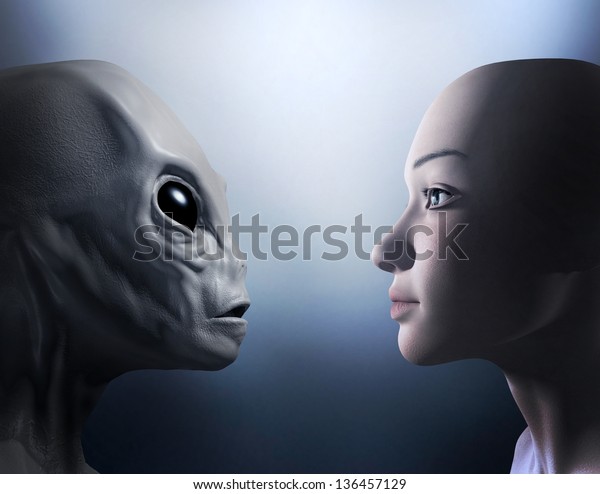
Eleventh: What if ET were microscopic? How would intelligent microbes sense the world? How would the communicate? (For an excellent treatment of these questions, read THE CHILDREN STAR, (1999) Joan Slonczewski.)

Twelfth: WHY would aliens even consider coming to Earth? What’s a LOGICAL reason for invading? Property. Power. Wealth. Probably not as WE understand it, what would be something we WOULDN’T understand?

Thirteenth: An invasion is only an invasion if someone survives it and names it as such. Is objection or manifest destiny – what other things would drive aliens? To answer the question, I would have to create an alien from their DNA outward.

Fourteenth: While parasitic aliens seem unlikely, is that just our omnivore
orientation speaking? How about an intelligent alien tapeworm that has a host THAT WE FIND ATTRACTIVE? These lovely hosts are about as smart as a dog, certainly not starship builders. I have to look beyond my prejudice of ALL life forms if I’m going to create a believable alien.

Fifteenth: Look at a Human society that you don’t understand at ALL – or even a person from a political party you hate. TRY and look at the world through their eyes…OK keep it simple. Look at some military action the society you don’t understand and see if you CAN understand.

Sixteenth: What do your aliens value: Family? Race? Conformity (not the wimpy “conformity” Americans practice. HARD CORE conformity…)? Ideology? Treatment of children? Make yourself study your culture from that alien POV.

Seventeenth: What is it that makes us Human? Pick ONE thing and twist it hard.

OK – that’s what I have so far. You might want to review the specific essay to get the full gist of what I’ve briefly summarized here. Or just take it, tweak it, and run with it!

From this point on, CREATING ALIEN ALIENS will become an irregular feature. I've shared pretty much everything I can think of. For the rest, check out and read books that have believable aliens in them! If you have questions, just post in the COMMENTS below and I'll do what I can to answer them! Thanks for following along this amusing journey!

Image: https://image.shutterstock.com/image-illustration/alien-human-600w-136457129.jpg

Guy Stewart is a husband supporting his wife who is a multi-year breast cancer survivor; a father, father-in-law, grandfather, foster father, friend, writer, and recently retired teacher and school counselor who maintains a writing blog by the name of POSSIBLY IRRITATING ESSAYS (https://faithandsciencefiction.blogspot.com/) where he showcases his opinion and offers his writing up for comment. He has 72 stories, articles, reviews, and one musical script to his credit, and the list still includes one book! He also maintains GUY'S GOTTA TALK ABOUT BREAST CANCER & ALZHEIMER'S, where he shares his thoughts and translates research papers into everyday language. In his spare time, he herds cats and a rescued dog, helps keep a house, and loves to bike, walk, and camp. He thinks out loud in print at: https://faithandsciencefiction.blogspot.com/