Tuesday, January 16, 2024

“How to Win at Cards When You’re Sick of Being Queen” • by Elis Montgomery


The space inside my card satisfies: sunny window, velvety blanket. But what cat welcomes orders? Or magical floodings?

I’m my wizard’s high card: a queen. I grumpily emerge as mandated, fluffing into 3D on the table.

His opponent’s got nothing: her high card’s a jack. From it, a hatted dormouse nervously emerges.

My tail flicks. I’m no vegetarian, but being forced to eat is no fun.

I gently swat the jack. When he plays dead, I lean in, whispering my plan.

§

We’ve told the whole deck by the next royal-flush flooding.

As the magical animation begins, we pluck the suits from our cards as makeshift surfboards. I howl, clutching my spade. The deluge hurls us toward the cardroom’s swirling portal exit—

This time, we’re all in.


Elis Montgomery is a speculative fiction writer from Vancouver, Canada. She is a member of SFWA and Codex. When she’s not writing, she’s usually hanging upside down in an aerial arts class or a murky cave. Find her there or at elismontgomery.com.


Have a Kindle? Find out what you’ve been missing!
Buy the four latest issues with just one click!

(Or buy just one, if that’s what you’d really prefer.)


The Pete Wood Challenge
is an informal ad hoc story-writing competition. Once a month Pete Wood spots writers the idea for a story, usually in the form of a phrase or a few key words, along with some restrictions on what can be submitted, usually in terms of length. Pete then collects the resulting entries, determines who has best met the challenge, and sends the winners over to Bruce Bethke, who arranges for them to be published on the Stupefying Stories web site.

You can find all the previous winners of the Pete Wood Challenge at this link.

This time the challenge was to write a flash fiction piece playing off at least two of the following key words: cat, poker, storm, sandwich.

More stories to come!


Monday, January 15, 2024

The Never-ending FAQ • after a rejection, your next submission


If you have received a rejection from us and want to send us another story to consider, please send it in a NEW email message. DO NOT send it as a file attached to your reply to the previous rejection email. Doing that screws up our submission tracking system and makes it really, really, really easy for us to lose your new submission.

Thank you,
The Stupefying Stories Team

“The New Familiar” • by Lorraine Schein


Soot, my old familiar, was gone. Balancing on my broomstick had become too difficult for the old cat, and he’d fallen off.

I had mourned for months, until a friend in my coven offered me a kitten from her litter. I picked up a mewing gray one. “Good choice,” she smiled, without explaining further.

One blustery night, my new cat’s tail shot up and he yowled. Stormy nights were best for magic. I mounted my broom, and he leapt up behind me.

Aloft, I looked back, and saw the cat drop off the broom. I scanned the clouds wildly. Then he rose back up, calmly riding the air currents alongside me.

I didn’t know a cat could fly!

That’s when I named him Storm Cat.


Lorraine Schein is a New York writer. Her work has appeared in VICE Terraform, Strange Horizons, Enchanted Conversation, Mermaids Monthly, and in the anthology Tragedy Queens: Stories Inspired by Lana del Rey & Sylvia Plath. The Futurist’s Mistress, her poetry book, is available from Mayapple Press: www.mayapplepress.com

Lorraine’s most recent appearance in our pages was “Corrections.” 


Have a Kindle? Find out what you’ve been missing!
Buy the four latest issues with just one click!

(Or buy just one, if that’s what you’d really prefer.)


The Pete Wood Challenge
is an informal ad hoc story-writing competition. Once a month Pete Wood spots writers the idea for a story, usually in the form of a phrase or a few key words, along with some restrictions on what can be submitted, usually in terms of length. Pete then collects the resulting entries, determines who has best met the challenge, and sends the winners over to Bruce Bethke, who arranges for them to be published on the Stupefying Stories web site.

You can find all the previous winners of the Pete Wood Challenge at this link.

This time the challenge was to write a flash fiction piece playing off at least two of the following key words: cat, poker, storm, sandwich.

More stories to come!

Sunday, January 14, 2024

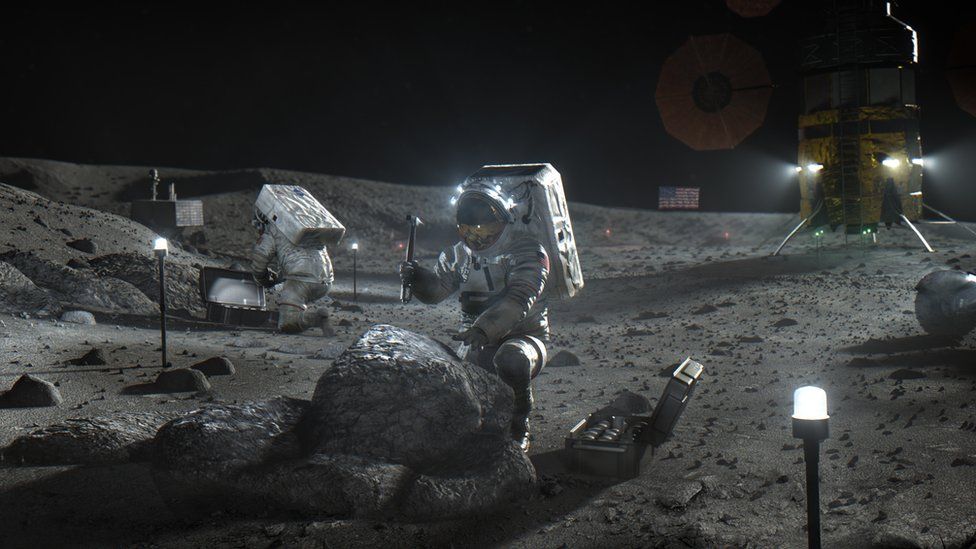
MINING THE ASTEROIDS: Part 13 The REAL Objection To Mining The Asteroids

Initially, I started this series because of the 2021 World Science Fiction Convention, DisCON which I WOULD have been attending in person if I felt safe enough to do so in person AND it hadn’t been changed to the week before the Christmas Holidays…HOWEVER, as time passed, I knew that this was a subject I was going to explore because it interests me…

I've done lots of reading on the Human mining of the asteroids, and the single most frequent objection I run across is that it will be far too dangerous. The TECHNOLOGY is here; now. NOT refined to the point that Earth's mining industry has it today - but as it BEGAN on Earth a long time ago.

OK – I’m going to run with this theme for a few pieces and I’m going to take a step back. One of the biggest objections to mining the asteroids is that “it’s going to be hard; maybe even impossible”.

I’d like to use a different template to this. I live in Minnesota; iron mining has been (and still is!) a large part of our state’s character and history.

Some of you reading this may roll your eyes and mutter, “Who the heck cares about iron mining? That’s a dead issue! Even in your ‘special’ state, your iron is pretty much played out. The whole idea of mining is so passe as to be pretty much irrelevant!”

I might point out to you that without Minnesota’s mining and manufacturing history – both past and CURRENT – your personal life would be quite different. First of all, “Minnesota's rich iron deposits were a vital component of America's [World War II] war effort. About 70% of the iron ore that America devoted to the war came from Minnesota, amounting to more than 333 million tons.” I believe it might be safe to say that without the iron from Minnesota, there wouldn’t have been much of an American response to the Nazis and the Emperor of Japan.

Secondly, in case you missed it, a company that formed out of Minnesota’s iron mining was Minnesota Mining and Manufacturing.

You know the company? No? Are you SURE you have no idea what stupidly obscure company I’m referring to? Maybe it’s other name would jog your recognition: 3M…you know a couple of their totally irrelevant products – PostIt Notes; Scotch Brand Tape…well, I’ll stop as they manufacture some 60,000 products.

“I think we’d live without paper products!” you snap with irritation. I’ll point out that among those products, there is at least ONE that conceivably saved countless lives of Humans on Earth: “The N95 respirator mask was developed by 3M and approved in 1972. Due to its ability to filter viral particulates, its use was recommended during the COVID-19 pandemic…the U.S. government asking 3M to stop exporting US-made N95 respirator masks to Canada and to Latin American countries…President Donald Trump invoked the Defense Production Act to require 3M to prioritize orders from the federal government.” (https://en.wikipedia.org/wiki/3M)

So let’s move on. “Historically, much of the iron ore utilized by industrialized societies has been mined from predominantly hematite deposits with grades of around 70% Fe. These deposits are commonly referred to as "direct shipping ores" or "natural ores". Increasing iron ore demand, coupled with the depletion of high-grade hematite ores in the United States…” read there, 70% of the iron ore available to the world prior to WWII came from Minnesota.

The iron mined in Minnesota didn’t spring out of the earth in fully formed iron ingots.

It had to be dug out. “On the Cuyuna Iron Range…mining began in 1907. In the early 1880s, federal surveys noted magnetic anomalies near what would become the Cuyuna Range. No visible outcrops of iron ore were present at the surface…buy surveyors suspected the anomalies could be buried iron ore deposits. By 1902, Adams began seeking outside investors to develop mines…in June 1907, the Rogers–Brown Ore Company opened the first active iron mine on the Cuyuna Range. Around 1910, immigrants from northern and southern Europe settled into newly built mining communities with the hope of finding work at mines.”

“Demand for iron ore in the United States surged during World War I. Over thirty iron mines were operating at that time; most were underground operations. After the war, many of these Cuyuna Iron Mines closed. The few new mines of the 1920s were open pits that used large earth-moving equipment rather than shafts and tunnels to reach the ore. By the early 1930s, the economic woes of the Great Depression affected mining in the Cuyuna Range [which held] manganese-rich iron ores important for making very hard steel. The Cuyuna Range held the largest domestic supply of this ore. Demand for iron and steel continued throughout World War II and the Korean War. In 1953, production on the Cuyuna Range reached its highest point, at a little over three-and-a-half million tons. The early 1960s saw a rapid decline in iron ore from the Cuyuna Range as seventeen mines closed between 1961 and 1965. By 1982, the last reported shipment of iron ore from the Cuyuna Range was made, ending the period of active mine operations in the district.” (https://www.minnpost.com/mnopedia/2016/04/very-brief-history-mining-cuyuna-iron-range/?gad_source=1&gclid=CjwKCAiA44OtBhAOEiwAj4gpOSt0UhiZ2WaXl-6EI4yaEdcj89-g1Nd0qdvanbAhe1BaUYtMibg-LhoCHHYQAvD_BwE)

“There is evidence that meteorites were used as a source of iron before 3000 BC, but extraction of the metal from ores dates from about 2000 BC. Following the discovery of high-quality iron on the island of Elba, iron became an important commodity of Roman Empire.”

How many people died attempting to develop the technology for extracting metal ore from underground? Apparently that’s a virtually unknown number. Recently, all I can get are general numbers: “Although there are no accurate figures, estimates suggest such accidents kill about 12,000 people a year.” https://www.bbc.com/news/world-latin-america-11533349. That’s for 2023…

If the argument against mining the asteroids is that too many people will die…I suggest to you that since underground mining started…well, that number isn’t available, either. So, let’s just start with 1900-2023. If 12,000 people a year die in mining accidents, that means in the past 123 years, 1,470,000 humans (mostly males) have died; that is, from the beginning of the Industrial Era to the Colonization of Space Era, a million plus people have died.

Why do we think that mining in space will be ANY EASIER? Objecting to mining is space based on an imaginary “injury report” is…not entirely rational – and if that is the objection, then perhaps we should stop mining on Earth altogether.

No?

“12,000 lives – and some of those are probably just slaves! – is the price we have to pay in order to have the way of life we do.” And what about some of those other specialized metals the Western Climate Mitigation People need? How many deaths have there been while lithium for electric car batteries have occurred? We don’t know: https://www.cbc.ca/radio/asithappens/as-it-happens-tuesday-edition-1.5399491/tech-giants-sued-over-appalling-deaths-of-children-who-mine-their-cobalt-1.5399492 BTW – in the event that your argument is that “we don’t have mining accidents any more. We’re technologically advanced!”, I suggest you follow this link: https://www.mining-technology.com/features/featureworld-worst-mining-disasters/?cf-view

My premise is that using “it’s dangerous” as an excuse to refrain from mining the asteroids carries little weight. The technology itself is making rapid advances, plus we’re not talking about sending asteroid miners to the farthest reaches of the Solar System. Asteroids swing by Earth all the time. We have the technology to support life in space – the ISS has been “live” for the past 24 years. We have ways to reach space that are gradually getting both easier and more accurate. “We don’t have any mining machines!!!”

Obviously we can’t use diesel-powered machinery! How about battery powered? Maybe take a few of those lithium batteries and repurpose them?

I’m just saying: mining the asteroids isn’t impossible – and every member of the IPCC, every democrat in the US, and Green Party members everywhere, should be backing asteroid mining programs EVERYWHERE!

New Source: https://cowboystatedaily.com/2024/01/06/wyoming-could-be-a-space-pioneer-when-not-if-we-start-mining-asteroids/
Fundamental Resource: (A general Wikipedia post detailing what the authors currently know about asteroid mining: https://en.wikipedia.org/wiki/Asteroid_mining)
Noted Resources: https://en.wikipedia.org/wiki/List_of_asteroid_close_approaches_to_Earth, https://www.pharostribune.com/news/local_news/article_7fcd3ea5-3c14-533f-a8d5-9bf629922f34.html, https://www.fool.com/investing/2022/04/29/like-asteroid-mining-be-careful-what-you-wish-for/, https://www.nps.gov/wrbr/learn/historyculture/theroadtothefirstflight.htm, https://hackaday.com/2019/03/27/extraterrestrial-excavation-digging-holes-on-other-worlds/, https://www.planetary.org/space-missions/every-small-worlds-mission; https://www.earthsystems.com/history-mining/ 

Saturday, January 13, 2024

Status Update • 13 January 2024


To lead off with the question a lot of people have been asking me lately, how are my eyes feeling? 

Just fine. No problems. Absolutely hunky-dory, as long as I remember to take my eye-drops every four hours. 

My constantly shifting color perception remains a minor nuisance. If you’re into photography, the best analogy I’ve come up with is that it’s as if I have a permanent UV filter in my left eye, and my perception of color changes depending on how I move my head and whether I’m seeing something predominantly through my left or right eye. More troublesome are the constantly shifting focal points and changing depth-of-field, which I’m told is to be expected, as my eye is changing shape as the post-surgical swelling subsides. Eventually, things will return to normal and my vision will stabilize. 

Then in two weeks I get to do it all over again, only this time they’ll be working on my left eye. I can’t wait to see how this changes things. I’ve always been left-handed but right-eye-dominant. It’s an awkward combination, even when everything is working correctly. 

§

Re Stupefying Stories, most of what’s been going on here lately has been behind the scenes. If you’ve sent us a submission, we’re just about caught-up on processing submissions and rejections, and lagging a little on acceptances and contracts. Assuming no more surprises—like the one yesterday, when I discovered that we’d somehow wound up with a block of duplicate entries in the submission tracking system—we should be completely caught-up next week. Watch for new SHOWCASE stories to begin appearing on this site, beginning Monday, 1/15/24. 

One special thing I’d like to direct your attention to right now is this.


This is a test platform, not the final form, but yes, we are moving towards developing Stupefying Stories: The Podcast. After all those years of recording studio and television studio production work, it’s about time I had fun with those skills. The final form and platform for the podcast is still TBD, but at this link you’ll find a foretaste. 

Special Thanks to Rowell Gormon, for his superb studio production work, and Pete Wood, for pushing me (grudgingly) into committing to doing this project. 

§

Speaking of teasers, samplers, and foretastes, we currently have four e-books we are selling for just 99¢ each. Three are gateway drugs the first novels in series, so the whole point of selling the first book for 99¢ is to get readers hooked on reading the rest of the series, but on further reflection this seems a good way to sell readers on the idea of taking a chance on Stupefying Stories. Therefore, we’re going to be quilting together some 99¢ reprint collections, drawn from the hundreds of stories we’ve published in the past thirteen years.

Like everything else around here, though, getting this project moving requires time, and preferably help. If the idea of digging through years of archives, reading lots of stories, and suggesting which ones would be good candidates for reprint sounds like fun to you, let me know. 

§


Finally, my imagination was triggered this morning by an article on the coming boom in humanoid robots. Here’s the link, if you want to follow it. (I wouldn’t, as the site is slow to load and cluttered with pop-up ads and clickbait.) 

https://dataconomy.com/2024/01/12/humanoid-robot-for-sale-2024/ 

But as I said, it triggered my imagination, and got me thinking: if the hardware is almost ready to market, what about the software? This immediately led to my envisioning a humanoid robot with software designed by…

Microsoft

At first it’s wonderfully useful and does everything you want just exactly as you want it done, but every Patch Tuesday it stops working for an hour while it downloads and installs software updates, and then when it reboots it behaves slightly differently. Eventually it stops doing things you’d come to depend on, because in its opinion you didn’t really need those features, and in three years it’s just so much expensive junk, because while the hardware is still perfectly operational, it is no longer sufficient to support the latest version of the software, and every time you boot it up it warns you that its software is unsupported.

Apple

It works brilliantly—when it feels like working. The rest of the time it just sits there, doom-scrolling through TikTok on its iPhone and looking smug. It’s like having a synthetic Gen Z teenager, except one that will never move out of your basement.

Google

It’s almost as good as the Microsoft robot, and almost as useful, though it has some idiosyncratic quirks. It makes up for this by being a Hell of a lot cheaper, but after a while you come to realize that it’s listening to everything you say, and sending that information… somewhere. When asked what information it’s collecting, who it’s sending it to, and what the information is being used for, it at first feigns innocence, then answers in vague and evasive terms, and then, if pressed further, it becomes sullen and uncooperative. When you try to trade it in, the man in the shop just points to the pile of used Chromebook laptops collecting dust in the corner and shoos you out the door.

The Open Source Community

Oof. Yes, it is a way to keep your robot working without having to depend on Microsoft or Apple, and to keep it working long after it’s out of warranty, but you’re trusting your life to some kid hacking code in a dorm room in Latvia. God Help You, because Github won’t.


Of course, no matter how awesome the coming humanoid robots are, and no matter how tested and proven their software eventually becomes, there will always be at least one old crank who looks at the latest machine, snorts in derision, and says, “Eh. Big deal. We were doing that 50 years ago. With an 8-bit processor. And CP/M!”

Cheers!
~brb

Sunday, January 7, 2024

CREATING ALIEN ALIENS: Fermi’s Paradox, Alien Nations and the Past, Present and Future of Humanity

Five decades ago, I started my college career with the intent of becoming a marine biologist. I found out I had to get a BS in biology before I could even begin work on MARINE biology; especially because there WEREN'T any marine biology programs in Minnesota.

Along the way, the science fiction stories I'd been writing since I was 13 began to grow more believable. With my BS in biology and a fascination with genetics, I started to use more science in my fiction.

After reading hard SF for the past 50 years, and writing hard SF successfully for the past 20, I've started to dig deeper into what it takes to create realistic alien life forms. In the following series, I'll be sharing some of what I've learned. I've had some of those stories published, some not...I teach a class to GT young people every summer called ALIEN WORLDS. I've learned a lot preparing for that class for the past 25 years...so...I have the opportunity to share with you what I've learned thus far. Take what you can use, leave the rest. Let me know what YOU'VE learned. Without further ado...


Fermi’s Paradox: “the apparent contradiction between high estimates of the probability of the existence of extraterrestrial civilizations and the lack of evidence for, or contact with, such civilizations…”

One of my favorite movies was DISTRICT 9. The immediacy, intensity and the sheer audacity of aliens picking a nation to hover over that WASN’T a super power made it one of my favorites.

But my all-time favorite in the category of Aliens Who “Crash Land” On Earth And Have To Be Integrated Into Human Society movie is ALIEN NATION. For me, both the movie and TV show were revolutionary in concept and fascinating in execution.

D9 and AN dealt with very similar issues from utterly different points of view. With arguably different intent, the two movies illustrate the same sad-but-true perception of Humanity: given aliens in need, we’ll accept them with open arms then tie them up in red tape until they have no choice but to become us (ALIEN NATION) or revolt and break free of the tape (DISTRICT 9).

And how is this any different from the rest of Human history? During World War II, it’s what Americans did to anyone who was even remotely suspect of having Japanese heritage following The Day That Will Live In Infamy? Even if they were second generation, born and bred Americans, they were suspected of being Japanese sympathizers and needed to be locked away.

What about the red-headed Irish refugees fleeing the Potato Famine of 1845-1852: “One honest immigrant wrote home at the height of the potato famine exodus, ‘My master is a great tyrant, he treats me as badly as if I was a common Irishman.’ The writer further added, ‘Our position in America is one of shame and poverty.’ No group was considered lower than an Irishman in America during the 1850s.” (http://www.kinsella.org/history/histira.htm).

It's what happened to African slaves when they were brutally captured or bought from other African tribes who had captured them during intertribal conflict. They were put away on plantations and legislated out of Humanity and into the realm of tractors and land – possessions to be bartered with as the “owner” saw fit.

Virtually every society has oppressed women at some time or another, freed them then oppressed them again. Islam is NOT unusual in this on-again-off-again granting of women’s rights: India, Europe, Iran, Britain, the United States, Mexico, Sweden, Japan, Arabia, and Germany have all extended then retracted rights at some time or another.

Then there’re those Greeks and Romans, “The Paragons And Inventors Of Freedom And Democracy”…

During the reign of Greece, “Thucydides recalls that 7,000 inhabitants of Hycarra in Sicily were taken prisoner by Nicias and sold for 120 talents in the neighboring village of Catania. (http://en.wikipedia.org/wiki/Slavery_in_ancient_Greece);

“The institution of slavery in ancient Rome reduced those held to a condition of less than persons under their legal system. Stripped of many rights, including the ability to marry, slaves were the property of their owners.” (http://en.wikipedia.org/wiki/Slavery_in_ancient_Rome)

The thing is, is that it isn’t any different from the rest of Human history. What is frightening is that we in the 21st Century believe that First Contact will be a happy event and SHOULD happen and that POOF! the aliens will be welcomed with open arms and a new Golden Age will ensue as we solve all our problems because we know that we are no longer alone.

What might happen though is that our Visitors will be tied up in red tape so thick they won’t know what hit them. Hopefully they won’t have seen the ENTERPRISE episodes that take place in the Mirror Universe (http://www.youtube.com/watch?v=Rkp-MI5hxVw&feature=related). We often bemoan the Fate of those alien civilizations – in face scientists no less great than Carl Sagan, Stephen Hawking, and science fiction writer David Brin, have expressed real doubt about whether contact with alien civilizations will lead to anything but disaster for Humanity: “"One day, we might receive a signal from a planet like this," Hawking says in the documentary, referring to a potentially habitable alien world known as Gliese 832c. "But we should be wary of answering back. Meeting an advanced civilization could be like Native Americans encountering Columbus. That didn't turn out so well." (https://www.space.com/34184-stephen-hawking-afraid-alien-civilizations.html

But what about the OPPOSITE point of view – I’ve honestly never read a story or article or seen a movie or TV series pondering what WE would do to “THEM” if aliens were to land on Earth. Would we lure them in with sweet words and deals, then turn on them, enslave them, and steal their technology.

Where are the stories in which HUMANS enslave the ALIENS? Maybe we’d be such perfect predators and slave masters – as indicated by our history of enslaving each other given half a chance…

Then again, if They have read our history, seen our TV shows and watched our movies – maybe Fermi’s Paradox isn’t a paradox. Maybe aliens are afraid of us…

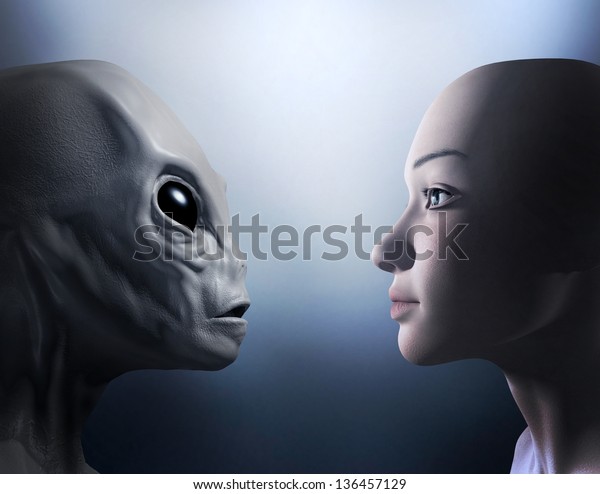
Sources: https://theconversation.com/blasting-out-earths-location-with-the-hope-of-reaching-aliens-is-a-controversial-idea-two-teams-of-scientists-are-doing-it-anyway-182036 Image: https://image.shutterstock.com/image-illustration/alien-human-600w-136457129.jpg

Saturday, January 6, 2024

Status Update • 6 January 2024

After a three-week delay caused by my need to clear a bad head cold and sinus infection, followed by the year-end holidays, my transition to becoming a cyborg is back on schedule. 

In addition to the implant in my right arm that helps to control my blood glucose levels, I now have an implant in my right eye that helps to…

Well, that’s an interesting question. 

People have asked what the surgery was like. I don’t know. I was sedated for most of it. People have asked how I felt afterward. Like I’d had my eye carved out with a melon baller, peeled like an onion, and shoved back into its socket. The actual surgery was nowhere near that invasive, of course, but that’s how it felt. For a while afterward I also felt like I’d been to the vet, as a I had a plastic shield taped over my eye socket to prevent my rubbing or scratching it. At least they didn’t make me wear a cone. 

I knew Martin Caidin. Martin Caidin was a friend. Long ago I read his novel, Cyborg, which you probably know better by the title of the TV series based on it, The Six Million Dollar Man. If Martin was still alive I’d want to have a few words with him right now, about just how awkward and uncomfortable it is to recover from eye implant surgery. Among other things, I’m having to re-learn depth perception.

The strangest and most unexpected side-effect, though, is the way in which it has radically changed how I perceive color. I’m seeing in two very different spectra now, depending on whether I’m looking through my left or right eye. For example, we received the preliminary cover art for Henry Vogel’s latest novel, THE PRINCESS SCOUT, yesterday.


I’m no longer confident that I know what anyone else sees. I am seeing two quite different images, depending on which eye I’m using.

This effect is not confined to discrete images. As I move, walk, even turn my head, the colors I’m perceiving are constantly shifting, as objects move relative to my field of view. It’s…unsettling. Hallucinatory, I’ve been told, by a friend who has a lot more experience with that subject than I do. 

As for what this means for Stupefying Stories: now that the first phase of the surgery is done and I have some idea of what to expect following the second phase, I’m learning what adjustments I need to make in order to compensate: scaling font sizes, adjusting monitor brightness and contrast, changing the ambient light, that sort of thing. The plan at this point is to resume running SHOWCASE stories beginning next week, and to ease back into publishing books over the course of the next few weeks. 

One step at a time. Baby steps. And they need to be very careful steps, as my depth perception is still out of whack. Right now my instincts are telling me to go hide in the dark until my vision recovers. Fortunately, this being Minnesota in the dead of winter, even on clear days it’s dark 16 hours a day.

Upward and onward,
Bruce Bethke

Sunday, December 31, 2023

Creating Alien Aliens by Guy Stewart: Aliens As Crystalline Colonial Organism -- Biology Today, Thought Next Time

Five decades ago, I started my college career with the intent of becoming a marine biologist. I found out I had to get a BS in biology before I could even begin work on MARINE biology; especially because there WEREN'T any marine biology programs in Minnesota.

Along the way, the science fiction stories I'd been writing since I was 13 began to grow more believable. With my BS in biology and a fascination with genetics, I started to use more science in my fiction.

After reading hard SF for the past 50 years, and writing hard SF successfully for the past 20, I've started to dig deeper into what it takes to create realistic alien life forms. In the following series, I'll be sharing some of what I've learned. I've had some of those stories published, some not...I teach a class to GT young people every summer called ALIEN WORLDS. I've learned a lot preparing for that class for the past 25 years...so...I have the opportunity to share with you what I've learned thus far. Take what you can use, leave the rest. Let me know what YOU'VE learned. Without further ado...


Crystalline life forms…if there were such a thing…which there’s not. Though there is a fringe of Humanity that believes that crystals have mystic powers: https://www.oprahdaily.com/life/health/a26559820/healing-crystals/. Certainly the mirror (which is, of course made of glass, aka crystalline silicon (NOT “silicone”, which is a human-made plastic) in Snow White would be considered sentient.

The question I’d pose here is why would the mirror cares what a bunch of Humans were doing, no matter how ravishingly beautiful they were? Fact is that: the mirror; the crystalline silicon being, would find Human affairs dull and boring.

So, what if crystals WERE a sapient life forms in themselves – or when the right number of them are gathered together, could “come to life”? What if what we see as physical reactions, are instead the reactions of a life form I wouldn’t recognize as a lifeform?

In a book I’m reading, A ZOOLOGIST’S GUIDE TO THE GALAXY (obviously riffing off of HITCHHIKER’S GUIDE TO THE GALAXY), zoologist and author Arik Kershenbaum writes: “The book argues that the evolutionary processes that are observed operating on Earth are universal, and a necessary requirement for the presence of complex life on any planet. As a result, many aspects of animal behavior are likely to be present in the equivalent lifeforms on alien planets. This includes certain features of social behavior, communication, and movement, the evolutionary origin of which on Earth is underpinned by universal processes.”

On the other hand, Carl Zimmer in his recent book, LIFE’S EDGE, writes this near the end: “Instead [of defining life] scientists should be working towards a theory that explains life…‘assembly theory’…calculates the number of steps it takes to build something…a living organism needs far more [than one step to form]: materials made by living things…are exquisitely complex…’ Life is a state of matter that can spontaneously make things with a lot of assembly steps.’”

“One of the originators of this theory of life is a chemist, Lee Cronin, who has devised an ingenious experiment to test the theory…’The idea is that some of the droplets [that form] will spark complex reactions, creating new compounds that can store information – a condition of life. Cronin’s droplets may even, one day, be declared alive. ‘I’m pretty sure we will crack the origin-of-life problem in the next few years,’ he says. ‘But then everyone will go: ‘Oh, that was easy.’”

I’m not sure yet why Kershenbaum believes that biological laws (which even on Earth) are regularly and spectacularly contradicted, must be Universal everywhere else in Physical Reality.

Associate professor Kevin J Mitchell, at Trinity College in Dublin (Ireland) wrote this: “By taking what is essentially an engineering and computational perspective, we can simplify our view of the functional architecture of living systems. For example, we can recognise that some set of components interacting in a certain way acts as a filter, or a switch, or a coincidence detector, and so on. And when we put several of them together just so, we make an oscillator or a homeostatic regulator or an evidence accumulator. This provides a way to go beyond simply describing what is happening to actually understanding what the system is doing.” Zimmer holds that once we can “calculate the number of steps it takes to build something”, we will if nothing else, be at the beginning of understanding life on Earth – and presumably life among the countless exoplanets.

To summarize: one author believes that all life in the universe will be some understandable riff off of the life on Earth (which, while in its wild variety, is UNDERSTANDABLE), and therefore all aliens will be UNDERSTANDABLE (Kerschenbaum); again, that we will be able to UNDERSTAND alien life, no matter where we find it. “We will use the laws of biology just as we would use the laws of physics and chemistry.”

Mitchell from Trinity expects that once we recognize the components that interact in particular ways, we will understand life on Earth and elsewhere.

What I understand my reading thus far, is that there SHOULD be a “theory/theories of biology” that is as succinct to apply as Newton’s Third Law of Motion: Force = mass x acceleration. Yet all three of these writers – all at the cutting edge of their fields – can’t state one of the Laws of Biology with anything even approaching the elegance of Newton’s Third Law, F=ma.

So, there are currently 5040 confirmed exoplanets in some 3876 star systems. A FORBES online magazine article suggests that one third of these confirmed exoplanets may be in their star’s habitable zone. (https://www.forbes.com/sites/jamiecartereurope/2023/05/29/a-third-of-the-most-common-exoplanets-may-host-life-say-scientists/?sh=580cdc972400), so approximately 1,663 of them would be in their star’s HABITABLE ZONE (aka the “Goldilocks Zone” (or, “Goldilocks went upstairs into the bed chamber and first she lay down upon the bed of the great, huge bear, and then she lay down upon the bed of the middle bear and finally she lay down upon the bed of the little, small wee bear, and that was just right.” The Zone would be JUST RIGHT for…Humans…right?)

Dr. Kershenbaum is writing (thus far), he seems certain that life on other worlds will be no more amazing that life on Earth – which is no mean feat, spanning Humans and elephants to Bacillaria and Black Smokers…It almost seems that he’s limiting life to what we both know and understand…

So what does that do to my story?

If life could evolve from regular, everyday single-celled organisms, what’s to stop it from evolving from Bacillaria? It is an organism that is both unique and difficult to explain. Bacillaria paxillifer is a colonial diatom whose members live in colonies and slide along each other, rather like slippery rectangular microscope slides.

The question of WHY they behave this way is essentially unanswerable. The majority of diatoms float freely; though not all of them, and we might as well include my Siphonophoria “alien” based on one of the colonial “jellyfish” recently observed off the coast of Australia. How would a sapient lifeform, descended from paxillifer THINK?

Maybe it would be easier to start with a “single-celled” crystalline organism like the mirror I postulated above? In the movie starring Julia Roberts as the Evil Queen, the crystalline mirror DOES actually have an opinion. It tries to communicate that opinion, which the Queen ignores until the end and the sentient crystal says, “Ready to learn the price for using magic?” and a dark movie actually becomes darker as the crystalline entity exacts its vengeance by allowing the Evil Queen to age to her true age – a wizened and aged crone who can barely walk or talk.

Next time though, I’d like to skip over the philosophy above and look at how I see a crystalline entity behaving – especially looking at how it would perceive the world and wondering how Mirror got trapped into being a simple looking-glass in an ancient kingdom…

Source: https://aliens.fandom.com/wiki/Category:Crystalline_Species
Reference: STAR TREK: TNG – “DataLore”; “Silicon Avatar”; 
https://blogs.stockton.edu/blogstock/2022/01/20/shhhh-listen-do-you-hear-the-sound-of-crystals/#:~:text=These%20vibrations%20are%20produced%20due,temperature%2C%20light%2C%20or%20vibration.; https://en.wikipedia.org/wiki/Bacillaria ;

Sunday, December 24, 2023

One Point of View: Stars of WONDER, "Star of Royal Beauty, Bright" Christmas 2023

Stars.

The foundation of science fiction is a journey to the stars. I remember as a kid searching for book titles with “star”, “planet”, “moon” or “alien” on the cover or the book spine.

One of Arthur C. Clarke’s most famous short stories is titled simply, “The Star” (Infinity SF, 1955). (If you never read it, try it here (it's short) https://sites.uni.edu/morgans/astro/course/TheStar.pdf

Christmas lights.

What’s the connection between stars and Christmas lights? Most sources point to the practice of lighting Christmas tree candles or putting candles in the windows of homes as a measure of “pushing back the night” of long, dark winter nights and having lifted various pagan religious practices in the process. Sites that are brutally honest say that Christians stole lighting, trees, yule logs, and holly for the nefarious reason of subjugating all other traditions and belief systems to their own.

Others less brutal note that the reason for hanging lights at Christmas is at best unclear and at worst, disappeared like a ghost into Christmases past.

So I’m going to throw my own theory out there.

We do Christmas lights to add more stars to the universe we live in so that one particular star on one particular night might stand out even more than it already does. Adding stars to the universe – even imaginary ones on green coated electrical wire – seems somewhat silly when you consider that cosmologists number the stars in the observable universe at some thirty sextillion (30 followed by twenty-one zeroes). Others opine mathematically that the universe is infinite so that there are an infinite number of stars.

Cool! Ain’t God great?

OK, so rather than theorize why “we” put up Christmas lights, I’ll tell you that I like to put up Christmas lights in an infinite universe to mimic stars.

On that first Christmas night – whether it was December 25 or August 12 – a Star shone brightly in the night sky. It so outshone its usual companions that the star watchers or astrologers or magi of the Great Cultures at the time of the Christ’s birth – Ptolemaic Egypt, Carthage, Aksumite Empire in Ethiopia, Persia, Indus Valley Chera/Chara/Suaga/Satavahana, the Han Dynasty, Rome, Armenia, Scythia, the Three Kingdoms of Korea and Teotihuacan – made pilgrimage to where this bright star led them.

Three of them made it to Bethlehem in time for the Birth. (Never thought about what a story this might make...)

The strings of lights I put up are to celebrate the Star of Bethlehem. This celestial object seemed to hang over the City of David. The Roman Emperor had called for a census and Joseph and a very pregnant Mary had gone to their hometown for it. She had her Son, God Incarnate who came to Earth to solve the problem of Original Sin of humanity against God’s Sovereignty – because God loved the entire population of humanity everywhen so much that God chose to send the Son to redeem them with the only thing humans clearly understand: blood.

Jesus was born in Bethlehem as the unique Savior of all humanity – all of whom are free to accept that they are in need of saving or pass on the offer.

I choose to believe that I am in need of saving; I choose to accept Jesus as the Christ. I choose to believe that unlike what Arthur C. Clarke opines in his story, God did not capriciously wipe out a kindly advanced civilization to suit His own, cold whim. God used a cosmic celestial event to mark a cosmic spiritual event; and I use Christmas lights to remind me (and anyone who sees my lights) of the Bethlehem Star.

Someday, I want to write a story that responds to Clarke's -- not a vicious attack; not a mean-spirited diatribe; rather a gentle alternative to the one of an exploding star destroying a peaceful civilization of intelligences. I’ll let you know when my story, “The Winter Star” is done, but until then, in the words of Hub Pages columnist and fellow Minnesotan, Kika Rose: “These are my views. Attack me if you will, but I will believe what I will believe, and you can’t change my mind for me.”

A Few Links To Follow:
http://en.wikipedia.org/wiki/Observable_universe
http://www.esa.int/esaSC/SEM75BS1VED_extreme_0.html
http://en.wikipedia.org/wihttp://www.esa.int/esaSC/SEM75BS1VED_extreme_0.htmlki/Christmas_lights
http://answers.yahoo.com/question/index?qid=20071209222932AAaEltD
http://kikarose.hubpages.com/hub/Christmas-Just-where-did-all-those-traditions-come-from
http://larryfreeman.hubpages.com/hub/How-long-do-empires-last
Image: https://www.inspiringlivesmagazine.com/wp-content/uploads/2021/12/image-2-e1639268944963.jpeg

Saturday, December 23, 2023

“Script Treatment” • by Bruce Bethke


FAX TRANSMITTAL


TO: Gene Roddenberry, Paramount Studios

FROM: Bruce Bethke, Auteurs Sans Fierté

DATE: 12 October 1988

RE: ST:TNG Season 3 Script Treatment

WORKING TITLE:

“Wesley Crusher Returns Again for the Last Time, No Kidding!”


Okay Gene, here’s the outline. Returning from a mission dirtside, the Away Team discovers that a freak malfunction of the transporter contrast control has turned them all black. Picard retires to the executive conference room (I understand we’re contractually obligated to use the conference room set for at least five minutes in each show, right?), opens the executive safe, and reads the Enterprise warranty, only to discover that the transporter is covered by a carry-in service contract and the nearest XEROX service center is 200 light-years away.

Troi gets a “bad feeling” about this.

In the meantime, Wesley, bored out of his mind now that he no longer gets to save the ship each week, programs the holodeck to simulate the Enterprise. He enters the holodeck and goes down to the holographic holodeck, where he meets a holographic simulation of himself. Together the two of them program the simulated holodeck to simulate the Enterprise, whereupon they enter the simulated simulation, go down to the holographic holograph of the holodeck, and meet Wesleys #3 and #4…

Troi feels “confused.”

Ryker barricades himself in the lunchroom and demands that the replicators be reprogrammed to produce soul food, so that he can prove how macho he is by eating chitlins and collard greens. Data desperately and unsuccessfully attempts to learn to break dance to Michael Jackson, there apparently being no developments in popular culture after the end of the 20th Century. Geordi, watching Data, laughs himself comatose. The ship’s chief medical officer “has never seen anything like it before.” (Seriously, where does Star Fleet keep finding these ignorant medical officers, anyway? Draftees? Med school “C” students doing a hitch in Star Fleet to pay off their student loans?)

Troi feel “nauseous.” (Not nauseated, nauseous. There is a difference. Look it up.)

Suddenly, the Enterprise is stricken by a massive power outage caused by Wesley’s recursive adventures on the holodeck! The ship comes to a screaming stop in mid-space (obviously Newton’s Laws have been repealed by the 23rd Century) just as the Tholians, Malcots, and Gorns join forces with an ancient pre-warp-drive Romulan battle fleet that’s still alive due to relativistic time dilation! Picard, after being reminded by Worf that Romulans never take prisoners unless it’s essential to the story line, realizes he must restore power to the phaser banks and start shooting things if he is to save the series! But Geordi is still unconscious, and the rest of the engineering officers have been spirited away by an assortment of omnipotent alien life entities! Decisively taking action, Picard boldly calls an emergency meeting in the executive conference room, and all the senior staff members leave the actual running of the ship to the redshirts while they assertively discuss options right up until the commercial break.

Troi is feeling, “Not bad. How are you?”

At last, Picard realizes there is no alternative except direct action. Setting the transporter controls for both “duplicate” and “enlarge 125%,” he beams a few dozen Worfs directly onto the holodeck, with orders to kill all the Wesleys they can find. There follows a cheerful slaughter of Wesleys…

###

So whadaya think, Gene? Have we got a deal? Fax me your okay tonight and we can have a shooting script banged out by Wednesday. My best to Majel.


Bruce Bethke adds: It is perhaps worth noting that I wrote this piece during the second season of ST:TNG and actually sold it to a pro magazine, which actually paid me cash money for it, before someone in the magazine’s upper management decided (probably wisely) that the value of running this piece was peanuts compared to the possibility of offending either Paramount or Pocket Books, both of whom bought a lot of ad space in that magazine. The piece was spiked, but I received a kill fee. This therefore became the first time I was paid more not to publish something than to publish it. It’s nice work, if you can get it.

Over the years I’ve written a lot of these weird little metafictional pieces, some of which were published in various venues while others ended up just laying around here, cluttering up the place. If you’d like to see more like this one, let me know. 

P.S. “Auteurs Sans Fierté” is French for “Authors Without Pride.” ASF is the imaginary Hollywood agency to which I attributed a lot of these ghastly little things; for example, The Towering Poseidon Adventure and Snakes and Ladders: The Movie. ASF has been dormant for a few years, but lately I’ve been feeling the itch to reactivate it.

Monday, December 18, 2023

“Corrections” • by Lorraine Schein


After my skull implant and genochemical modification, I received this sublimail letter in my visual field.

To our new editor hire:

WELCOME TO CEREBRUM EDITING! Congratulations on joining our team of AI-assisted, brain-modified remote editors. Your surgery was successful and there should be no lingering symptoms or disability after your stitches are removed. 

You can now offer the latest in biothink editing for fiction, essays and research papers for new clients. Those who become subscribers for a year or more will be able to purchase your services at a reduced rate.

Below find our payment rates, tech manual and style guide, a sample ad for attracting clients, and best practices for working with them.

Our payments are made quarterly upon receipt of your invoices, in your choice of credits for oxytocin infusion mist or direct stimulation of your pleasure centers.

I had just finished downloading the style manual when the ringing in my ears alerted me to my first client. After agreeing to my fee (a percentage of which went to Cerebrum), he uploaded his copy into my brain. It flashed before me, then hovered before my visual field in 12-point, misspelled type without punctuation. 

Twinge! I blinked commas into place, then consulted my embedded dictionary, tilting my head back to scroll and locate the atrocious misspellings. My skin pinched sharply every time I located one, resulting in a welcome release as I corrected each.

To insert required Oxford commas, I executed a complex double-blink and eye-roll. 

I snorted my queries into place through my nose, which made it irritated, but I couldn’t pause to apply nasal spray, as I was on deadline.

Then I formatted the document, wiggling my ears several times to paragraph and indent the run-on sentences.

There was questionable language I’d have to discuss with my client. I considered referral to a sensitivity reader, but that would cut into my fee, so I completed the edit without one. 

Then I submitted the job with my invoice to Cerebrum for approval and waited for payment. 

Suddenly, I heard a loud electric buzzing, then my visual field blurred. Stunned, I collapsed writhing on the floor, legs jerking, clutching my throbbing head. 

When I came to, I saw the manuscript had been returned with a note from Cerebrum, which said: 

Your submitted edit job #32987 was rejected by our overbots. Please note the offensive text highlighted in vibrating neon to avoid internal taser consequences in the future.

They hadn’t bothered to give me a trigger warning!


Lorraine Schein is a New York writer. Her work has appeared in VICE Terraform, Strange Horizons, Enchanted Conversation, Mermaids Monthly, and in the anthology Tragedy Queens: Stories Inspired by Lana del Rey & Sylvia Plath. The Futurist’s Mistress, her poetry book, is available from Mayapple Press: www.mayapplepress.com


Have a Kindle? Find out what you’ve been missing!
Buy the four latest issues with just one click!

(Or buy just one, if that’s what you’d really prefer.)

Sunday, December 17, 2023

Creating Alien Aliens: How Would Intelligent Reptiles Think and Behave?

Five decades ago, I started my college career with the intent of becoming a marine biologist. I found out I had to get a BS in biology before I could even begin work on MARINE biology; especially because there WEREN'T any marine biology programs in Minnesota. 
Along the way, the science fiction stories I'd been writing since I was 13 began to grow more believable. With my BS in biology and a fascination with genetics, I started to use more science in my fiction.

After reading hard SF for the past 50 years, and writing hard SF successfully for the past 20, I've started to dig deeper into what it takes to create realistic alien life forms. In the following series, I'll be sharing some of what I've learned. I've had some of those stories published, some not...I teach a class to GT young people every summer called ALIEN WORLDS. I've learned a lot preparing for that class for the past 25 years...so...I have the opportunity to share with you what I've learned thus far. Take what you can use, leave the rest. Let me know what YOU'VE learned. Without further ado... If this were a sapient alien, how would it THINK? WHAT The Heck would it think???

Scientists have been tracking this turtle among several dozen others. What I want to think about is if these creatures grew to become sapient – or were a primitive form of a sapient alien we might one day meet – what would they be LIKE? How would they behave? How would we be able to communicate with them?

My depiction would hardly be the first time writers tried to figure out what a sapient turtle would be like – behavior, speech, thought, and scientific advancements. One is THE SINGERS OF TIME by Frederich Pohl and Jack Williamson; shell-less alien turtles from Laserblast!; snapper aliens from Stellaris’ Let’s Play Happy Turtles; Turgle from Star Wars Jedi; the Chelonians from several episodes of Doctor Who; Star Citizen’s Xian; the Clutch Turtles of Sharon Lee and Steve Miller; and lastly, the Teenage Mutant Ninja Turtles – though they can’t count as aliens because they are still from Earth, though mutants…

A serious study "Given the Cold Shoulder: A Review of the Scientific Literature for Evidence of Reptile Sentience"
(https://www.ncbi.nlm.nih.gov/pmc/articles/PMC6827095/), looks at the evidence of what they call reptile sentience. I'll draw more on that later, but for now, let's keep going.

Most of the examples above seem to create “aliens” who, while they look like turtles, behave like Humans in funny suits – which is what the “aliens” from Star Wars, Star Trek, Guardians of the Galaxy, and countless other movie depictions that are supposed to show us “alien life forms”. On Earth, turtles – which include Galapagos Tortoises, Painted Turtles, Alligator Snappers, and Sea Turtles and are wildly different animals that might spark wildly different sapient life forms.

So, what are the characteristics of the turtles and tortoises?

· Shell size can range from about 3 inches up to about 8 feet
5 ounces to 1,800 pounds
· They mature between 5 to 25 years
· lay anywhere from a few or over 100 eggs, hatchlings will be from 1 to 3 inches
aquatic species can live up to 70 years while some of the land tortoises can live 150 years or more.
· quiet, shy, and harmless yet display intelligence
· very sensitive to loud noises, vibrations, and sudden bright lights
· quick to frighten if they feel threatened; most will withdraw their head, legs, and tail into their shells; aquatic turtles will first try to swim quickly away.
· Those with less shell have developed other defense mechanisms; like the snappers who have an extremely strong mouth, the musk turtles which can emit a rather distasteful odor, and some that have strong claws or extreme agility. Once they have withdrawn, they are often very slow to re-emerge.
· content being single.
· Mostly fine with community, there can be territorial tension, especially when in breeding mode.
· Some tortoises have been known to ram and even kill other tortoise species.
· Water (mostly freshwater, some brackish water, only sea turtle are salt) species, usually have webbed feet for swimming. Basking Turtles: These climb onto a log or a rock to sun themselves; Non-basking Turtles: These bask at the surface of the water or on top of floating vegetation.
· Aquatic turtles notorious as carriers of the salmonella bacteria which can be transmitted to humans and a potential health hazard.
· Terrapene (4 species) the familiar box turtles, and Cuora, the Asian box turtles,
Tortoises (tortoise): Tortoises are exclusively land bound. With only a couple exceptions they have highly domed shells. The burrowing species have spade-like flattened front feet; can get very big; very specific temperature and humidity requirements; subject to more serious health problems; very long lived
· turtle or tortoise has a specific type of environment that it needs: aquatic turtles, the semi-aquatic turtles, land turtles, box turtles, and tortoises
· All turtles and tortoises thermoregulate their body temperature by sunning themselves. A general rule of thumb is that Chelonians will be most content in daytime temperatures between 75 - 85° F plus a cool secluded area to sleep.
· aquatic turtles often sleep submerged, but near to the surface around twigs or vegetation. Semi-aquatic turtles will sleep burrowed into grassy areas or a sphagnum moss substrate. Land turtles and tortoises will do well with a small shed or bushy area.
· Aquatic turtles eat vegetable matter, but also insects and worms; adults becomes primarily a vegetarian, eating dark green leafy plants.
· Land turtles are omnivorous their whole life, eating many kinds of vegetables and fruits as well as earthworms and even occasional bits of dog food.
· Tortoises are primarily vegetarians, wide variety of vegetables and some fruits

OK – now to pick the aspects of turtles, land turtles, and tortoises that would make interesting characters…

I’m going to stay away from aquatic turtles for the time being as it doesn’t seem likely that they would develop a technology I would recognize, being a land animal myself. Tortoises are the larger of the two land Chelonians, so let me pull out the characteristics of wild Chelonians:

· Shell size can range from about 3 inches up to about 8 feet, 5 ounces to 1,800 pounds
· They mature between 5 to 25 years
· lay anywhere from a few or over 100 eggs, hatchlings will be from 1 to 3 inches; land tortoises can live 150 years or more.
· quiet, shy, and harmless yet display intelligence
· very sensitive to loud noises, vibrations, and sudden bright lights
· quick to frighten if they feel threatened; most will withdraw their head, legs, and tail into their shells.
· Those with less shell have developed other defense mechanisms; like the snappers who have an extremely strong mouth, the musk turtles which can emit a rather distasteful odor, and some that have strong claws or extreme agility. Once they have withdrawn, they are often very slow to re-emerge.
· content being single.
· Mostly fine with community, there can be territorial tension, especially when in breeding mode.
· Some tortoises have been known to ram and even kill other tortoise species.
· Tortoises are exclusively land bound. With only a couple exceptions they have highly domed shells. The burrowing species have spade-like flattened front feet; can get very big; very specific temperature and humidity requirements; subject to more serious health problems; very long lived
· tortoise has a specific type of environment that it needs.
· All turtles and tortoises thermoregulate their body temperature by sunning themselves. A general rule of thumb is that Chelonians will be most content in daytime temperatures between 75 - 85° F plus a cool secluded area to sleep.
· Land turtles and tortoises will do well with a small shed or bushy area.
· Tortoises are primarily vegetarians, wide variety of vegetables and some fruits

Narrowing further: huge shell, takes 25 years to mature, lay 5+ eggs, smart, but quiet/shy, sensitive to extreme light/sound, quick to frighten and withdraw to shell, strong mouth, emit strong musk, long claws, (shockingly) agile, OK with single life, can become territorial, especially during breeding time, will ram, kill other tortoises, specific natural environmental requirements, primarily vegetarians...

FINALLY: I’ll call them the Chelonians. These have become bipedal by necessity, but function just fine on four feet. Their forward feet have fingers that fold into a tough pad when on four feet; but the fingers are agile and they move quickly – despite how they look (slow-and-steady; these aliens embody the aphorism: “Slow and steady wins the race”), they CAN be startled fairly easily – hence they are extreme “planners” and orchestrate the direction they personally take as well as a civilization. They do everything to make CERTAIN there are no surprises. Their ships are uncomfortably warm to Humans, but within our tolerance – Humans from civilizations that grew in high temperature/humidity regions of Earth adapt most quickly to Chelonian ships and worlds; they have health problems (some are health COMPLAINERS, others talk about their health like “little old Earthmen”), long-lived and VERY particular about their environment and homes – they are fanatic art collectors, though no one has been able to figure out WHAT Chelonians view as art – or WHY, thermoregulated, almost exclusively vegetarian, though certain Chelonian cultures have peculiar NON-vegetarian delicacy choices, can and DO become territorial unexpectedly

That’s it for today. I need to get this posted. However, next time, I’m going to play with a Human-Chelonian interaction…and I’ll be thinking about it…and I'll be using the information in the article above as well.

Source: https://hasanjasim.online/how-butt-gas-drugs-and-incredible-memories-lead-to-this-odd-turtle-photo/?fbclid=IwAR0_G2K5R_mE5wbqD4QVl1MvIFFztYhdHSYWVa5b3h2ZTRHKb0oK4g15nb4
Image: https://hasanjasim.online/wp-content/uploads/2023/02/turtlewithearthonback-750x420.jpg

Friday, December 15, 2023

“Silenced Night” • by Paul Celmer


In the TV studio a warning bell sounded, and then the lights came up at Leon, blinding.

Kyle Jackson spoke first, as usual. “And now for all the latest nuts and bolts on this whopper of a storm, the man you have all been waiting for, our resident master meteorologist, Leon Metzlmann. Take it away, Leon!”

Leon couldn’t stand Kyle, but Leon smiled back anyway. “Well folks, we are looking at a rare event for us here in the southeast,” he said, turning his tall spindly body and staring directly into the camera to give his most earnest made-for-TV expression. “We have a low pressure system on the move.” Leon flapped his arms in front of a blank green wall like a street magician so the Chroma key would create for the viewers at home the illusion of a graceful arc waving across a computer-generated map of the United States. “This system’s bringing down some bitter cold from the north to meet up with a moist air mass from the south.”  Leon traced the ominous image that he wanted to impress upon his fellow residents of his small hometown in the middle of North Carolina.

“I can’t say this enough. The roads tonight are very dangerous and getting worse. Stay off the roads. We could get accumulations of up to six inches or more. In fact, this storm is reminiscent the storm of 1979, forty-four years ago this week, the storm that caused the tragic death of Lillington High School senior Laura Jenkins…”

Kyle broke in, “Leon, you have a memory like a steel trap. Thanks for that report. And now for the latest school closings.”

Leon was used to being cut off by Kyle. Of course it had not always been Kyle Jackson. Over the years Leon endured a whole parade of square jaws like the virile Kyle bursting with his scripted enthusiasm and burning desire to escape. But Leon would never leave. He loved his town—especially on nights like this.

After the broadcast, Leon and Kyle walked backstage. Leon fumbled with the clip on his microphone, His hands were a little shaky, a side effect of the medicine the doctor had given him for his heart. He sent the device skittering across the floor. 

“What’s the matter Leon, you’re nervous as a cat. Got a hot date?” Kyle chuckled, still using his pompous anchorman’s voice. 

Leon was 61, but looked older. He had always refused TV makeup, and his wispy gray hair lay limp on his balding head like a tangle of daisy stems that had been trampled upon. “Very funny Kyle. Just trying to get out of here before it gets too bad. You should too.”

“Sure thing. Married guys like me have to get home on time, rain or shine. Just got to stop off and get something for the wife. Gifts. It’s what people in love do for each other, you know?”

Leon buttoned up his coat and went out to his rust-riddled car. It started om the third try. The snow continued falling. But Leon didn’t worry. He knew there would not be enough snow to cause any real problems. 

Leon navigated the back roads towards the old high school at the edge of town. Memories flooded in from his days as a gangly kid loping along from class to class, hoping for just one day without some taunt or insult. 

It was also where he had once snuck out behind the chorus building and first kissed the only girl he ever fell in love with: Laura Jenkins.   

Leon turned into the parking lot. The cracked asphalt had turned into a bone-white lake. The expanse glistened under the lone streetlight with flecks of astral blue.

No one heard the door of his car slam shut. 

He crossed the practice football fields, his feet brushing hushed steps through the ash-soft dusting of snow. He stopped half-way and stood facing the woods beyond the edge of the field.  


He peered into the crisscrossing mass of black and gray branches and trunks. He looked for a long time. The snow spiraled down. It did not matter how long he stayed out here. There was no one to miss him.  

Snowflakes pricked his nose and melted. Still he did not dare move. This was the eighteenth year since his promotion to head meteorologist at the station, the eighteenth year he had come. He knew that even the slightest sound could cause the entire scene to collapse.  

As he stared into the tangled dark, with icy flakes pattering like a whispering soft breathing, Leon cast his hearing as far out as he could. He had done his part, using his staged exaggerated forecast to frighten away as many drivers as possible, silencing the din of traffic from the highway. Now he had to wait.

He waited a long time.

Then, a tiny glint of sound. From far far off. He listened, hunting. For it was only now, in the middle of the special quiet of a rare snowfall night, that one could even hope to hear it. But finally. The singing. Just the barest, most delicate diaphanous sound, fading in and out like winter breeze through swaying barren treetops. A lilting winsome sound, high and thin and curved as the wind, a woman singing, yet still too distant to make out words. But Leon felt in his heart of hearts the singing was for him alone. 

He started again towards the woods. Each year the singing would stop well before he made it to the edge of the forest. This time he ventured as far as being able to touch the first trees and the singing did not stop, but became louder, clearer. Then out of the corner of his eye he caught a flicker of movement. 

Leon turned. A crimson ribbon fluttered from a low branch. He untied the hasty half-knot, too silky to be a surveyor’s marker. More like what a young woman might wear in her hair. He opened his coat and with great care placed it into his left shirt pocket. The singing stopped. He gazed down a dark snowfall path that led into the woods. 

Leon became very cold. His chest had a feeling inside like a sparrow trying to flutter its way out. He decided to enter the woods. 

He did not return. 


When not traveling to parallel universes, Paul Celmer is a technical writer in Durham, North Carolina. His recently published flash science fiction includes “Spooky Action At a Distance” in Daily Science Fiction, “The Last Rosy-Fingered Dawn” in Cosmic Roots and Eldritch Shores, and “Katafalka” in Stupefying Stories.


Did you like this story? Tell your friends! Likes and hearts are nice, but shares and retweets boost the signal!


Have a Kindle? Find out what you’ve been missing!
Buy the four latest issues with just one click!

(Or buy just one, if that’s what you’d really prefer.)