Saturday, March 13, 2021

Science Fiction Never Saw This Pandemic Coming • by Pete Wood


I’m still waiting for the flying cars. Let’s face it. Science fiction is entertaining, but not always prescient. Transporters and ray guns and time travel might come eventually, but I’m not holding my breath.

Some science fiction can’t come soon enough. We all want to journey into space, or have robots clean our homes, but nobody’s looking forward to the Apocalyptic stuff. I don’t want to go through a real alien invasion.

In 2020 the world had the chance to live an end-of-the-world scenario that’s been played out countless times in print, movies, and film. And I’ve been continually surprised by how wrong every writer turned out to be about a worldwide pandemic. 

I’m not an epidemiologist. For all I know, Anthony Fauci loves Outbreak and The Walking Dead. I dunno. Or maybe he got two chapters into The Stand and let out a blue streak and heaved it across the room in disgust. Who knows?

I’m a lawyer and I can’t watch lawyer or cop shows. They get it wrong time after time. Law and Order would have us believe that cases are fast-tracked for trial and that judges open court for one motion on one case and then adjourn for the day. No crowded dockets on television. In the TV world, prosecutors tackle one  case at a time, conduct all discussions about cases in person—never over the phone or email—and are highly confrontational with the other side. The truth is we all get along. It’s a job, y’all. I don’t get into fistfights with the D.A. if I see him at a local bar. But that’s not good television.

My favorite lawyer movie is My Cousin Vinny. Many of my colleagues agree. It gets a lot right. Vinny’s summary of contract law in the pool hall is spot-on and would have saved me a semester of law school.

But back to the pandemic. I don’t profess to be an expert on pandemic literature, but I have noticed a couple of things in fiction.

In the vast majority of fiction, the pandemic is unstoppable. The worldwide pandemic kills almost everone in works like Station Eleven and Earth Abides. People survive by going off the grid until the plague burns itself out.

Nobody takes any remedial measures. In Station Eleven, I can recall exactly one character wearing a face mask. There are no public service announcements, no talk of hygiene. The viruses in the Scarlet Plague, Earth Abides, and The Stand are able to cover vast distances and travel through walls.

Government does nothing in these books. Characters live in a libertarian nightmare where it’s every man for himself; an Ayn Rand utopia. No CDC, no local health departments. Just people trying to get the hell out of the city.

Government isn’t present or it’s incompetent or somehow responsible for the virus. In Stephen King’s The Stand, the government created Captain Trips and the only public policy is to cover it up. The military doesn’t do shit, except things like gunning down media who try to talk about the virus.

Don’t even get me started on 28 Days Later and 28 Weeks Later where Rage, a virus that shouldn’t have made it out of London, somehow takes over the entire British Isles and then eventually all of Europe. How the hell did that even happen? The infected get the disease in under a minute and become crazed zombies. Are zombies driving to other cities? Did Parliament fund a zombie relocation program?

Say what you want about the response of governments to COVID-19, but they at least had a response. Very simple rules for dealing with the virus have been broadcast constantly. Wash your hands, wear a mask, social distance. I can’t recall anything of that sort in fiction.

The pandemic in fiction rages out of control and overwhelms everybody. Don’t get me wrong. I love The Stand, Station Eleven, and Earth Abides. But the response of government in those works is highly unlikely and reality has proven me right.

No work of fiction anticipated  the deep political divide caused by the pandemic. People in Station Eleven or The Stand might not be doing much to counter things, but nobody in those books pretends that things are normal.

There are riots and traffic jams and street crime in fiction. Four Horsemen of the Apocalypse stuff. Not so in the real world. Oh, we had riots all right. Plenty of them. But they weren’t about the pandemic.

Who could have predicted that?

If I had read a book with the plot of the past year, I would have pulled a Fauci and tossed it across the room myself. Oh, come on! They’re not heading for the hills or escaping the city. They’re heading to the city to protest the election? Who the hell would do that?

Don’t go back in the haunted house. Stay out of the City!

I’d like to think that maybe the reason the coronavirus pandemic wasn’t like The Stand is because people have read that book. I’d like to think that we’re learning from the mistakes of characters in a Stephen King novel.

Maybe these great fictional apocalypses have taught us something. We didn’t get it wrong. When intelligent apes pop up, we won’t be stupid enough to enslave them as maids and hairdressers and janitors. Then maybe, just maybe their takeover won’t be quite so easy. I’d like to think that if the apes end up running the joint, they won’t flip up humanity and drag the Statue of Liberty up to the rocky beaches of New England. “We’re don’t want your huddled masses, you damned dirty humans!”

I like to think that if we do develop time travel and stupidly give it to the U.S. Congress to regulate, unlike Time Cop, we won’t put the sleaziest and stupidest two senators in a room and let them decide who’s going to control the technology. For the love of Isaac Asimov, I hope that if there is a one-line allocation in Joe Biden’s COVID-19 relief bill for a multimillion-dollar grant to Cyberdyne Systems to fund the development of something called Skynet, I pray that we notice it.

I’m not holding my breath.


Pete Wood is an attorney in Raleigh, North Carolina, where he lives with his kind and very patient wife. His first appearance in our pages was “Mission Accomplished” in the now out-of-print August 2012 issue. After publishing a lot of stories with us he graduated to being a regular contributor to Asimov’s, but he’s still kind enough to send us things we can publish from time to time, and we’re always happy to get them

Friday, March 12, 2021

Ask Dr. Cyberpunk • with your host, Bruce Bethke


Today’s question comes from Lars, who leads into his question with a quote from what someone else had written about me: 

“When coining the term for his 1983 story “Cyberpunk,” Bruce Bethke reportedly matched up words for technology and words for troublemakers until he found a pair that seemed right, rather than singling out punks as a crucial countercultural group for the new genre.”

Any chance you could enlighten us about the origin of the term? She is arguing that “punk” did not specifically and politically reference the “punk movement” (connotations of anarchy, anti-establishment, etc.) but [you] needed a term that generally referenced something “troublemakers.” We would love to hear how this came about.

Yeah, that looks like a translation of a paraphrase of something I’ve said many times in many interviews, and used to have posted on my website in an article entitled, “The Etymology of ‘Cyberpunk’.” I took the article down because I got tired of dealing with science fiction fans who wanted to talk, and talk, and talk about cyberpunk fiction without paying any attention to what I’ve been doing in the 40 years since I wrote the story. I’d re-post the article if I could find it now, but the file—well, it’s somewhere around here, buried in about 4TB of poorly organized data.

When I came up with the title: first off, I was just trying to come up with a catchy one-word title for my short story. I really wasn’t thinking about anything beyond that. So the way I came up with the title was by experimentation, by putting together various terms for technology—cyber, techno, und so weiter—and terms for “socially misdirected youth,” until I came up with a word that just plain sounded right. 

That was my critical consideration: that it sounded right. I tried a lot of word combinations, and even experimented with Japanese borrow-words—for example, bōsōzoku got really close to my concept—but there’s no way to turn that into an English-language expression without making it sound silly. “Cyberbozos?” Sounds like an Alan Dean Foster novel.

The other key thing to know is that I didn’t set out to become a science fiction writer. I am by training and inclination a musician, which is why how the word sounded was extremely important to me.

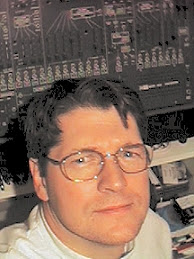
Note the photo. That thing behind my head is my ARP 2600, and that, as we musicians say, is my axe. And I keep writing and rewriting and deleting this part of my reply, but let’s just leave it at: if you go to the wikipedia articles on Contemporary Classical music, electronic music, and computer music—well, a lot of the names you’ll see there are people I met, knew, studied, or worked with. Some were even friends. An important part (to me) of my bio, that flies right over the heads of most people in the science fiction world, is that I spent a couple of years working for Passport Designs and was on the design team that developed MIDI and the Finale music notation engine, among other things. If you really want to understand me, go find and watch the movie, I Dream of Wires.

So yes, in the latter part of the 1970s, I was acutely aware of the punk rock music scene. And that is where the “punk” part of cyberpunk came from.

“...punks as a crucial countercultural group...”

Seriously? Countercultural? Hell no. In the US, punk was mostly just counterdisco.

I get the impression that at the time, punk meant something very different in the UK and Europe than it did in the US. In the UK, there seemed to be an authentic working class/proletariat/anarchist/revolutionary thing going on. (Though let’s face it, the Sex Pistols were the Monkees of punk.) There may even have been something authentically political about the New York punk rock scene, circa'76~'77. But by the time punk hit the rest of the US I was living in Los Angeles, trying to break into recording studio work, and the LA punk scene was entirely about affecting the look, the pose, and the fashion. For a year or three there anyone could get a record contract, no talent required, if they just had a lead singer with a mohawk and a guitarist who wore lots of black leather, studs, and chains. (The studs and chains scratch the hell out of the backs of guitars, by the way.)

That is what the American punk rock scene was all about: not James Dean’s “Rebel Without a Cause” but Tom Petty’s “Rebel Without a Clue.” There may have been a few specimens of the real thing in the wild, but at least 90% of American punks were poseurs, pure and simple: affluent white suburban kids, dressing in punk style and going downtown to dance and get drunk on Saturday night, and then back to school or work on Monday. They were McPunks, and that is why Billy Idol became the quintessential “American” punk rock star. He had the hair, the clothes, that little bit of a snarl in his voice, and made great-looking music videos that played well on MTV. But if you close your eyes and listen to his music, and especially to the arrangements and the studio production values in the recordings, you could be listening to any arena rock band of the time. There is nothing threatening—absolutely nothing “countercultural”—in a Billy Idol single. 

Which is why Billy Idol’s songs live on forever in FM airplay, while bands like The Clash, The Buzzcocks, Television, and Siouxsie and the Banshees are for all practical purposes forgotten now.

Except for “Rock the Casbah.” That one comes back on the radio on a regular basis, every time our government is trying to start another war with Iran.


About Bruce Bethke: In the early spring of 1980 Bruce wrote a little short story about a gang of teenage hackers. From the very first draft the story had a one-word title—a new word, one that he’d made up in a deliberate attempt to grok the interface between the emerging high technology scene and teenage punk attitudes, and this word was—

Oh, surely you can guess. 

Half a lifetime later Bruce is still getting questions about this story, so rather than answer them privately and one at a time, he’s decided to make answering questions about cyberpunk a regular feature on this site. If you have a question you’ve always wanted to ask him, post it in the comments here, IM him on Facebook, or email it to brucebethke.cybrpnk@gmail.com. He can’t guarantee that he’ll answer, but he’ll certainly give it a good try.

Thursday, March 11, 2021

THE SALVAGE CREW • Review by Eric Dontigney

Title: The Salvage Crew

Author: Yudhanjaya Wijeratne

Publisher: Aethon Books, LLC

Length: 302 pages

Audiobook Publisher: Podium Audio

Audiobook Length: 8 hours and 21 minutes

Sales Link: https://www.amazon.com/Salvage-Crew-Yudhanjaya-Wijeratne-ebook/dp/B08J977YVQ


Note: This is a review of the audiobook version, so it will include references to the performance.

In Yudhanjaya Wijeratne’s, The Salvage Crew, we get dumped right into the action with an AI describing the sub-par and psychologically damaged crew for a salvage mission. Oh, a space adventure with a snarky machine intelligence, Murderbot-style. Cool. Wait, wait, no. That’s not a machine intelligence. It’s a digitized human consciousness that’s been loaded into this dropship/temporary habitat. I guess it’ll be a rumination about the nature of consciousness set against the backdrop of this salvage adventure. Wait, wait, no. There’s stuff on this planet that’s dangerous. I guess it’s a man and digitized consciousness vs nature survival story. Okay, I’ve got a handle on this thing now.

Wait, no, there are hostile cyborgs here as well. Oh, the company that launched this mission is constraining life-saving activities to keep costs down. Maybe this is a cleverly disguised deconstruction of capitalism and bureaucracy set against a multilayered backdrop of salvage adventure, rumination on consciousness, man and digitized human consciousness vs nature and cyborg bad guys? I can work with this. Wait, is that an alien structure I see in the distance?

You’d think that with all of this going on, The Salvage Crew would read like a hot mess of mixed themes, motifs, and tropes that will eventually collapse under the weight of all its pretentiousness. In the hands of a lesser writer, it would. Yet, Yudhanjaya Wijeratne sits before his keyboard and binds these disparate elements together like a master weaver at the loom. While it seems like this thing shouldn’t work, it does, and it works quite well at that.

Of course, the heart of the story is that of the digitized human consciousness who is at least nominally in command of this salvage operation. Unlike so many machine consciousnesses in science fiction literature, this digitized human consciousness retains much of his humanity. He spends a disproportionate amount of his time trying desperately to keep the human crew alive in the face of a mission that has gone wildly, catastrophically wrong. At one point, he even rules-lawyers the AI of the orbiting company ship into doing what he wants, even though the company would normally forbid the expensive action.

Despite his near-constant efforts to preserve the lives of his crew, the escalating despair of the digitized consciousness grows palpable as the situation deteriorates. This despair is mirrored in the increasingly erratic behavior of the human crew who are all too well aware they are likely screwed and never getting off the planet. And just what the heck is going on with the alien structure?

Adding to all of this is the vocal performance of science fiction fan favorite, Nathan Fillion. While the production values are a little uneven in places, Fillion brings his trademark combo of snark and empathy to the reading to excellent effect. If you’re one of those people who find listening to books easier than blocking out time to physically read them, Fillion’s performance won’t disappoint.

The Salvage Crew is heir to an older tradition of science fiction that you don’t see much these days outside of authors like Neal Stephenson, David Brin, and William Gibson. It is science fiction that marries adventure with serious philosophical considerations, science realism with scientific speculation, and an abiding belief that humanity means something more than a human body. If this book isn’t already on your TBR list, you should put it on there immediately. 

—Eric Dontigney


Eric Dontigney is the author of the Samuel Branch urban fantasy series and the short story collection, Contingency Jones: The Complete Season One. Raised in Western New York, he currently resides near Dayton, OH. You can find him haunting obscure sections of libraries, in Chinese restaurants or occasionally at ericdontigney.com.

Wednesday, March 10, 2021

In the meantime...


And especially for those of you with Kindle Unlimited subscriptions, here’s a reminder that PRIVATEERS OF MARS would also benefit from some attention by the Fearless Bug Hunters of the Stupefying Stories Typo Patrol. (Really, I’m beginning to think we need a badge. And a t-shirt. And coffee mugs.)

I’ve been focused on SS#23 lately and missed the three latest reader reviews. All of them warm my hard and leathery publisher’s heart.

• “This was a perfect before-bed page turner. Hilarious and witty, it got me laughing aloud multiple times which is sorely needed right now. Great little sci-fi adventure with action and intrigue! I especially loved the spectrum of diverse characters. Enbys in spaaaaace!”

• “This was so much fun to read! The worlds the characters travel to are each exciting and creative, as is each character. I seriously could not decide which character I liked the best (side bonus: no sexist tropes of female characters!) and the end twist was super unexpected. I’m not the biggest fan of sci-fi as a book genre, but this blends genres into an adventure that I think everyone would enjoy. Great for all ages too!”

“Do you miss Firefly? Do you like The Expanse? If so, then Privateers of Mars is exactly what you need. Castleman combines the down-on-their-luck-crew feel and humor of Firefly with the kind of near system space travel and background politics that drive The Expanse. Structured as three loosely interconnected short stories, it reads like three episodes of a great science fiction show that you wish someone would make.

Emphasis added. And no, I did not pay Eric to write that last review. He did that on his own.

Introducing Typo Patrol

There is a time-honored rule in publishing: “No matter how many times it’s been proofread by no matter how many people, there is always one more stupid and embarrassing typo that will slap you right in the face the moment you open the finished and printed book.”

STUPEFYING STORIES 23 is no exception to that rule. Dammit.

Fortunately we no longer need to wait until the next print run to fix such things; we can do so fairly easily and quickly. Rather than try to keep quiet about our mistakes, then, we’ve decided to make this an audience-participation feature. If you find a typo in one of our books, please post it in the comments here, along with sufficient information to help us find it and fix it in the next upload. 

We will be watching who makes the most and best comments. The winner(s) will receive free ARC copies of our next book, so that they can get a head start on proofreading that.

I’ll kick things off with the typo that smacked me in the face the moment I opened up SS#23.

“A few words from the editor...” paragraph 3, Still, it’s been so long since we released Stupefying Stories 22 that is seems like

D’oh!

—Bruce Bethke


Tuesday, March 9, 2021

While you're waiting...

While you’re waiting for your paperback copy of STUPEFYING STORIES 23 to arrive—you did order it in paperback, didn’t you? Seriously, even I am impressed with how well the paperback turned out, and I built the thing.

While you’re waiting, I’d like to remind you that we do have other books for sale as well. For example, if I was looking for something inspirational to read today, I would go for “Finding Spring,” by Sipora Coffelt, which you’ll find in SHOWCASE. It’s just $0.99 for the Kindle edition, or FREE if you’re a Kindle Unlimited subscriber.

As a special added unintentional bonus, SHOWCASE also features “The Carpetbaggers Ball,” by Karl Dandenell. Read “The Carpetbaggers Ball” in SHOWCASE, then his story “The Last Feast of Silas the Wizard” in STUPEFYING STORIES 23, and we think you’ll understand why we’ve tagged Karl Dandenell as a Writer To Watch!


Monday, March 8, 2021

The State of the Loon • 8 March 2021


With STUPEFYING STORIES 23 finally out the door and selling, it’s time for us to take a deep breath and then begin to clean up the mess in the office. It’s not quite as bad as it was in the old days, when we actually had to paste-up pages on Bristol board and courier them over to the printer’s shop to be photographed and turned into lithographic plates. (And then switch on the fans and air out the office, because the 3M Spray Mount fumes were so thick they could make you dizzy.)

Still, a new book release always leaves us with a surprising amount of clutter in the office, mostly in the form of paper that needs to be sorted into three piles: that which needs to be saved and filed, that which needs to go into the recycling bin, and that which needs to go into the shredder.

Likewise, a new book release also leaves us with a certain amount of mental clutter, so this is a good time to reflect on lessons learned: what worked well, what didn’t work so well but can be improved for the next project, and what really needs to go into the cognitive shredder so that we never try to do it that way again. For those of you familiar with Agile development methodology: yup, it really does apply here.

Next thing you know I’ll be setting up a Kanban board to track all the moving pieces of every book project in progress.

Oh, wait…

Actually, that would work. Dammit. Why didn’t I see that before? A Kanban board would in fact be a really good way to address the most noisome thing on my “never do that again” list. Before I begin to explain why Agile is the more applicable development model here even though a book would seem to be a natural candidate for using Waterfall methodology, let me just shut that off right now and get on to the good, the somewhat less good, and the fugly. 

What worked well:

• Going big. SS#23 is the biggest, most ambitious, and most expensive project we’ve done to date. It contains 40% more fiction content than SS#22. Putting the two books side-by-side, SS#23 just plain looks like a thing to be taken more seriously. 

• Upgrading our cover art. Much as I’ve enjoyed commissioning original cover art, what was quirky, original, and eye-catching a few years ago leaves much to be desired now. The new approach to cover art we took for issues #22 and #23 has been getting far more positive responses.

• Interior illustrations. Including interior illos for every story in the issue was kind of a last-minute decision, but it works. I really didn’t think it would add to the pleasure of reading a story until I saw it. It’s like the difference between slapping some food on your plate and paying just a little more attention to how it’s presented and served.

• Paying the authors earlier in the cycle. We’ve always been a pays-on-publication market, simply because we can’t afford to pay on acceptance. Paying the authors when they signed off on their copy-edits, though, took a major source of stress out of the usual release week panic. We’ll have to keep doing this.

• Sending the authors copies of the almost final PDF galleys. By getting these into the hands of the authors earlier in the cycle, we got extra proofreading done and caught some embarrassing mistakes while there was still time to fix them easily. We’ll have to keep doing this. 

• Getting the stories copy-edited much earlier in the cycle. This was an accidental virtue, resulting from our attempt to get the book out last November. But starting the build with stories that were already copy-edited and approved by their respective authors worked much better than trying to build the book while also working through copy-editing.

What worked but needs improvement: 

• Early copy-editing. This also became a problem. We’ve had so many false starts and failures to launch in these past two years, we actually got stories copy-edited, signed-off on by their authors, and then lost track of the stories and forgot that they’d been approved and were ready to go. Here is where a Kanban board would actually come in very handy. On a positive note, having all these stories in the queue gives us a good head start on Stupefying Stories 24.

• Interior illustrations. I’ve been working from a web perspective for too long. Some of the illos I picked look great in the ebook but are dark and muddy in the print edition. Others run afoul of the matter of page orientation. For example, consider this illo that I picked for Helen French’s “Outrider.”


Looks pretty good online, right? But squish it down to the four-inch wide image that we can use in the print edition and a lot of the energy is lost. Wouldn’t it have looked better if it had been cropped down to the core of the concept and run as a vertical image instead?

We’ll have to put a lot more thought and care into our use of interior illos, going forward. 

• Cover art. We need to start thinking about the cover story and image long before we’ve fully populated the issue. There is risk in doing this. The cover can start to drive the entire rest of the editorial process, if you let it. One of the things that irked me about Jim Baen was that he would buy art because he thought it would make a great cover, and then look for a story to go behind it. That’s one step short of buying a piece of art and commissioning a writer to write a story to go with it, which is one of those things I swore I would never do. 

But then, consider this:

Admit it. Knowing absolutely nothing else about it, doesn’t that cover pull you in and make you want to take a closer look at the book?

• Author’s copies. This is an area where we must find a better way to do things. Amazon no longer lets us order print copies before the book is live for sale on Amazon, so so much for having copies in the author’s hands on release day. Coupled with this, the Kindle ebook creation tools no longer generate a .mobi or .epub file, so we can’t send viable ebook files directly to authors; we must send them through Amazon. But to further complicate matters, Amazon won’t let me, from an account in the U.S., send ebooks directly to Kindle users in the U.K., nor will it let me order them on amazon.co.uk. This problem needs to be solved.

What didn’t work at all:

• Having half the book-building processes running on a Windows 7 machine and the rest running on a Windows 10 machine. This caused serious problems with Kindle Create in particular, as the versions got out of sync. By the time we’re ready to build the next book, we need to have everything on Windows 10. (No, not on the Mac. That’s just begging for trouble.)

• Creating the TOC and front matter in Word just confused Kindle Create. Don’t do it. Import the source and then let Kindle Create do its thing with generating the TOC and front matter.

• Put illos after section headings. Don’t nest page breaks inside section breaks. Trying to get fancy-shmancy with page layouts in Word just confused Kindle Create. Don’t do it.

• Trying to generate the cover art for the print edition as a print-ready PDF file using the process specified by Amazon is a time-consuming exercise in frustration and futility. Instead, download the template, create and save the cover as a PNG file, and then (here’s the tricky part): use Amazon’s cover creator wizard. One of the templates lets you upload your own PNG as the “background” image, which it then overlays with all sorts of ugly auto-generated text, but that text can all be deleted. Voila! A workaround to get the cover art uploaded and validated without going through all that tedious PDF business.

• And this is the fugly one: I must stop talking about projects that are in development before we are actually within reach of executing on those plans. My doing so just frustrates and annoys authors, especially when some external event forces us to change plans and I don’t notify all the authors affected, often because I don’t remember which authors are affected. This is one place where having a Kanban board would really help.

Upward and onward to SS#24.

—Bruce Bethke


Friday, March 5, 2021

IT'S ALIVE!


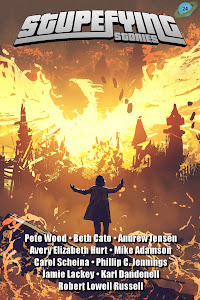
Rampant Loon Press is excited to announce our biggest and most ambitious project yet: STUPEFYING STORIES 23. Twelve new stories, covering a range of genres from contemporary horror, to urban fantasy, to science fiction so hard it clanks. Twelve authors, ranging from names you probably know and love already to new voices we believe you'll be hearing a lot more from very soon. A nice balance of previous contributors and new friends; a good mix of lengths and tones, from a novelette set on a generation ship gone terribly wrong ("Outrider") to the delightful little confection that is "Brimstone and Brine," STUPEFYING STORIES 23 features:

Woe to the Hand, by Julie Frost
The Unicorn’s Companion, By Jamie Lackey
The Secret of Erin Stewart, By Terry Faust
Outrider, By Helen French
The Last Feast of Silas the Wizard, By Karl Dandenell
The Bird and Baby, By Allison Thai
The Worm’s Eye, By Tom Jolly
Magic with the Bones, By Beth Hudson
Eddie’s Upgrade, By Kevin Stadt
The Dead Barn, By Amy Caylor
They Call Me Charon, By Gary Pattinson
Brimstone and Brine, By Beth Powers

From magic to mystery to science fiction, from the mythic past to the dystopian future, here are twelve tales to chill, thrill, excite and amuse you. Always fresh and entertaining, never formulaic or predictable, Stupefying Stories is the terrific new reading you've been looking for!


Thursday, March 4, 2021

A few words from the editor...


[DRAFT]

Hello, I’m Bruce Bethke, editor of Stupefying Stories magazine and executive cat-herder-in-chief here at Rampant Loon Press. You hold in your hands Stupefying Stories 23, a book that was beginning to approach The Last Dangerous Visions in terms of its quasi-mythic “Will that damned book ever be released?” status.

Yet here it is at last: the biggest and most expensive project we’ve done to date. Twelve stories, covering a range of genres from contemporary horror, to urban fantasy, to science fiction so hard it clanks. Twelve authors, ranging from names you probably know and love already to new voices you haven’t heard before, but who we believe you’ll be hearing a lot more from in the not-too-distant future. A nice balance of previous contributors and new friends; a good mix of lengths and tones, from a novelette set on a generation ship gone terribly awry (“Outrider”) to the delightful little confection that is “Brimstone and Brine.”

Still, it’s been so long since we released Stupefying Stories 22 that is seems like a longer introduction is needed. Therefore, since author’s and editor’s bios are always written in third person, it’s time to shift into third-person and tackle two questions: who is Bruce Bethke, and why should you care about the stories he’s presenting in Stupefying Stories 23?

#

To answer the second question first, consider this review quote from Dave Brzeski at SFcrowsnest Magazine. Writing about Stupefying Stories 22, he said [emphasis added]:

“This is perhaps not a publication for those whose tastes fall within narrow boundaries, as the stories can fall pretty much anywhere within the broad scope of speculative fiction. It's fairly obvious that Bruce Bethke's only criteria for the magazine is that the work should be of a uniformly high standard.

To coin a phrase: Dave Brzeski gets it.

To answer the first question, then, we need to add a qualifier: when? In the 1980s Bruce Bethke was a successful short story writer, with a list of professional publication credits so long he quit counting new sales after a while. In particular some of the science fiction stories he wrote and sold in the 1980s are considered “significant” now, by people who feel themselves qualified to judge such things. (And if you want to talk about any of those old stories, there’s a feature called “Ask Dr. Cyberpunk” on the StupefyingStories.com web site where you can do just that.)

By the 1990s, Bethke had realized that writers cannot live on short story sales alone, so he graduated to writing novels and became an award-winning novelist. He also served a few terms on the board of directors of a certain famous science fiction and fantasy writers association, and took a contract job as an anthology editor at a major publishing house. In the process of doing these things he gained a great deal of experience and insight into how the commercial publishing industry really works, although he has difficulty describing that experience now—at least, not without using a great deal of profanity.

By 2000, fed up with the way the publishing industry grovels before a small handful of bestselling authors and treats all the rest of their original content creators like fungible contract workers, he walked away from fiction publishing and went off to do something else. Again, he has difficulty describing that experience now, but in this case it’s because of NDAs he signed that are still in effect.

In 2010, aided by a terrific crew of friends and volunteers, Bethke founded Rampant Loon Press and launched Stupefying Stories, with the goal of using the attention people wanted to pay to him, because of all those stories and novels he wrote back in the 1980s and 1990s, to help boost the careers of new up-and-coming writers. Since then Stupefying Stories has had its ups and downs, and more than a few times when things went completely sideways, but along the way Rampant Loon Press has published dozens of books, hundreds of stories, and given a hand-up to hundreds of newer and younger writers.

Judging simply by the number of writers who got their start here and then moved up and on, to become award-winning authors, successful novelists, or recognized names on the covers of major magazines, that part of the original goal has been a success. And with the backstory thus established, it’s time to shift back into first person and talk about Stupefying Stories 23.

#

As we turn the corner into the third decade of the 21st Century, it’s tempting to issue a manifesto, to declare that Stupefying Stories has made a fresh start, or in some other hubris-laden way to make a statement, laying out our ambitions and plans for the coming year. However, I’ve become gun-shy about doing that. For the past ten years we’ve been experimenting, learning, and making mistakes galore. Too many times, when I thought we finally had everything all figured out, the Fates decided to throw a new spanner in the works, just to see how we dealt with it. 2020 in particular was a year in which absolutely nothing went as planned or expected, for us as well as for everyone else. Frankly, if 2020 was a car, I’d call it a total write-off and call someone to tow it away to the scrapyard.

Therefore, rather than make a statement, allow me to present to you Stupefying Stories 23. Consider this the prototype for the direction in which I want to take Stupefying Stories, God willing and the creek don’t rise. As I said at the start of this introduction, this is the biggest, most ambitious, and most expensive project we’ve done to date. We’re even using interior illustrations in SS#23, for the first time since our 2010 debut issue. (Although the illos didn’t turn out quite as planned: some look much better in the ebook than in the print edition.)

We’re still learning. We’re still evolving. Stick with us. Stupefying Stories 24 will look even better.

Per aspera ad astra,
Bruce Bethke 

Sunday, February 28, 2021

JUST TWELVE HOURS LEFT!


Stupefying Stories #19 and Stupefying Stories #20 have both reached the end of contract life of go out-of-print at midnight tonight. To go out with a bang we've dropped the price to just 99-cents each. If you’re looking to add these two to your Kindle collection you’ll never find a better opportunity—but act now, because as of midnight, they're gone forever. 
 
 
COMMUNION • by Fi Michell
SUBMISSION GUIDELINES FOR THE FAIRYLAND GAZETTE • by Effie Seiberg
HORNS OF A PARADOX • by Julie Frost
THE BONE MERCHANT • by Robert Luke Wilkins
SOULLESS MACHINE • by Jennifer R. Povey
BEHEMOTHS IN THE PARK • by Henry Fields
THE INVASION WILL BE ALPHABETIZED • by Ryan Harvey
MORE CRACKLE THAN MUSIC • by RM Graves
A RAINFOREST, THE WATER CYCLE, AND FIFTY PREGNANT TIGERS • by W. Winward-Stuart
THE OLD MAN AND THE C • by Ronald D. Ferguson
DOGS AND MONSTERS • by Harold R. Thompson
 
 
ZOMBIE LIKE ME • by Clancy Weeks
THEIR NOSTALGIA WILL BE VERY MUCH LIKE OUR NOSTALGIA • by Eric Cline
HOW TO BUILD A TRAIN • by Brandon Kempner
ENDEAVOR TO DREAM ON BROKEN WINGS • by AJ Finley
PILES OF DUST AND BERRIES • by Sadie Bruce
ALIEN WHISPERING • by Bo Balder
LUCKY FIND • by Lance Young
SECRET SEED, by Shannon Norland
 
Remember, “likes” are nice, but “shares” help spread the word.

Saturday, February 27, 2021

Review: Reverse Engineering and Behind Her Eyes • by Pete Wood

Arr, ye scurvy dogs, major spoilers ahead. Ye be warned, ye landlubbers!

Here’s my beef. The entire Netflix series and Sarah Pinborough’s source novel are geared towards reaching that head-scratching double twist. Nothing the characters do matters. The genre doesn’t matter. The only goal is to reach that twist. Plausibility and tone be damned.

The story is reverse engineered. Instead of having characters behave logically, the glorified chess pieces are manipulated to reach a preordained conclusion. The story works as tense psychological thriller, but there is an abrupt genre change that had me crying foul.

It’s all about the twist. And that’s a real shame. Exquisitely acted, it’s compelling with some innovative cinematography. The first three—maybe four—episodes, at least, are top-notch. Then everything goes off the tracks.

Louise (Simona Brown), a London secretary with a young son, has an affair with her psychiatrist boss, David (Tom Bateman). She strikes up a friendship with Adele (Eve Hewson), David’s lonely wife. We also see, through flashbacks, Adele ten years ago in a rehab center with Rob (Robert Aramayo), a heroin addict from Glasgow. There is something in the past of David and Adele that allow her to blackmail him into staying in a loveless marriage.

Here’s the twist. Adele isn’t really Adele. She’s Rob. Rob is gay and jealous of rich beautiful Adele and her hunky boyfriend, David. He switched bodies with her, murdered Adele in his own body, told David “Rob” died of a drug overdose and convinced David to hide the body. Flash-forward to the present where “Adele” switches bodies with Louise and murders the new Adele in a house fire.

This works only because of reverse engineering.

Rob’s really stupid plan

Yeah, his plan succeeds, but only because the other characters are stupider than he is. Rob’s farfetched scheme has to work perfectly. First, when Adele teaches him to astral project, we accept that he in one day becomes better at it than Adele to the point where he can manipulate her. Um, okay. Then we have to accept that his plan to teach Louise astral projection works to the point where he can switch bodies with her. So, she has to want to be friends with the obviously disturbed wife of her lover, buy into the astral projection mumbo-jumbo, and then become a pro. Those three links are all pretty unlikely. What would you do? Would you become friends with your boss’s wife under those increasingly bizarre situations? Would you hang out with a clingy person with no friends and no life who wanted to teach you astral projecting?

David has to be both an asshole and deliberately vague.

David does an exceptional job of acting like a complete asshole around Louise so that we and Louise can buy into “Adele’s” story that he’s an abusive husband. He’s really the good guy, but instead of just bringing Louise up to speed on his wife’s mental health problems and penchant for committing assault, breaking and entering, and other crimes, he fires Louise and gives cryptic warnings about being involved with his wife that come across as threats. When he’s alone with Adele, he still talks in vague unhelpful terms that shed no light on what happened in the past that binds him to his wife. Even his notes in his voluminous secret Adele file that Louise steals are vague and unhelpful, often resorting to open-ended questions. Why? Because it hides the ball and preserves the twist

Louise and David must act like complete morons.

David, when Adele tells him that Rob has died of a drug overdose, doesn’t just call the cops, because that would make too much sense. Why not? Because he has to hide the body so “Adele” can blackmail him in the future for Rob’s murder. When Adele begins to act more and more disturbed, Louise keeps talking to her, despite the warnings of everybody she knows to cut the friendship off. She continues to take phone calls from a sociopath. She gives her key information which help set up the fait accompli.

And then in that twist that really got under my skin, when “Adele” texts her that she’s going to kill herself, Louise doesn’t call the cops, like any sane person would. Nope. She runs over there and, seeing the house is on fire, she astral projects inside. Why? Because we have to have the twist. She can’t help Adele as a spirit. She’s still locked out of the house. Somehow fake Adele knows this is going to happen and leaps into Louise’s body, because, you know, that was the only logical result from the plan. No chance that the cops come or Louise breaks down the door or smashes a window or Adele dies in the fire. And one more thing, at this point it’s not even clear to “Adele” that Louise has even pulled off astral projecting. Louise claims she has, but, a lot of people claim to have astral projected. Would you stake your life on it?

Astral Projecting

There are no rules to astral projecting unless they lead to the twist. Either there is a mind-body connection or there isn’t. When Louise astral projects for the first time, she is yanked back to her body when she hears her son screaming through her body. So, the soul is tethered somehow to the body. Except it isn’t, because it can jump into any body and survive. So the soul is a free agent. Except it isn’t, because it needs a body or it dies or something? Huh? So, the spirit is independent of the body until the body dies then the soul is up shit’s creek, but it can be any body that dies, not the original body? I gave up trying to figure out the rules.

Look, I’m not against unhappy endings. I’m not anti-twist either. I just ask for the ending and the twist to flow logically from the premise.

The original Planet of the Apes, On the Beach, and Colossus: The Forbin Project all have unhappy endings. Those work, because the characters follow the rules. The actions taken by Taylor, the astronaut in Planet of the Apes, make sense. He is smart and logical. The President and scientists in Colossus come up with some pretty good plans to defeat the supercomputer that has control of our nuclear arsenal. These plans fail, because the computer is smarter or due to the hubris of the characters. They don’t behave stupidly for stupid’s sake. On the Beach, about the last survivors of a nuclear war, has the bleakest of bleak endings, but we don’t get there because of the stupidity of the characters.

I found the shift in genre jarring in Behind Her Eyes. Shifts can work. Take Psycho and Rosemary’s Baby. Psycho works, I think, because it’s obviously a mystery, it’s a Hitchcock movie, and it’s titled Psycho for God’s sake. It doesn’t become a monster movie or science fiction or fantasy. It’s still grounded in the real world. We know Rosemary’s Baby is a horror movie going in. We just don’t know exactly what’s going on and gradually find out like the protagonist. Behind Her Eyes just careens from tense psychological thriller—like Jagged Edge or Fatal Attraction—to mediocre poorly explained horror about two-thirds of the way in.

In You Can Count on Me (2000) Laura Linney has an affair with her boss played by Matthew Broderick. When he tells her she’s fired she flat out refuses to leave the office, because she’ll have the sexual harassment lawsuit from Hell. He backs down. That’s what real people do. When David, conveniently acting like an asshole to reach that damned twist, fires Louise instead of talking to her and explaining about his wife, she becomes a doormat and leaves her job. She’s not a doormat. She’s assertive and resourceful when it doesn’t interfere with the twist.

I’ll be frank. I am no fan of the body-switch trope. The victim of the swap seldom behaves rationally and the perpetrator seamlessly adjusts to the new body. The Outer Limits in “The Human Factor” and The Prisoner in “Do Not Forsake Me My Darling“ made it work with the victim still having his wits about him. But those are the exceptions.

I wonder how Behind Her Eyes would have been if the characters had behaved logically. What if the fake Adele had ended up hoisted on his own petard? What if the real Adele was still lurking out there in the spirit realm and helped out somehow? That would not have been against the fast and loose rules of Astral Projection which shift, like the characters, as the story demands. Instead of asking how can I shock the viewer, why not ask how would people respond to a mind-swapping bad guy?

Stephen King is a successful writer, not just because of his horror, but also due to his characters. King sticks his characters in a supernatural situation and tries to figure out how they would respond. The mother and son get out of the Overlook hotel in The Shining. They aren’t victims of some cruel shocking twist at the end. King doesn’t reverse engineer. He doesn’t force his characters to stay in the haunted house. He lets them figure a way out.


Peter Wood
is an attorney in Raleigh, North Carolina, where he lives with his kind and very patient wife. His first appearance in our pages was “Mission Accomplished” in the now out-of-print August 2012 issue. After publishing a lot of stories with us he graduated to being a regular contributor to Asimov’s, but he’s still kind enough to send us things we can publish from time to time, and we’re always happy to get them.

Friday, February 26, 2021

Ask Dr. Cyberpunk • with your host, Bruce Bethke


In the early spring of 1980, I wrote a little short story about a gang of teenage hackers. From the very first draft the story had a one-word title—a new word, one that I’d made up, in a deliberate attempt to grok the interface between the emerging high technology scene and teenage punk attitudes, and this word was—

Oh, I bet you can guess. 

Half a lifetime later I’m still getting questions about this story, so rather than answer them privately and one at a time, I’ve decided to make answering questions about cyberpunk a regular feature on this site. If you have a question you’ve always wanted to ask me, post it here, IM me on Facebook, or email it to brb[at]rampantloonmedia[dot]com.

Today’s question comes from Mark, who asks:

“Many people speak of solarpunk, post-cyberpunk, and even the death of cyberpunk. In your opinion, looking at cyberpunk as a sub-genre of the 1980s and compared to the past ten years or so, what do you think is the biggest difference in cyberpunk media today?”

First off, it's hard to convey just how amusing I find it that people seem to expect me to be some sort of Elder Statesman of Cyberpunk. “Elder”and “Punk” are antithetical. An elder spokesperson of any kind of punk is an oxymoron. (Nonetheless, I think John Shirley claims to be the Elder Patriarch of Cyberpunk from time to time, and Pat Cadigan does seem to want to be recognized as the Den Mother of Cyberpunk or something like that.)

Me, I’m just a guy who wrote a story, and who put a good deal of effort into coming up with a snappy, fresh, one-word marketing label to use as the title of that story. I never for a moment imagined we’d still be talking about the thing more than forty years later.

Second, to understand where cyberpunk came from, you have to understand what was going on in SF/F publishing in the years just before it hit. The fantasy market was absolutely saturated with Imitation Tolkien in those days, to the point of it being a joke. (An elf, a dwarf, and a wizard walk into a tavern. The bartender says...) Pocket Books was moving an absolutely ungodly number of Star Trek spinoff novels, which were rotting the minds of readers and wasting the talents of writers world-wide. We’d just gone through a Robert E. Howard revival, and book racks everywhere were still overflowing with Gonad the Barbarian and his many imitators and spinoffs, striking body-builder poses as they stood there in their fur-lined jockstraps, holding insanely oversized and overtly phallic swords. 

Science fiction proper—serious, “hard” science fiction—had gone from being the literature of ideas (if it ever was) to being the literature of trope and melisma. Heinlein had become a self-indulgent self-parody. Asimov was writing turgid and flaccid mystery novels and calling them SF because they had robots in them. Larry Niven had turned Ringworld into a franchise (Real Estate Agents of Ringworld!), Frank Herbert was busy turning Dune into a both multi-generational soap opera and the family cash-cow, and Gordon Dickson—man, I loved Gordie, he was a good friend, but there was no excuse for The Final Encyclopedia. By the early 1980s the big-name heavily promoted SF authors that the publishers loved to throw six-figure hardcover contracts at had become the literary equivalent of arena rock acts, going out there and playing their greatest hits over and over again, but never actually bringing anything new to the table. It wasn’t science fiction anymore. It was self-referential metafiction.

Then along comes this next generation of writers—my generation—who came of political age during the Vietnam War, and who grew up on Alfred Bester, Kurt Vonnegut, John Brunner, Harlan Ellison, Thomas Disch, Anthony Burgess, the alternately brilliant or psychotic Philip K. Dick, and all the other writers who emerged from the 1960s New Wave, and we were carrying a surplus of cynicism and nihilism in our stony little hearts, and we looked at the future that lay ahead of us...

And said, uhn-uh. That clean, bright, and beautiful Star Trek future? Ain’t gonna happen. Well, maybe it will for the rich people at the absolute top of the food chain, but for everyone else the future is gonna be a whole lot dirtier, darker, more dangerous, and considerably less white. What’s coming down the pipe for us is going to make George Orwell look like an optimist.

So by 1980, the punk part—the cynicism, the nihilism, the anomie, the willingness to embrace anarchy, and the outright contempt for the Big Ideas of the 1940s~50s generation of science fiction writers—was already installed. All it would take was one good push...

That push, you may be surprised to learn, was not “Johnny Mnemonic.” It was Star Wars. When that cultural juggernaut hit, people all over the entertainment industry realized, “Damn, there’s serious money to be made peddling that Buck Rogers shit!” So while the most visible aspect of that realization was the flood of big budget sci-fi movies that followed in the years after Star Wars, a less visible but more pertinent knock-on effect was that there was a major influx of capital into SF print publishing, as publishers scrambled to get just a little piece of that Star Wars action.

Except...

Except the new writers who were producing the content to fill those newly opened publication slots, and the new editors who were choosing the content to be published in all those newly emerging magazines and books—well, quite a few of them harbored punkish sympathies, and they were saying, Nope. You may think that because of Star Wars, the science fiction of the 1980s is going to look just like 1935 all over again—but we’ve got some surprises in store for you.

The original 1980s cyberpunk wave came and went surprisingly fast. I think Bruce Sterling was already declaring cyberpunk dead by ‘85 or ‘86. I do know that by the early 1990s I was being told by agents and editors all over the industry that cyberpunk was dead, and there was no point in trying to write or sell anything like that anymore.

Then, of course, The Matrix hit in 1999, and it was like Star Wars all over again.

What happened to cyberpunk fiction in the 1980s was the same thing that happens to every successful new thing in any branch of pop culture. At first it was something unexpected, fresh, and original. Then it became a trendy fashion statement. Then it became a repeatable commercial formula, and publishers began signing writers who could work the formula and ape the style without doing anything too fresh or original, as in the publishing business genuinely original is always a tough sell. It’s much easier to sell a book if you can use the pitch, “If you liked X, then you’ll love Y!”

In time, cyberpunk became a hoary and ossified trope, as immutable as an IEEE standard, complete with a checklist of stylistic markers and time-honored forms to which obeisance must be paid if one is to write True Cyberpunk.

And in time the market became saturated with “me too” work, a lot of it written by people who had good writing chops but no fucking clue what they were writing about, they were just working the formula, and cyberpunk was dead again.

Looking at it from the vantage point of 2021, I must admit that as the editor of Stupefying Stories, it cracks me up every time I read a cover letter from some eager young writer who is gushing about how I of all people should appreciate his (or her, or their) new cyberpunk story. Yes, there are some really bright new talents out there writing some really great new cyberpunk-style stories that would be absolutely perfect—in the pages of Asimov’s in 1985!

But out here in the larger world time has moved on, and those kinds of stories look as quaint now as Chesley Bonestell’s beautiful 1950s spaceship art did after Apollo landed on the moon. A huge—enormous—depressingly mountainous amount of the self-identified cyberpunk fiction I see now is stuck firmly in the 1980s. It’s not new, fresh, or original. It’s paint-by-numbers Imitation Gibson. It’s Blade Runner fan fic, or Akira fan fic, or worse, wannabe Shadowrun or Cyberpunk 2077 media tie-in fan fic.

The original cyberpunk writers of the 1980s: they were operating from a 1970s punk rock ethos, an awareness of the social and political milieu of their times, and a seemingly reasonable set of extrapolations based on the technologies that were just beginning to emerge at that time. Thanks to a certain few editors, this body of work developed into a sort of consensual vision of the future, some of which was spot-on, and some of which was laughably wrong.

I have spent the past forty years since writing “Cyberpunk” working in the computer industry; the past 20 working in supercomputer software R&D. And I am here to tell you: the baseline assumptions have changed.

I would dearly love to see a truly new form of SF emerge that reflects the baseline of now, and begins a whole new series of extrapolations that creates a new consensual vision of a different future. But I think that as long as you're intentionally labeling your fiction as “cyberpunk,” you’re deliberately handicapping yourself.

But probably playing right into Amazon’s marketing algorithms, because as I said before, genuinely original is always a tough sell.
 
To reiterate, I would dearly love to see something truly new. A lot of the assumptions that underlay the original 1980s cyberpunk, and thus the retro-1980s cyberpunk of today, were based on imagining how the wired world of the future might work. Now that we’re here, 40 years further on, we know that a lot of the things that were imagined then were just plain wrong; it doesn’t work like that; it can never work like that. Because physics.
 
I hope I don’t come off like someone just one shot of Geritol short of shouting, “Get off my lawn!” As I said, I’ve spent a lifetime working out on the bleeding edge of the computing industry. And the ideas that were originally behind the cyberpunk trope—that’s the cool part. My friends who went into aerospace tell me the old guys who built their industry all grew up reading Heinlein and Clarke, and went into aerospace to turn those crazy things they read about as kids into practical realities as adults.

In my industry I get to meet a lot of really brilliant young kids fresh out of MIT, or Carnegie-Mellon, or Urbana-Champaign, and every once in a while one of them sees my name, does a double-take, and then starts to tell me all about how they grew up reading Gibson, Vinge, and Rucker—and yes, me—and that’s why they went into this field: to turn that crazy sci-fi stuff they read about as kids into practical realities as adults.

We don’t quite live in the world that the cyberpunk fiction of the 1980s predicted. But we live in the world that the kids who grew up reading that fiction built, and that is a very cool thing indeed. 
  
 
—Bruce Bethke
 

Thursday, February 25, 2021

Lights, Camera, Action!


by Pete Wood

Two years ago, I found myself scouting locations for a film adaption of my short story, Quantum Doughnut. Ray Petrolino, the director, and I stood outside Krispy Kreme Doughnuts in downtown Raleigh. We had to revise the story. With customers lined up outside for the best doughnuts in the world, I doubted Krispy Kreme would shut down for a film shoot. We couldn’t shoot after hours, because Krispy Kreme is open twenty-four hours. Lucky for us, Ray had a friend in the doughnut industry.

The most gracious shop’s owner couldn’t let us shoot until after dark. So, we had to scrap outdoor scenes. I tweaked the dialogue and removed all references to local businesses and sports teams, because Ray and I didn’t know what might be permissible. Neither of us wanted to approach a university or a national company and ask permission to mention them in a movie.

I have exactly one film adaption under my belt. I have a long way to go before I come close to Frankenstein or Dracula, the most adapted novels of all time. Favorite authors of screenwriters include Mark Twain, Agatha Christie, Jules Verne, Stephen King, Philip Dick, H. G. Wells and Sir Arthur Conan Doyle, among many others. The results are a mixed bag.

Monkey Planet (1963) by Pierre Boulle is a mind-numbingly dull read. Slow-paced with uninteresting characters, I found it quite forgettable. Thank God, Rod Serling did not. He gutted the novel and inserted compelling characters, a ton of tension, social commentary, and the greatest movie ending of all time when he penned the script for the original Planet of the Apes (1968).

John Carpenter morphed Ray Nelson’s  one-note 1963 short story, Eight O’clock in the Morning, into my favorite science fiction action movie, They Live (1988). Carpenter lifts the premise of subversive alien hypnosis and ditches a counterproductive twist. He adds a healthy dose of humor, some kick-ass characters (he cast Roddy Piper, a professional wrestler in the lead) and some snappy dialogue. None of the dialogue appears in the book. How great are the film’s one liners? Our local NPR station did a one-hour show on great movie lines and used a line from They Live in the promos. Since I suggested the line, they had me talk about it on the air.

Versions of Jack Finney’s 1955 novel, Invasion of the Body Snatchers, range from great (the 1956 original) to pretty good (the 1978 remake) to don’t bother (all the others). All lack the book’s central logic. The novel’s body snatchers had a sensible plan that adapted when the humans got wise. Idiot plot drives the political allegory of the original and the horror slant of the 1970s remake.

Director, Clarence Brown, filmed Intruder in the Dust (1948)  in Oxford Mississippi, William Faulkner’s hometown, and the author’s inspiration for the fictional setting of most of his novels. The film has a rare authenticity since most of the scenes seem familiar to those acquainted with Faulkner.

In my opinion the worst movie adaption is the abysmal A Sound of Thunder (2005), in theory based on Ray Bradbury’s short story. You’d think there would be some sort of professional courtesy among screenwriters. Bradbury could teach a master class in how to make films of unfilmable novels, thanks to his brilliant reduction of 378-page Moby Dick into a two-hour movie. Bradbury’s short fable is the best time travel story ever written. Period. The film is junk. The four screenwriters (four!) abandoned Bradbury’s premise, added senseless action, incoherent rules of time travel, and cardboard characters and an hour and a half of filler. If you want to see a good adaption of a Bradbury short story, check out The Beast from 20,000 Fathoms (1953) which has little in common with Bradbury’s 1951 short story, The Foghorn, but is at least a good movie.

Even if filmmakers sometimes fix what ain’t broke, screenwriters have improved upon mediocre fiction enough that I can’t really complain too much about tinkering. I never would have thought you could  improve on the Odyssey until Joel and Ethan Coen adapted Homer’s epic poem into Oh Brother Where Art Thou?

Films have a daunting task of condensing longer works into two hours give or take. Larry McMurtry might have done the best job of culling when he condensed his own novel for Peter Bogdanovich’s 1971 The Last Picture Show. The book is more nuanced, but the film is still pretty damned brilliant.

Sometimes filmmakers just give up and grab the title, a few key characters, and little else. Ian Fleming wrote 16 James Bond novels from 1953 to 1966. Every single one became a movie that had nothing to do with the novels, other than the title and the main character. The novels are generally better, but quite dated. I read Diamonds Are Forever (1956) a few months ago and had a hard time dealing with its racism. The 1950s Bond wouldn’t sell tickets today.

Maybe the best approach is to make a miniseries. That worked for Dune, The Shining, and The Haunting of Hill House. Shirley Jackson’s 1959 horror classic became Robert Wise’s 1963 movie The Haunting.  Mike Flanagan greatly expanded the perfect novel in his ten-part Netflix miniseries in 2018. He added backstory, many new characters, and two simultaneous ghost stories, one in the present and one in the 1980s. Flanagan’s rethinking took hubris, but it works. Alas, his similar approach to Henry James last year did not succeed. The Haunting of Bly Manor, inspired by the Turn of the Screw, is neither interesting nor scary. It’s just a mess.

I can’t possibly go through every single adaption. Movies and the written word are two different mediums, neither better. Bladerunner and Do Androids Dream of Electric Sheep? are different, and I can’t choose between the two.

After someone finally adapts Walter Miller’s A Canticle for Lebowitz, I hope Hollywood gives me a call. I have 70-plus published short stories, y’all. The next blockbuster is hiding in there somewhere!


Read the original story: “Quantum Doughnut”
Watch the film on YouTube: Quantum Doughnut
Encourage the filmmakers! Say nice things about the film on IMDB: Quantum Doughnut on IMDB


Peter Wood
is an attorney in Raleigh, North Carolina, where he lives with his kind and very patient wife. His first appearance in our pages was “Mission Accomplished” in the now out-of-print August 2012 issue. After publishing a lot of stories with us he graduated to being a regular contributor to Asimov’s, but he’s still kind enough to send us things we can publish from time to time, and we’re always happy to get them.

Wednesday, February 24, 2021

Taking “Quantum Doughnut” from Story to Production

 by Alex Granados

[continued from Part 1

... But a few months later, Wood got back in touch and told them production was a go.

“Of course everybody was up for it because it meant that we got to hang out all night in the donut shop,” Seth said.

Finally, Wood asked Seth if he could cast the loudmouth. Seth didn’t hesitate.

“Sure,” he told Wood. “I know the perfect person.”

Seth brought in Sean A. Cole. Cole is an attorney in Raleigh with a passion for the dramatic.

Cole said he did theater in high school and college, and he and Seth have both taken part in a production done by the local bar association called “The Bar Awards.” He described it as a “song and dance review that gives out fake awards for real events.”

“That’s the closest thing to real acting that I have done in some time,” Cole said, adding later: “Any kind of public spectacle I can make of myself, I enjoy that.”

So the cast is clear, but what’s up with the story? Who writes a science fiction tale that revolves around sugar-glazed doughnuts and a jerk?

“Well the story was kind of revenge for being stuck behind a really unpleasant guy in a restaurant in Blowing Rock, North Carolina for an hour who complained a lot about his damn race horse,” Wood said. That description will sound familiar to anyone who’s read the story.

Okay, that explains the story. But why was Petrolino so into making this film? Fame and fortune?

“I primarily just enjoy getting a good story out to people,” he said.


Petrolino was able to show the film at Cary Theater’s Rough Cuts Review, where local filmmakers can get feedback on their productions. After making some tweaks, he was able to bring the film back and show it again.

“And everybody came out it was just wonderful support,” he said. “If it didn’t do anything […] other than that, that would have been hugely rewarding because you probably had 100 people in that theater and everybody was having a good time,” he said.

In addition, the film got into the Austin Revolution Film Festival, where Petrolino estimates 700 to 800 people got a chance to see "Quantum Doughnut.”


So finally, we get to a promise I made earlier in the piece. Just how many doughnuts were consumed? Okay, I might have strung you along a bit. The best answer I could get out of the case was “a lot.”

Cole called it more of a doughnut-tasting exercise, because in one scene he takes a bite out of a doughnut and spits it into another guy’s coffee. Rebecca said more doughnut ended up on her face than in her stomach.

But the measure of success isn’t the number of doughnuts eaten. In fact, in this case, it’s all about the memories. And since the film was made, a lot has happened. You might not have heard, but there’s a pandemic, and the notion of gathering a bunch of people together to make a film is a little less palatable than it once was. Petrolino looks back on the experience with longing.

“Just to be outdoors on a city street with a camera you know with other people around you. That would be really nice to be able to do that again,” he said.

And you, too, can have that experience, plus a little dose of profundity over doughnuts, with Quantum Doughnut.


Read the original story: “Quantum Doughnut”
Watch the film on YouTube: Quantum Doughnut 
Encourage the filmmakers! Say nice things about the film on IMDB: Quantum Doughnut on IMDB


Alex Granados
is a Raleigh-based education journalist. When he’s not reporting, he writes fiction, including his first novel, Cemetery Plot, published in 2012. He served as assistant director on the Baen Books audio adaptation of Larry Correia’s “Detroit Christmas” and has covered the arts scene in Raleigh and surrounding areas as a columnist for the North Raleigh News section of the News & Observer and a producer for The State of Things on North Carolina Public Radio WUNC.

Tuesday, February 23, 2021

Taking “Quantum Doughnut” from Story to Production


by Alex Granados

What do you get when an alien, a physicist, and a loudmouth walk into a doughnut shop? A Quantum Doughnut. Okay, so that’s neither a very good joke nor a particularly appealing introduction to an article about a deceptively profound piece of fiction, so maybe if I could just stop time for a moment and start over…

What do you get when an alien, a physicist, and a loudmouth walk into a doughnut shop? A meditation on the nature of reality, the path not taken, and humanity’s maturity in the face of life’s mysteries. Or maybe just a funny story about an alien who likes doughnuts. It all depends on the reader.

“Quantum Doughnut” by Pete Wood is a piece of flash fiction wherein an alien and a physicist discuss the nature of time and the secrets of the universe over a plate of donuts. Then their profound discussion gets hijacked by a loudmouth sitting nearby. I don’t want to give too much away, but suffice it to say that the humans in the story learn a lesson. The film Quantum Doughnut is a short rendition of Wood’s story, directed by Ray Petrolino and starring Rebecca Blum, Seth Blum, and Sean A. Cole.

I sat down (via Zoom) with Wood, Petrolino, the Blums and Cole to talk about the story, the movie, and just how many doughnuts were consumed on the set of the film.

First, the tangled web of relations that led to this production.

Petrolino and Wood know each other from church. They were talking during service one day and Wood revealed his side hustle. Wood, a lawyer by trade, writes fiction—mostly science fiction—in his free time, and he’s been published in a number of professional magazines, including Asimov’s Science Fiction. “Quantum Doughnut,” however, appeared in a December 2016 issue of Page & Spine, a North Carolina-based literary magazine.

Petrolino wanted to read some of his stuff, so Pete shared. One of the stories he gave him was the titular tasty treat.

“I was very impressed with it,” Petrolino said, adding later: “I was kind of blown away with the premise.”

Petrolino is active in the Triangle film-making community. For those not from North Carolina, the Triangle is the reference term for Raleigh, Durham, and Chapel Hill, which kind of forms a triangle on a map. Petrolino has created a number of other short films himself and has helped out on other features and shorts. After he read “Quantum Doughnut,” he told Pete it might be fun to make a movie out of it.

The image that really stuck out to him was donuts going down a conveyor belt and being produced, something described in the story and depicted in the film. Petrolino won’t reveal the location of the shop used for filming the movie, but he did say that one of the biggest challenges was finding a way to cover all of the shop’s branding. In the movie, the name of the shop is Mad Monk Doughnuts, and Wood and co. actually had t-shirts made up with a fictional logo. 

 
Full disclosure, I’m friends with Wood and I wear my Mad Monk Doughnuts shirt regularly.

After Wood and Petrolino agreed that making a movie would be fun, it fell on Wood to find some stars. He reached out to old friend Seth Blum. Wood has known Seth and his wife Rebecca since the ‘90s. Seth was skeptical but agreeable.


“I said, ‘Well, this will never happen, so sure.”

And then Wood asked if Seth was willing to involve his entire family, which includes Rebecca as well as children Eowyn, Havana, and Scarlett. The whole family likes to act, but Havana and Scarlett are arguably the most famous since they’ve appeared in the popular TV show The Walking Dead, Seth said.

Seth and his family all agreed to take part, though they never exactly expected the film to move beyond the conception stage. But a few months later, Wood got back in touch and told them production was a go.

...to be continued...

 
Tomorrow: Pete Wood talks about what it took to turn the story as written for print into a viable shooting script. Meanwhile, you can:
 
Read the story: “Quantum Doughnut” - the story
Watch the film: Quantum Doughnut - the film
Rate the film on IMDB: Quantum Doughnut on IMDB


Alex Granados
is a Raleigh-based education journalist. When he’s not reporting, he writes fiction, including his first novel, Cemetery Plot, published in 2012. He served as assistant director on the Baen Books audio adaptation of Larry Correia’s “Detroit Christmas” and has covered the arts scene in Raleigh and surrounding areas as a columnist for the North Raleigh News section of the News & Observer and a producer for The State of Things on North Carolina Public Radio WUNC.