Monday, November 8, 2021

The Cafeteria Plan Challenge


As you might expect from a lawyer, for this Pete Wood Challenge Pete came up with a real doozy. He calls it The Cafeteria Plan Challenge.

1. Characters

a. A sarcastic robot who is itching for an argument

b. A vegan waiter who hates working at the steakhouse

c. A door-to-door salesman who can’t accept that the days of the door-to-door salesman are gone

d. An heir to the throne who likes doing “grunt work” with low- or no-pay for the local color

2. Setting

a. A sinking boat

b. A rest area on the North Carolina interstate

c. The chocolate chip cookie capital of Mars

d. An archaeological dig run by incompetent political appointees

3. First lines

a. The time traveler from 1977 didn’t even try to fit in.

b. The process server I’d been dodging for months spotted me.

c. The worst thing about being an apprentice had to be negotiating with the demons.

d. There is one indispensable item you need for every quest, and trust me, it’s not what you think.

e. Everyone at the faculty meeting told Professor Gupta not to trust that intern to deliver the schematics to the patent office. 

The Challenge:

Write a flash piece, up to 300 words long, that takes one element from each of the above categories: that is, one character, one setting, and one first line. Any genre is acceptable. The story can use more than one character or setting, but the ones you pick from the menu must be integral to the story. You can’t zip over one of the settings in a flying car or have the chosen character make a cameo appearance in line at the coffee shop behind your protagonist.

Ready? Set? Start writing!

And the Winners are: 

Beginning tomorrow and running through Friday, with links going live at 0700 CST daily:

  • “King of Chrome,” by Travis Burnham
  • “Out with the Old,” by Eric Fomley
  • “Bargaining Power,” by Mary Berman
  • “When Good Salad Bars Go Bad,” by Gustavo Bondoni

___________________

Publisher’s Comments: 

As always, the participating writers responded with an impressive display of creativity. The astute reader will note that “An archaeological dig run by incompetent political appointees” proved so popular that Pete decided to spin it off into its own challenge, which resulted in last week’s batch of challenge stories, and if you haven’t read them, feel free to do so now.

The Incompetent Archaeology Challenge Winners

Note also that the opening line “The time traveler from 1977 didn’t even try to fit in,” proved too restrictive and Pete decided that 1977 could be acceptable as either a point of origin or a destination. I mean, “The time traveler from 1977 didn’t even try to fit in, but arrived in style in his tricked-out time-traveling AMC Gremlin, wearing four-inch tall platform shoes with a plaid double-knit polyester leisure suit and ready to par-tay!” Please, no.

___________________

Special Note to Ray Daley: 

Yes, a Gremlin. The DeLorean wasn’t introduced until 1981 and it was a terrible car, overweight and underpowered, with laughably bad performance, handling, and build quality. The only reason it’s remembered fondly now, and not considered an automotive joke right up there with the Edsel, the Pacer, or the Yugo, is because one was used in Back to the Future.

Actually, six DeLoreans were used in the Back to the Future series, and the only reason they were used was because the film was running over budget and over schedule. They didn’t have the time or money to do the time-travel effects originally scripted and could pick up DeLoreans cheap because hundreds were sitting unsold in Long Beach.

And thus another science fiction legend was born…  


Saturday, November 6, 2021

Movies: The Problem with Back To The Future • by Ray Daley


Back To The Future still holds up well, for a movie made in 1985.

HOWEVER! It’s not perfect, and I’m about to tear some holes in your beloved film.

If you haven’t seen it (HOW?), Back To The Future is the story of slacker Marty McFly and inventor Emmett Brown, AKA Doc. Doc is an inventor with numerous failures to his name but he doesn’t know the meaning of the word quit.

That’s fine, I don’t know the meaning of the word antidisestablishmentarianism but they made me learn how to spell it at school. Anyway, Doc manages to perfect time travel and performs two successful tests, the second throwing Marty back to the year 1955, 30 years before the movie is set.

Marty discovers his father is a pervert and accidentally manages to ruin the moment when his father met his mother, ultimately unraveling the thread of his existence.

AND THIS IS WHERE WE HAVE OUR FIRST PROBLEM—THE PHOTOGRAPH!

In his pocket, Marty is carrying a photograph of himself, his older sister, and their older brother. Who suddenly start vanishing from the picture. From this point onward, the movie is on a ticking clock. If Marty can’t get his mother and father to fall in love again, he’ll fade out of existence. forever.

“So, what’s the problem, Ray?” I hear you all shouting? (What’s that? You’re not shouting? Okay, I’ll just wait here until you do. I’ve got all day. Okay, you’re all shouting now? On we go!)

The photograph is the problem. Ignoring the sheer fact it shouldn’t exist at all because it hasn’t been taken yet (which the writer glosses over without a moment’s thought) Marty’s siblings vanish in the order they were born in. Only they shouldn’t.

As the youngest, Marty should vanish first on that photograph. It’s a massive continuity goof that almost no-one notices until it’s pointed out to them. Marty’s oldest brother should be last to vanish. He should be the protagonist of this movie. Again, we’ll gloss over the fact that he isn’t. Now, if Marty was the eldest, the photograph would make sense. IT DOESN’T.

I’ve probably just blown your mind there.

Okay! Now let’s talk about an alternate reality.

Michael J. Fox wasn’t the first actor cast as Marty McFly. Oh, no. Eric Stoltz (of Cher movie Mask fame) was originally Marty. Eighty-percent of the movie was shot before someone decided he just wasn’t working out as they’d hoped. He is still in one scene. Go check the 1955 cafe scene where George punches Biff. That’s Eric Stoltz’s arm! Neither Eric or his arm get a credit, which sucks. If my arm was in a movie, I’d want a credit for it. And ice cream, but I always want ice cream.

TIME FOR THE SECOND BIG PROBLEM

The stupid, wrong photograph isn’t the only big problem with Back To The Future. It’s an issue that should be addressed in ALL time travel movies. I can tell you all about it with three simple words.

THE EARTH MOVES. 

Apart from spinning at roughly 1000 miles an hour on its axis, the Earth is also moving in space, around the sun. It’s why we have seasons. Where we were in 1985 is certainly not where we were in 1955, or where we will be in 2015. If you traveled into the past, you’d have to not only account for the rotation of the Earth, you’d also have to factor in our orbit around the sun. Otherwise, if you were able to travel in time, you would almost certainly end up floating in space, and certainly not on Earth.

[Editor’s Note: Which is why having a T.A.R.D.I.S. instead of a DeLorean would be quite useful, hmm?] 

Even if you were freakishly lucky and somehow managed to land on Earth (and trust me, compared to space, Earth is a tiny target to hit!), the chances of it being exactly where you’d left from would be slim to none. Chances are, you’d most likely end up in the ocean.

Time travel to the past is possible, right now. You can jump on a jet plane and travel both backwards and forward in time by a few hours. Sure, it’s merely crossing time zones, but you can leave Europe, fly to America and arrive before you left. Tell me that isn’t time travel!

Back To The Future asks some difficult questions. It asks us to believe the butterfly effect is a thing.

As far as Science Fiction goes, the butterfly effect was first shown in the Ray Bradbury story “A Sound of Thunder,” in 1952, in which a time-traveler steps on a butterfly in the Late Cretaceous era, altering the future. Back To The Future shows us both positive, negative and neutral outcomes of the butterfly effect.

Neutral effects with Twin Pine Mall becoming Lone Pine Mall, positive effects with Goldie Wilson encouraged to run for Mayor and George McFly stepping out of the shadow of his school bully, Biff, with the negative effects obviously being Marty initially ruining his parents first meeting.

Personally, I don’t believe in the butterfly effect. I believe in causality. This means whatever happens, happens, regardless of if you were there or not. I’m fine with the concept of traveling back to the moment you left, which is the present.

I don’t believe traveling to the far future (anything beyond more than 12 hours) is even remotely possible. Why? One simple fact.

IT HASN’T HAPPENED YET.

Something is only an event once it’s taken place. Until it has, there is nothing. The future is the present, eventually. The present happens, a second passes, we’re in a new event, a new future, a moment which is currently taking place but is yet to physically happen as it’s happening. I know, it sounds crazy complex, so here’s an easy breakdown.

Take a piece of paper and something to write on. That paper is the present and the future. It’s blank, there’s nothing there until something happens. So you write your name on it. That’s an event, once you’ve finished writing your name happened in the past. Unless you have an ink eraser or you wrote in pencil, what’s done can’t easily be undone.

By writing on the paper, you’ve changed its timeline. It went from always being blank to now having your name written on it. However, you can’t go from a moment when it was blank, to a time when your name is already written on it, not without performing that action yourself.  You’ve got to make the future, you can’t just move into it.

So we’ve dealt with the stupid science of Back To The Future.

Bruce asked me to talk about cultural appropriation. Specifically, Marty becomes a white saviour. He gets the dance going, brings Mom and Dad back together so they have kids, setting the timeline back to as it should be. And in the process, steals another man’s thunder.

Chuck Berry.

I need to say a thing first. I checked, Marvin Berry was real, he was Chuck’s cousin. However, Marty did not invent or inspire rock and roll. Before he plays Johnny B. Goode, he instructs The Starlighters that it’s ”a blues riff in B, watch for the changes”. If they’ve never heard any rock and roll style music before, they would have no clue what Marty was saying or his intended meaning.

HOWEVER

As Blues music had been around since the start of the 20th Century, Marvin and his band would have been well aware of the style. Bill Haley had already been number 1 with Rock Around The Clock in 1954 and Chuck Berry had a hit with Maybellene. Marty didn’t inspire anyone. Rock and roll already existed. That phone call was unnecessary, Chuck Berry was already famous. Probably not a fact the casual watcher is aware of. You are now.

You’re welcome.

I’m not going to mention one of the most uncomfortable plot aspects, which is someone thought incest was funny. Mostly because it’s not.

I will say this in closing though.

Whilst Fox’s portrayal of Marty makes the part, the ensemble cast truly makes the movie. Without Thomas F. Wilson, Lea Thompson, Christopher Lloyd, Crispin Glover and Donald Fullilove there would be no Back To The Future. It’s a fine and enjoyable movie, and if you haven’t seen it yet, I would encourage you to do so.

Nostalgia is always going to be popular, and while Back To The Future isn’t perfect it comes pretty close in places.

____________________


Ray Daley
was born in Coventry and still lives there. He served six years in the RAF as a clerk and spent most of his time in a Hobbit hole in High Wycombe. He is a published poet and has been writing stories since he was ten. His current dream is to eventually finish the Hitchhiker’s Guide fanfic novel he’s been writing since 1986. Tweet him @RayDaleyWriter or check out his web site at https://raymondwriteswrongs.wordpress.com/

"The Curse of the Mummy's Tomb" • by Ray Daley


“Where’s this treasure you promised? I can’t balance a budget without funds!”

I shook my head at the Minister. “The workers are on strike, for hazard pay.”

“What about my meeting with the Mothers Crusade Against Robbery and Crap?”

“Mummy’s curse against crypt robbers, Minister.”

“Set the mummy on fire, then!”

I rolled my eyes. “I can’t, sir. Needs a risk assessment, health and safety briefing too. Also, it’s the fire officer’s day off.”

“God damn it, man!”

“Which god, Minister? This is Egypt. They’ve got hundreds.”

“Whichever god gets them back to work and makes them forget their hazard pay!”

I nodded. “Dua.” Well, we were in the shit. The God of Toiletry and Sanitation sounded like just the guy we needed.

“Summon him then! We’ll balance that damn budget somehow, okay?”

____________


Ray Daley
was born in Coventry and still lives there. He served six years in the RAF as a clerk and spent most of his time in a Hobbit hole in High Wycombe. He is a published poet and has been writing stories since he was ten. His current dream is to eventually finish the Hitchhiker’s Guide fanfic novel he’s been writing since 1986. Tweet him @RayDaleyWriter or check out his web site at https://raymondwriteswrongs.wordpress.com/


And now, a few words from the publisher…

Bruce Bethke here. This week The Pete Wood Challenge brought you six new flash fiction stories, all of which keyed off the idea, “Imagine an archaeological dig, as run by incompetent political appointees.” In an ideal world we’d like to see you express your appreciation for these stories by taking a closer look at our other magazines, chapbooks, and original novels, probably starting with STUPEFYING STORIES MAGAZINE

But if you already have all the books, ebooks, and audio books you could ever possibly use, then I’m going to switch to my old public radio on-air voice and tell you that STUPEFYING STORIES and Rampant Loon Media are supported by the generosity of readers and listeners like you. If you appreciate the kind of programming we’re bringing you, please show it by clicking this link or the button below to make a donation today. All major credit cards are accepted, and all donations go directly towards paying the authors and artists who create the content you’re enjoying on this site.


Interface with Stupefying Stories!
» kudos and complaints to: feedback@rampantloonmedia.com


"Still Life with Elderberries" • by Anatoly Belilovsky


“Well, it’s obvious, innit?” said the Hampshire Commissioner of Antiques. “You were looking for a grave of a famous general in Binsted, yes?”

“Yes,” said the Professor.

“And in addition to bones belonging to an elderly male human, carbon-dated to Mid-20th century, you found a snake skeleton from approximately the same era and a piece of stemware made some two thousand years earlier?”

“Yes,” the Professor repeated.

“Congratulations!” the Commissioner exclaimed. “You found…”

“Yes?”

“Monty’s Python and the Holy Grail!”

________________


Anatoly Belilovsky was born in a city that went through six or seven owners in the last century, all of whom used it to do a lot more than drive to church on Sundays; he is old enough to remember tanks rolling through it on their way to Czechoslovakia in 1968. After being traded to the US for a shipload of grain and a defector to be named later, he learned English from Star Trek reruns, apparently well enough to be admitted into SFWA in spite of chronic cat deficiency. He has sold original and translated stories and poems to NATURE, F&SF, Analog, Asimov's, Daily SF, Podcastle, Kasma, UFO, Stupefying Stories, Cast of Wonders, and other markets. His Twitter feed @loldoc is equally divided between punditry and puns.

Anatoly’s first appearance in our pages was “If This Be Magic” in the now out-of-print Stupefying Stories #2, but “In Vino Veritas” is still findable (for now) in SHOWCASE #7 and his delightfully horrific tale of coming to America, “Tempora Mutantur,” is in SHOWCASE #9. We are delighted to welcome him back.

SHOWCASE: "An Emergence of Worms" • by George Lockett


The coffee machine was totally ballsed. 

There was no ‘out of order’ sign to indicate this, no smoking electrical cord. There was no blockage in the pipe which caused it to spray the aspiring coffee-seeker with muddy, lukewarm water (though that had happened last year and caught her out on three consecutive mornings).

In fact, the machine had performed normally, dispensing a steaming flow of slightly burnt-tasting bean juice, the mechanism cycling through its customary wonky ballet of sound and motion. Only afterwards, adding her third sachet of low-calorie sweetener, did she see the worm.

A flicker of motion round the nozzle had caught her eye. Thinking it a drip, she’d reached for a paper towel to dab it away and wipe down the front—she, unlike the others in the lab, cleaned up after herself—but had drawn up short when she saw a thin, inky body protruding from the coffee nozzle. It was about the length of her little fingernail, the thickness of soggy spaghetti. It swayed slowly, questing this way and that, like it was groping for something out of reach.

Annegret considered this emanation and, as was her habit when contemplating a problem, sipped her coffee. She trailed the electric warmth down her throat until it hit her stomach and cascaded outwards, lighting up the fatigue-darkened reaches of her body. She shut her eyes for a moment as the tingling reached her fingers, reveling in the sensation.

She’d sipped three times before enough synapses were firing to connect observation and action, and she scrabbled over to the sink and spat.

“Are you alright?” The pretty grad student with the bobbed hair and gold wire-frame glasses whose name she could never remember stood in the doorway of the kitchen. Annegret smoothed her hair, sudden self-consciousness overpowering her revulsion. She was still very aware of her mouth, and wanted to spit into the sink, but she forced herself to swallow.

“You look… startled,” the grad student said, a quizzical smile on her face.

“Have you drunk from the machine today?”

The woman frowned. “Not yet.”

“Come look at this.” Annegret beckoned her over.

“Oh my God.” She put both hands over his mouth like the worm might leap into it. “Urgh.”

“Uh-huh,” said Annegret, eying her half-full cup. It was a mock volumetric flask, the now-fading graduations labelled with snippy remarks such as Don’t even think about it and One more sip and then you can talk. One of her colleagues had bought it for her as a joking-not-joking statement of passive-aggression, but she actually liked it. She didn’t like the thought of facing down this worm problem without coffee. The sips she’d taken hadn’t killed her, and it had tasted fine. Good, in fact. Surely...

No, better not.

As they watched, the worm seemed to grow, extruding more of its body from the machine like gunk easing out of a blackhead. Finally, it fell free from the nozzle and landed with a ‘plop’ in the drip tray.

The two of them exchanged a glance, then Annegret took her pen and levered off the tray cover. The mud-murk water was alive, shimmering with the hyperanimate flailing of a dozen or so dark worms.

Annegret heard the wet slap of the grad student retching into the sink. It made her feel weirdly better, like she’d embarrassed herself slightly less. She let the drip tray cover drop back into place.

“We should open up the machine, see how bad it is. Get it cleaned out.”

“Are you kidding?” said the woman. “We should call Building Services and have them take it far away and burn it. Better yet, my friend in Materials has access to a furnace, we could…”

Annegret had had only had two—and a half, she supposed—cups today. Even if she had time to run out for one more from down the street, it would be a long, painful afternoon. She sighed. “Fine. I'll call them. Can you stick a sign on it?”

The grad student poked her tongue out a little bit while she wrote, Annegret noticed. Not for the first time, she found herself wondering if she should ask her out for coffee. Maybe if she remembered the woman’s damn name, she would. But right now, she couldn’t be sure she wasn’t just fantasizing about coffee.

As Annegret turned to go, she hesitated, then grabbed her mug and threw it in the microwave for thirty seconds before heading back to her desk.


She almost made it through to lunchtime the next day. She stared at her monitor, trying to massage away a headache she knew could only be exorcised by one thing. She peered optimistically inside the takeout cups on her desk, but she’d hoovered up the last dregs of those an hour ago. She could make another run, but she needed to at least maintain the pretense of getting work done today.

Not that anything was getting done. She’d been snagged on this problem for nearly a week, even when she hadn’t been trying to press through the brain-fogging membrane of caffeine withdrawal. Something was wrong in her code, and it was throwing her modeling results way off. All her tests were passing correctly, and she’d slogged through the full length of her code three times without being able to identify the error. There’d been a moment yesterday afternoon when she’d thought she had it; a sudden, vertiginous feeling where she was able to hold the whole thing in her head, just for a heartbeat. But it had slipped away, leaving her no better off.

Christ, she needed coffee. She lifted her empty mug and pantomimed drinking, hoping the muscle action would jar something in her brain. She’d scrubbed it yesterday afternoon, but the inside still held its thick brown patina, the geological record of a thousand cracked problems.

Suddenly, impulsively, she stood up and marched to the kitchen. She’d felt fine yesterday. She’d even scrutinized her morning bowel movement, and it had been normal—normal for someone who drank seven cups a day, at least. She’d nuke it in the microwave and try not to think about it.

She closed the door behind her, set aside the DO NOT USE – WORMS!!! SERIOUSLY DON’T, EW sign, and worked a pen into the nozzle, trying to scrape out any obstruction. Then she ran the machine, blasted her mug with thirty seconds of worm-killing microwaves, and closed her eyes.

Her senses lit up, the effect sharper for her privation. She tried to hold the feeling, basking in it and taking a further sip whenever it started to die back. Finally, she tipped the last of the cup into her mouth. As she swallowed, something tickled her throat. It felt fleshy and fibrous, in a way that made her think of those tall, slim-stalked mushrooms you find in ramen bowls. Something inside her clenched, and she gagged.

“Have they torched that machine yet?”

She spun. The grad student—Sammy? Samantha?—had come into the kitchen.

“No,” she tried to say, but her voice caught in her throat, and she had to clear it with a sound like someone failing to start a leaf blower. “No. Building Services said they’re sending someone tomorrow.” She glanced down at her mug. “This is tea.”

“You have my condolences in this difficult time.” The grad student smiled. Annegret’s stomach twisted a little. She couldn’t tell if it was a good or bad feeling.

She wished she could remember the woman’s name.

She went back to her desk and resumed staring dully at random spans of code on her screen. Her headache had gone, mercifully, but she felt a horrible flutter in her guts every time she remembered that texture in her throat. Maybe if she gargled some water. Or bleach.

Something in her stomach dropped, a roller-coaster feeling of sudden freefall. Every inch of her skin prickled, and as she watched, the characters of her code shifted and writhed on the surface of her screen. She watched first with nausea, then horror, then comprehension.

There wasn’t some minor mistake in her code that she’d missed, no numbering error or errant bracket or misnamed variable. It was something more fundamental, an error in the assumptions that went into forming the whole model. Normally, she’d be furious, or despairing, but she could see the solution too, maybe a hundred lines of code and some clever re-arrangements. The whole thing was there, hung suspended in her head like a manifold orrery, perfectly calibrated to encode and process a million pieces of data, a hyperobject that should have been impossible for her mind to hold.

She started to type. After a minute, the perfected image began to fall out of focus, rapidly deliquescing into a horrible, discordant mire. She worked faster, turning her fear into a fury that drove her on, trying to stay ahead of the nimble, stalking doom of a collapsing moment that pursued her. It was like trying to sketch an architectural plan of a building from inside while dodging falling masonry.

She was halfway through her code fix when horribly, impossibly, it slipped away from her, informational disharmony rising into a fresh headache so overpowering it drove her slumping to the desk. She fought back tears of pain, of frustration, of knowing the question but no longer being able to remember an answer that moments before had seemed resounding and self-evident.

“Your salvation is at hand.”

Annegret lifted her head as delicately as she could. Sammy-or-perhaps-Samantha was standing by her desk, takeout coffee cup in each hand.

“I was running out anyway and I thought—God, you’re really suffering, aren’t you?”

“Thank you.” Annegret’s throat was full of gravel. The other woman had to press the cup into her hand. Annegret fumbled it against her mouth.

“I’ll, er, leave you to put yourself back together.”

The coffee didn’t help. It didn’t abate her headache even a little bit. She rubbed her neck thoughtfully. She’d had it, for a moment. She’d seen everything clearly.

She massaged her throat. A thought struck her. It was not a happy thought.

She went back to the kitchen. She didn’t use the microwave this time. An hour later, her code was working.


She dreamed of writhing glyphs, characters formed of thin, dark bodies. Their coordinate shapes and individual movements spoke to her. It was like having ten thousand conversations at once, and not only being able to follow them, but seeing, really seeing, the person at the other end. She’d never had a conversation this true and unobstructed with anyone else. It was totality.

They spoke to her of an emergence, of great works to come. There was so much they had to show her. They wanted her to see truly, totally, like they did. But they needed her help. And she wanted to help them.

She woke in a sweat, the afterimage of the sigils still hanging in her eyes.

She got to the lab early, hoping, desperately hoping, that Building Services hadn’t made it to the kitchen yet. The coffee machine was still there, lurking in the half-light. She pressed the catch and opened the top of the housing.

The inside was alive, a thick mass of black worms pressed together in the hollows of the machine. In the quiet, she could hear them moving. Their churning quickened as she slipped her hand inside. They were excited, reaching for her.

She plucked one from the crush, peeled it free. It was moist and a little spongy, its skin yielding under her fingers, sliding around something hard at its core. It stopped its motions, slackening and stretching out, ready. She pressed it onto her tongue. It tasted bitter. She let it linger for a moment before she swallowed, feeling the worm slide down her throat, letting its truth flow into her.

As she took hold of another, the mass parted, revealing what lay beneath: a clutch of white eggs, so fine they might have been dust.

She would help them. But their truth was far more than she could carry alone.

“Hey, Samara.”

The pretty grad student with the glasses turned, smiled that smile.

“Thought I’d pay you back for yesterday.” Annegret set the takeout cup on Samara’s desk. Samara raised an eyebrow.

“I don’t know—I’ve seen what this stuff does to you.” She winked. As she swallowed, a look of alarm flashed over her face, like she about to choke, but it passed quickly. Annegret put a hand on Samara’s shoulder. Samara looked back at her, a little dazed, everything coming into focus around her. Annegret smiled.

“Come on,” she said. “We have a great deal to do.”

_________________________


George Lockett is a writer, designer, and consultant for video games and interactive narrative. His work has appeared in such places as Fireside Magazine, sub-Q Magazine, and Andromeda Spaceways. He can be found at https://www.georgelockett.com/contact or on Twitter @mastergeorge.


stupefy (ˈstü-pə-ˌfī) to stun, astonish, or astound

Available now on Kindle or in print. Coming in December to Nook, Kobo, Apple Books, and all the rest.

On Amazon now ► STUPEFYING STORIES 23

Interface with Stupefying Stories!

kudos and complaints to: feedback@rampantloonmedia.com

Friday, November 5, 2021

“Getting Performance Up to Par” • by Gustavo Bondoni


The professor stared at the new head of the dig with grave concern. But it was the steam shovel that really worried him.

“I can’t believe you were digging with picks and toothbrushes,” Johnson, former Undersecretary of Sanitation, said. “It’s a good thing I got here before the President found out. You would all have been fired.”

“Look,” Professor Hemmings said. “You can’t just use…”

Johnson held up a hand. “Of course not. There’s more than steam shovels in this world. Explosives are the way to go. You’re about to have a better career than you ever dreamed of.”

“No! Wait!”

A powerful explosion shook the ground. Dirt, rocks, and pulverized shards of pottery and bone rained down around them.

Johnson winked. “You’re welcome.”

¤      ¤      ¤


Gustavo Bondoni is novelist and short story writer with over three hundred stories published in fifteen countries, in seven languages.  He is a member of Codex and an Active Member of SFWA. His latest novel is Test Site Horror (2020). He has also published two other monster books: Ice Station: Death (2019) and Jungle Lab Terror (2020), three science fiction novels: Incursion (2017), Outside (2017) and Siege (2016) and an ebook novella entitled Branch. His short fiction is collected in Pale Reflection (2020), Off the Beaten Path (2019) Tenth Orbit and Other Faraway Places (2010) and Virtuoso and Other Stories (2011).
 
In 2019, Gustavo was awarded second place in the Jim Baen Memorial Contest and in 2018 he received a Judges Commendation (and second place) in The James White Award. He was also a 2019 finalist in the Writers of the Future Contest.
 
His website is at www.gustavobondoni.com


__________________________________________


Calling all heroes...


A beautiful princess, kidnapped and locked away in a sorcerer’s tower. A deadly labyrinth, filled with traps and monsters. So, Mr. Handsome Prince, before you go charging in there with your mighty sword swinging, did it ever occur to you to wonder who maintains that labyrinth?

Find out in GROUNDSKEEPER, by Kirstie Olley, just one of the terrific tales in STUPEFYING STORIES 22!

Available now in paperback, on Kindle, or free for Kindle Unlimited subscribers.


“Clowning Around” • by Carol Scheina


The new directors arrived at the excavation site wearing oversized shoes and round, red noses.

Reeva muttered, “Is this a joke?”

“Archaeology ranks pretty low for this administration. Clowns are cheap,” Anita replied.

One clown honked a horn and cackled, “Ready for fun? Mandatory seven-hour All Hands meeting on juggling artifacts!”

Anita corrected herself. “Make that evil clowns.”

“Our site’s doomed,” Reeva moaned.

“Not yet.” Anita held up a tarnished spoon.

“Is that a joke?”

“It’s the Spoon of Infinite Power, lost for a thousand years. I uncovered it this morning. Think of what we could do.”

They shared broad smiles.


¤      ¤      ¤


Carol Scheina
is a deaf speculative fiction author whose work has appeared in an array of publications since her first professional-rate story was published in early 2020. That story, Once More With Feeling (Daily Science Fiction), featured a violinist coping with sudden hearing loss. 

Since then, she’s had other short stories and microfiction sales, including: Like Grandma Made (Bards and Sages), The Food Critic (Theme of Absence), The Pieces that Bind (On the Premises), The Midwife (Luna Station Quarterly), The Fruits of Sisterhood (Daily Science Fiction), Death Poems of the Folded Ones (Escape Pod Flash Fiction Contest), I Can Be a Hero Too (Daily Science Fiction), We Wait for a Better Future (The Arcanist), The Sweetest Things (All Worlds Wayfarer), Would You Like Fries With That? (Stupefying Stories), The Family Business (Stupefying Stories), Long-Distance Relationship (Stupefying Stories), and Just Like Before (Stupefying Stories). 

Carol also works as a writer/editor in the Washington, D.C. suburbs. In her career, she has won a Blue Pencil Award from the National Association of Government Communicators and a Silver Inkwell Award from the International Association of Business Communicators and was recognized as an Outstanding Department of Defense Disabled Employee of the Year in 2005. Carol has an amazing husband who is always willing to give her stories a second read and two fantastic kids with the best imaginations ever. She also lives with a tuxedo cat who likes to walk over the computer and mess everything up, but he’s cute so he can get away with it. She grew up in a magical spot in Virginia with a creek and a woods and plenty of scope for the imagination.

________________________


And now, a few words from the publisher…

Bruce Bethke here. This week The Pete Wood Challenge is bringing you six new flash fiction stories, all of which key off the idea, “Imagine an archaeological dig, as run by incompetent political appointees.” In an ideal world we’d like to see you express your appreciation for these stories by taking a closer look at our other magazines, chapbooks, and original novels, probably starting with STUPEFYING STORIES MAGAZINE

But if you already have all the books, ebooks, and audio books you could ever possibly use, then I’m going to switch to my old public radio on-air voice and tell you that STUPEFYING STORIES and Rampant Loon Media are supported by the generosity of readers and listeners like you. If you appreciate the kind of programming we’re bringing you, please show it by clicking this link or the button below to make a donation today. All major credit cards are accepted, and all donations go directly towards paying the authors and artists who create the content you’re enjoying on this site.


Interface with Stupefying Stories!
» kudos and complaints to: feedback@rampantloonmedia.com

_____________________

Thursday, November 4, 2021

“The Memory Excavator” • by Adriana Kantcheva

___________________

The Pete Wood Challenge returns this week with six new stories, all keying off a simple premise: imagine an archaeological dig, as run by incompetent political appointees…

Next up, this story by new contributor Adriana Kantcheva, who surprised us by taking the idea off in a quite unexpected direction.

___________________


“So, how deep are we supposed to dig?”
asked Mr. Wolfsdeer.

Ms. Danielson checked her file. “The witness is fifty-eight now. We need the layer of his thirty-sixth year of life.”

Mr. Wolfsdeer turned the knob of the memory excavator. “OK. About two decades back. Here we go.”

“Wait! That’s four decades. We’ll be fined for privacy violation.” 

“Sheesh, Ms. Danielson. The knob slipped. I’m just an archivist.”

Their manager’s argument that memories were only messily archived files seemed phony now.

“Ms. Danielson, look. What’s that?”

“Mr. Wolfsdeer! Turn that knob right back.”

“But look. So curvy. That must’ve been his first—”

“It’s a lovely vehicle. An old-timer. Now turn that knob.”

“Alright, alright. Two decades back only.”


¤     ¤     ¤


Adriana Kantcheva is a Bulgarian writer of speculative fiction who lives in southern Germany with her family. She has a Ph.D. in molecular biology and has worked as a science editor. Her fiction also appears in Short Édition, Electric Spec, and others. Find more about Adriana at https://catchingwords.com or get in touch with her on Twitter (@AKantcheva) or Instagram (adriana.kantcheva).

________________________


In a world...


Where the Soviet Union won WWII, England is now a Soviet satellite, some magic actually works (sometimes), and Premier Kruschev is going eyeball-to-eyeball with President Patton—

The last surviving member of His Majesty’s Dragonslayer Corps is called out of retirement, because it seems dragons aren’t extinct after all and one has taken up residence in a prominent Politburo member’s country estate. Read the rest in THE SHE-DRAGON OF BLY, by Jason D. Wittman, just one of the terrific tales in STUPEFYING STORIES 22!

Available now in paperback, on Kindle, or free for Kindle Unlimited subscribers.


“Sleeping Beauty” • by Roxana Arama

___________________

The Pete Wood Challenge returns this week with six new stories, all keying off a simple premise: imagine an archaeological dig, as run by incompetent political appointees…

First up, this devilish little tale by frequent contributor Roxana Arama that drives home the lesson: always read the fine print.

___________________


He finished drilling,
then lowered the robotic arm through the shaft into the underground tomb. The sensors connected to his neural implant let him smell the dampness inside. His camera moved toward the sarcophagus at the center of the tiny funeral chamber. There was an inscription on the sarcophagus but he couldn’t read it because he teared up.

There she was, the last princess of his ancestors. He was disturbing her centuries-old sleep but he hoped—

“Attention!” A drone hovered over the archeological site.

Explosive anger overcame him. “Not now!”

“Move away!”

“Why?”

“A filing error when the administration changed. The updated form doesn’t say tomb, it says—”

He focused his camera on the inscription and the last thing he saw was a B.

¤     ¤     ¤


Roxana Arama is a Romanian-American writer and a member of Codex Writers’ Group. She has an MFA in Creative Writing from Goddard College, her work has been acknowledged in several literary contests and magazines, and she maintains the website Rewriting History: How writers turn history into story, and story into history at www.roxanaarama.com. She lives in Seattle with her family. Follow her on Twitter at @RoxanaArama.

______________________


Wednesday, November 3, 2021

A Tale of Two Book Covers (Part 2, Addendum)

Adding to A Tale of Two Book Covers (Part 2): no, seriously, “Buck Turner and The Spud from Space” would make a great low-budget indie or student film project. You could shoot almost the entire thing with just two sets: an interior set that could be any lounge bar in any major metropolitan airport, and an exterior nighttime location shoot at the old Nike missile site just off Mulholland Drive. The hardest part would be getting the permits you’d need to film in San Vicente Mountain Park.


 Come on, someone must find this idea worth optioning.

Tuesday, November 2, 2021

Creating Alien Aliens, Part 3: Looking at an Original Alien

Five decades ago, I started my college career with the intent of becoming a marine biologist. I found out I had to get a BS in biology before I could even begin work on MARINE biology; especially because there WEREN'T any marine biology programs in Minnesota.

Along the way, the science fiction stories I'd been writing since I was 13 began to grow more believable. With my BS in biology and a fascination with genetics, I started to use more science in my fiction.

After reading hard SF for the past 50 years, and writing hard SF successfully for the past 20, I've started to dig deeper into what it takes to create realistic alien life forms. In the following series, I'll be sharing some of what I've learned. I've had some of those stories published, some not...I teach a class to GT young people every summer called ALIEN WORLDS. I've learned a lot preparing for that class for the past 25 years...so...I have the opportunity to share with you what I've learned thus far. Take what you can use, leave the rest. Let me know what YOU'VE learned. Without further ado...

I’m going to dissect, so to speak, an alien that is less…um…alien than it is exaggerated. It’s iconic and from the first Alien movie.

In the universe created by Dan O'Bannon, Ronald Shusett, how the aliens look (as envisioned by H.R. Giger), are less important to me than how they act. Do they ACT alien?

In the original three movies (which spawned (ironically), an entire franchise (https://en.wikipedia.org/wiki/Alien_(franchise)), the aliens appear to be simple monsters; a giant-sized version of somewhat insectile, somewhat reptilian…rats.

While the aliens here weren’t new, nor was the tone of the movie: “…the Doctor Who serial ‘The Ark in Space’ (1975), in which an insectoid queen alien lays larvae inside humans which later eat their way out, a life cycle inspired by that of the ichneumon wasp. He has also noted similarities between the first half of the film, particularly in early versions of the script, to H.P. Lovecraft's At the Mountains of Madness, ‘not in storyline, but in dread-building mystery…’”

Being a biologist, I’m most interested in the connection between the Aliens and the wasps. They’re part of a very small family of the order of Hymenoptera (ants, bees, wasps, sawflies) of which there are some 150,000 species. Within their suborder, they are a secondary branch described as parasites. Though this group is only unofficial, within the rest of the Hymenoptera, we have the insect superfamily that inspired the Alien franchise.

The Ichneumonidae, of which there are some 100,000 species, mostly unidentified, are distinguished by the quintessential characteristic of the Alien species – they lay eggs inside of living caterpillars. The young hatch, and eat the insides of their host on their way out. Then they go on with their lives.

So, the problem with creating aliens and THE Alien, is that the writers had two directions they could have gone. They could have left the aliens as animals or they could have made them intelligent; with a society, morality, and thoughts to think.

Instead, they chose to make them MOSTLY animals with just enough brains to appear to threaten the Humans. They don’t speak, just hiss and drool a lot. They aren’t particularly intelligent. The implication is that they are an “infestation”. When the NOSTROMO crew first discover them, their hosts were immense humanoids who apparently piloted the ship. They find a hold full of eggs, which is where the horror begins to grow.

I’m not the only person who’s noticed this: “In Alien Vault, the excellent account of the first film’s creation by Ian Nathan, the nature of the creature is briefly discussed by its creators. ‘It’s never been subject to its own culture,’ said screenwriter Dan O’Bannon. ‘The alien is not only savage, it is also ignorant.’”

“Savage and ignorant the alien may be…in Alien, the creature uses the ship’s darkness and hiding spaces to its own advantage, turning a tatty old mining vessel into a hunting ground – abilities you’d expect from a natural, highly-evolved predator. But later on in the film, the alien begins to do things you wouldn’t expect of a mere animal.”

Hmmm…I expect dogs, cats, and monkeys to hide. I expect these animals to seek out the warmest, safest place to hide their young. Ryan Lamble uses this instinct to imply intelligence: “In Aliens… Ripley points out that the creatures' lair is located right beneath a reactor, meaning any stray gunfire could destroy them as well as the aliens…Did the aliens choose this spot for their nest as a tactical advantage, or was it merely the coziest spot in the base?” Another question is that using other life forms as hosts, do they also need exposure to outside sources of energy to complete their metamorphosis into adults? Or do they get that energy from eating both the host and anyone else around the host?

They bring up another point, “Ripley…threatens to torch the alien Queen’s eggs if the latter doesn’t restrain her soldiers – a moment of bargaining that probably wouldn't work with mere animals.” Consider though that even wolves and other animals might back off when a Human threatens their litter. “…and echoing the events at the conclusion of Alien, Ripley later discovers that the Queen has snuck aboard the Sulaco, avoiding destruction on LV-426 in an almost identical fashion to her predecessor on the Nostromo decades earlier. To do this, the Queen had to work out how to operate a lift, and then, we're guessing, hide itself away in the landing gear of the dropship...”

But as the kid’s movie “Homeward Bound” shows, even Earthly animals are capable of amazing feats. Higher animals like the elephants and dolphins are capable of self-sacrifice. I understand that people always argue that animals are people, too, but I think part of that is a ploy to get their puppy a seat on the jet and a table at a five star New York restaurant, rather than to preserve the elephants and dolphins. At the end, animals are animals no matter how much caviar you feed them. And the aliens in Alien are intelligent, no matter how much you claim they’re animals.

Speaking of eating tasty delicacies, “…[a] proposed final scene would have revealed that [after eating Ripley’s brain, a] xenomorph is capable of rational thought - or, more chillingly still, it's somehow capable of imbibing the intellects of its victims [implying that xenomorph is much like we humans in certain respects: it's a creature of its environment as well as its breeding…[they also have an] uncanny ability to anticipate their prey’s movements, and even manipulate machinery…unclouded by conscience, remorse, or delusions of morality…”

Given all of that speculation, the Aliens in the franchise are severely short-changed and left to stew in their own highly corrosive juices. We’re never given a chance to find out what they might have become. Rationality implies at least a possibility of rational thought. Even the leftist of the left and the rightest of the right can’t imply that their far distant counterpart isn’t Human and capable of all of the other assumptions we make about Humanity. In the Alien franchise, the Xenomorphs aren’t given a chance to show their “Human” side (to be specist!)

Would hive intelligences inherently be our enemies? How SHOULD they react – besides skulking about in dark starships and murdering Humans right and left and lashing their pointy tails (have you ever noticed how they are more-or-less an “alienized” version of our cartoons of Satan?)? Do the writers ever give them a CHANCE to do anything but be…monstrous?

 What about their dreams? Bizarre, no doubt; but would they be any more bizarre than an elephant dream? David Brin took time to develop the personality of dolphins in his UPLIFT books and gave the Streaker’s captain “whale dreams”. What if the purveyors of the Alien franchise took the same amount of time with the Xenomorphs? (They may have as I’ve never read an Alien original novel…of which there are a dozen or more…) has anyone ever tried to imagine what it would be like to be an intelligent colony of Ichneumonidae?

Maybe I should read one of the books and find out.

Reference: https://en.wikipedia.org/wiki/Alien_(film)#Sequels_and_franchise, https://www.denofgeek.com/us/movies/alien/261999/alien-just-how-intelligent-is-the-title-monster

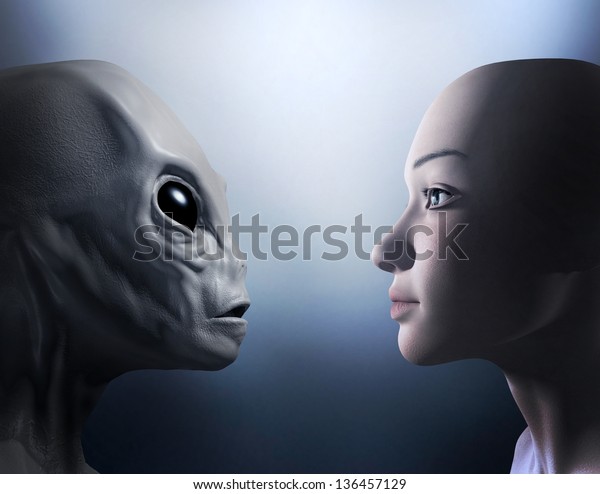
Image: https://image.shutterstock.com/image-illustration/alien-human-600w-136457129.jpg


Guy Stewart is a husband supporting his wife who is a multi-year breast cancer survivor; a father, father-in-law, grandfather, foster father, friend, writer, and recently retired teacher and school counselor who maintains a writing blog by the name of POSSIBLY IRRITATING ESSAYS (https://faithandsciencefiction.blogspot.com/) where he showcases his opinion and offers his writing up for comment. He has 72 stories, articles, reviews, and one musical script to his credit, and the list still includes one book! He also maintains GUY'S GOTTA TALK ABOUT BREAST CANCER & ALZHEIMER'S, where he shares his thoughts and translates research papers into everyday language. In his spare time, he herds cats and a rescued dog, helps keep a house, and loves to bike, walk, and camp.

Monday, November 1, 2021

A Tale of Two Book Covers (Part 2)


Sometimes you just can’t mess with a book cover. I mean, strictly speaking, yes, of course you can. You can always mess with a book cover, and the racks of used book stores are filled with horrid examples to prove the point. But this particular book cover…

This is the very expensive original artwork that Amazing Stories commissioned artist Phil Foglio to produce for the original magazine appearance of my story, “Jimi Plays Dead,” back in that wonderful but short-lived and terribly misguided period when Amazing was trying to ascend to the next level by becoming a full-sized “slick” magazine comparable to OMNI, complete with full-color interior illustrations throughout. I was given to understand that while the result was an absolutely beautiful magazine, newsstand sales never lived up to expectations, and TSR lost a sizable pile of money doing it.

Still, I do love this illo, to the extent that when the opportunity came up to buy the original art I did, and now have it hanging in my office. I particularly liked the clever way Phil worked his signature into the face of the amp and made it look like the old Peavey logo—except of course that Jimi Hendrix would (pardon the expression) never have been caught dead using a Peavey amp. He preferred Marshall amps, at least onstage.

Note: At the time I bought the original art, I of course also negotiated an agreement with Phil to use his art for a book cover. Remember, just because you own a physical piece of art, that does not necessarily mean you have the rights to use it for publication.  

So if we can’t mess with the cover art, what’s the next thing we can do to improve the presentation of the book on Amazon? Remember, for most people, their first look at this book is going to be a thumbnail, about the size of an S&H green stamp; a vaguely purplish and greenish blob, with a splash of white and red. So maybe the place to start is with the typography, to make the title bigger and clearer—and maybe I will do that, but not right now. Instead, let’s put this thumbnail in context.


There, this gives us a clearer idea of how people will first see this book: in the context of one of Amazon’s push-sell bars, either “Books in this series” or “People also bought” or something like that. And at this point I’m really wishing I’d taken a pile of screen captures before I began this exercise, to show you just how dull the original appearance was. All it showed was the cover thumbnail—even smaller, you’ll notice, as some of the real estate is occupied by the Kindle Unlimited banner—the title; the author’s name; the customer ratings—and there are only two of them, so there’s not much I can do about that right now—and the price.

Immediately, what jumps out is that the title is just a title, not a teaser. So the first thing I did was added a subtitle. What was simply Jimi Plays Dead is now, Jimi Plays Dead: Two Stories About Sex, Drugs, and Rock 'n' Roll.  Immediately, the title is more engaging. Even truncated to the 40 characters Amazon allows in a thumbnail title, you learn more of what this book is about, and perhaps become slightly more interested in clicking the link. (Though that “2 customer ratings” remains a problem. We’ll have to work on that. But not now.)

Assuming you click the link, then, what do you see next?


Oh, that. And this is the point where I really wish I’d saved a “before” screen capture, because at this point the prospective reader sees the title, the subtitle, the ratings, a bit of pricing information, and just the top four lines of the book description—and let me tell you, the original book description was dull. It was just one gray monolithic block of text talking writer-to-writer about the conceptualzzzzzz…

Excuse me, I dozed off for a moment there. 

So I switched on my marketing persona, took a really hard look at that description, and thought: “Amazon is giving me about 4,000 characters in which to get people interested in this book and close the deal. They’re also giving me a rudimentary HTML editor. So what can I do with that?”

Well, first off, I’d better lead off with an opening that gets people engaged enough to click the “Read more” link and read the rest of the description. Then, I’d better tell them who the author is and why they should want to read this book. And then: Sales 101. Close the deal. Ask them to make the commitment to buy—and then shut up, stand back, and let them make their decision.

Putting the pieces together, then, I wrote this:

Remember 45 r.p.m. records? Remember how when you bought one, it was like rolling the dice? Sure, the "A" side was always the hit single you wanted, but the "B" side... who knew?

Here now for your entertainment are two stories by award-winning science fiction writer Bruce Bethke, packaged back-to-back together in a special "hit single" ebook. The "A" side is Jimi Plays Dead, Bethke's much-loved and Nebula-nominated story of the obsessed guitarist who will do anything to sound just exactly like Jimi Hendrix.

The "B" side, though—here's where you're taking a chance. Buck Turner and The Spud from Space is Bethke's published but forgotten tale of airports, garage bands, kids with dreams of making it big, and an alien who comes to Earth seeking intelligent life, but through an unfortunate miscalculation makes the mistake of landing near Hollywood. It is also, according to Bethke, who spent a decade in the music industry before he switched to writing fiction, at least partially absolutely true in places.

So the "A" side, Jimi Plays Dead: guaranteed smash hit, you'll love it. But the "B" side, Buck Turner and The Spud from Space: is it brilliant? Is it daft? Is it just begging to be optioned and turned into a low-budget movie?

Read it now and find out!

OVER TO YOU ►